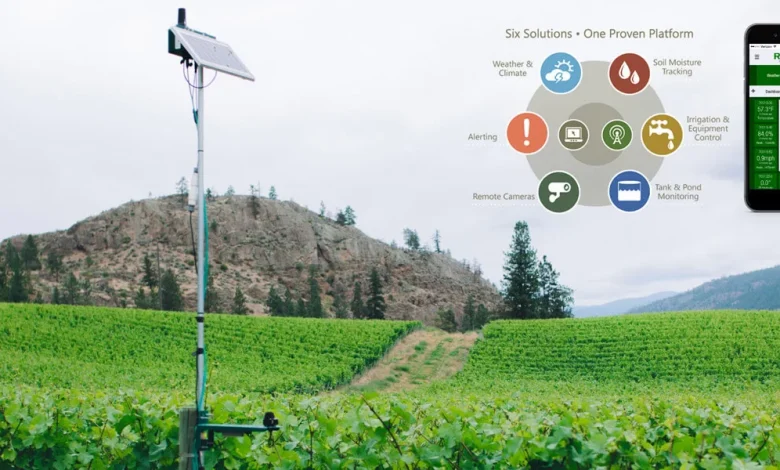
Modern agriculture increasingly depends on accurate information for better yield and sustainable management of resources. Two of the most important tools to support this change are the use of soil moisture sensors as well as weather stations. Real-time information about the soil and environmental conditions enables farmers to make informed choices about the management of irrigation in addition to crop production management and yield optimization.
This guide provides information on their operation, including proper methods of installation, and also their advantages, as well as maintenance and care requirements.
Understanding Weather Stations in Agriculture
Weather stations are computer systems designed to collect and store atmospheric data such as temperatures, humidity levels, rainfall amounts and solar radiation levels; general forecasts only offer generalized climate information relevant to your farm or field whereas climate stations installed locally allow farmers to better predict frost stress, rainfall patterns or storm threats, plan fertilization irrigation harvesting more effectively as well as reduce losses by improving decision making processes and planning strategies. Accurate data also assists with crop loss reduction while simultaneously improving farming decision-making.
What Is a Soil Moisture Sensor?
These sensors measure soil moisture in soil at different levels. It aids farmers in determining what crops need irrigation and also determines if the soil is sufficiently supplied with water. Sensors to monitor soil moisture can stop drowning and overwatering that can harm plants as well as draining sources. This type of technology is extremely beneficial in areas with limited or irregular rainfall. It also helps to promote the expansion of the root as well as the growth of crops.
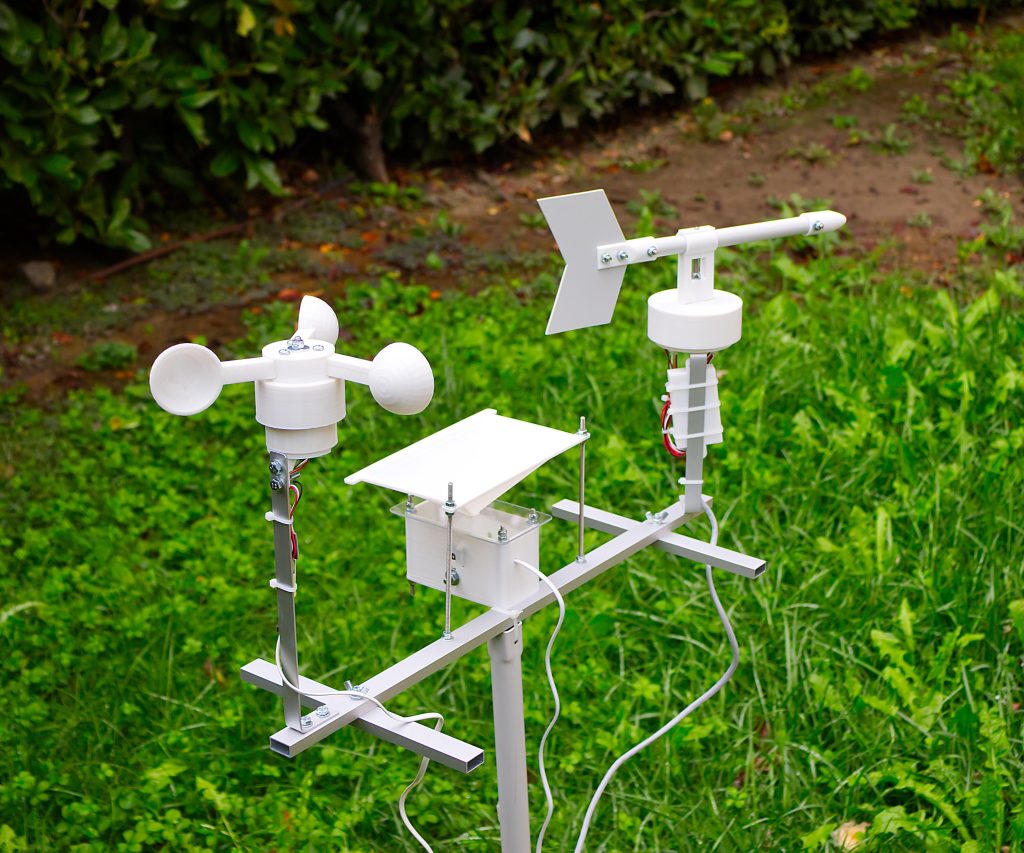 How to Install a Weather Station?
- Choose a wide space that is free of high buildings.
- The weather station must be mounted on a sturdy pole mast, which is at the height that is recommended.
- Check that your rain gauges, as well as wind sensors, aren’t blocked.
- Secure the components in a way that stops them from shifting due to winds.
- It is linked to a power source and can keep track of its data platform.
A proper installation of the Weather Station will ensure the precision and accuracy of the information.
Benefits of Installing a Weather Station
- Real-time localized weather information
- assists in planning fertilization, irrigation and scheduling of sprays
- Lowers the destruction to crops that are damaged by unavoidable weather-related events
- Aids in making precise choices about the harvesting and planting of crops.
- Increases the overall efficiency of farms and helps with managing risk
- In the event that it is properly configured, an outdoor weather station could be a useful tool in modern-day agriculture.
Install a Soil Moisture Sensor
- Specific regions of the zones of the crop.
- Dig a hole to the necessary depth, close to the point where you find the root.
- A soil moisture detector is securely inserted in the soil, while making sure that there is no air space.
- Fill the hole carefully to protect your soil’s shape.
- Connect devices to data or monitoring systems of loggers.
Benefits of Installing a Soil Moisture Sensor
- Protects against underwatering and overwatering
- Improves the efficiency of irrigation and conserves the water supply
- Increases root development and increases ensures healthy crop growth.
- Reduces energy and water costs
- supports sustainable and data-driven agriculture
- Properly installed, the soil’s moisture sensors provide exact information that allows you to make accurate irrigation decisions.
Care and Maintenance of Weather Station and Soil Moisture Sensor
Accurate readings and long-term performance of a soil moisture sensor requires frequent maintenance and care. Sensors on weather stations must be cleaned frequently to clean off dust, debris and bird droppings. sensors for rainfall and wind should be checked for alignment. The power connection, batteries, and data cables need to be inspected regularly to ensure they meet specifications of the manufacturer to calibrate them.
In addition, it is essential to examine sensors that detect moisture in the soil, as well as sensors that detect moisture in soil that require periodic inspections if they are damaged by probes or soil build-up and corrosion issues. Sensor surfaces should be carefully cleaned and their calibration checked frequently and cables protected from farm animals and equipment to prevent disturbances.
When working in the field, beware of the sensor’s placement by causing disturbance to its location by machinery. Regular maintenance of both devices will ensure the reliability of monitoring, a well-informed decision making and a long-lasting life for the equipment they are attached to.
Role in Precision Agriculture
Precision agriculture utilizes technology to manage the fluctuation of fields and to increase the use of resources. Meteorological stations, as well as soil moisture sensors, give regular information that can be integrated into smart irrigation systems, for instance, in software for managing agricultural operations and mobile apps. Monitoring in real time helps farmers automate irrigation, respond rapidly to weather conditions and increase the quality of their crops. These tools are essential to ensure long-term sustainability, efficiency, and profit of farming practices.
Conclusion
A weather station and soil moisture sensors are crucial tools to modern-day information-driven agriculture. A proper installation and ongoing maintenance assure reliable, accurate data that allows for more efficient irrigation as well as healthier crops and sustainable agriculture methods. With these methods, farmers are able to use precision agriculture to conserve resources and improve long-term efficiency and profit.
FAQ’s
1: Does a weather station and soil moisture sensor help reduce the use of water?
Yes, both devices allow farmers to use water only in the instances that are needed, which significantly reduces water usage.
2: How often should they perform maintenance and inspection?
Normally, at least annually should be set aside for such maintenance activities.
3: Can remote monitoring be done with Soil moisture sensors and Weather Stations?
Yes, a number of sensors for soil moisture and weather stations are compatible with wireless connectivity. This allows farmers to track conditions using applications on mobile devices or via computer software.