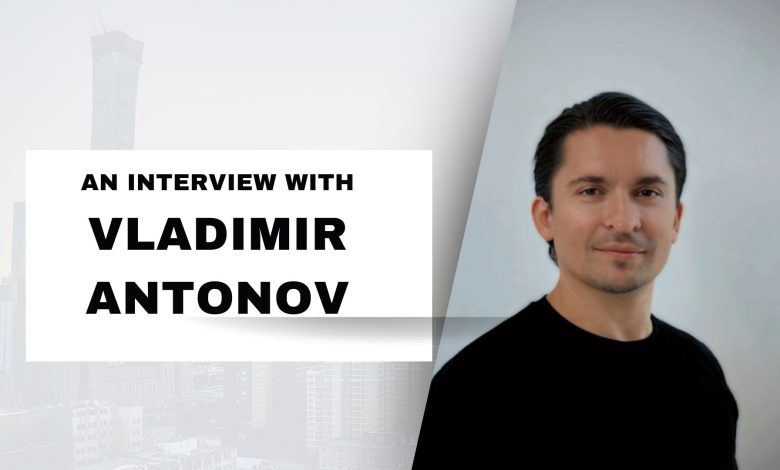
We sat down with Vladimir Antonov, the verification chief at Avito, the largest classified platform. Vladimir is at the very top of the trust and safety pyramid, ensuring that there are no harmful defects that can compromise the whole system. At Avito, verification is critical to the platform’s safety. Vladimir works with a “massive scale” in terms of Avito’s user base and their daily activity on the platform. When something goes wrong at that level, it can go very wrong indeed and has the potential to affect many people. So, how do they do what they do, and what is their secret sauce?
Could you start by telling us what makes Avito’s scale so significant and why trust & safety have become top priorities?
Avito is one of the world’s largest online classifieds platforms, and the biggest one in Russia. That illustrates the enormous scale we operate on—imagine tens of millions of people visiting the platform each day to buy or sell general goods, cars, rent and buy apartments, find jobs or employees, and engage in countless other interactions. In a classifieds and marketplace platform of this size, trust and safety are absolutely essential. If users worry they might be scammed or harassed, they’ll hesitate to complete deals and will be less likely to return for future ones. We’ve made it our mission to protect people’s interactions, which is why we invest heavily in anti-fraud technologies, user education, and verification processes that confirm each user’s real identity. Avito is a unique platform that brings together professionals using it to earn income and private individuals giving a second life to unnecessary items, promoting conscious consumption. This model requires a special approach to verification: it must ensure a high level of security while remaining accessible to a broad audience, not just professionals.
You lead the product teams responsible for verification at Avito. Could you explain how verification fits into the bigger trust & safety picture?
Verification really is the foundation for everything else we do to build trust and safety. If we don’t know who’s behind an account, bad actors can keep creating new profiles, even after we block them for fraud. By requiring documents like passports or driver’s licenses, or letting people verify through banking IDs and Gosuslugi (Russian government services portal), we’re effectively ensuring that interactions happen with a real person. It also gives buyers confidence because they can see those “Documents Verified” or “Requisites Verified” badges on a seller’s profile. When people sense authenticity and accountability, they’re far more likely to complete deals on the platform.
Some recent reports highlighted that 78% of Russian buyers prefer to deal with sellers who have verified profiles. Have you observed similar trends at Avito?
Absolutely. We’ve seen that the vast majority of people will choose a verified seller over an unverified one, given the choice. It makes sense: people want to know the person they’re about to pay is who they claim to be. Our internal data shows that verified accounts drive more inquiries, and we’re constantly working to improve the verification process so it’s both robust and user-friendly. For instance, in 2023 we’ve recently introduced mandatory property verification via the Russian registry (ЕГРН) for real estate listings, particularly in high-value areas like secondary property sales and long-term rentals. This double verification—of both the user profile and the property—ensures transparency and security, which greatly enhances buyer confidence. As a result, listings with verified profiles and properties see significantly higher engagement and trust from users.
Could you talk about how you balanced simplifying the verification process while maintaining strong anti-fraud controls?
That was one of our key challenges. The last thing we want is for honest, reputable sellers to abandon verification halfway because it feels tedious. So we spent a lot of time examining each step to figure out where users were dropping off, and we cut down any redundant forms or confusing instructions. We have implemented advanced verification methods tailored to each category of our sellers. On Avito, users can seamlessly verify their profiles as Individuals, Self-employed professionals, or Businesses, ensuring a secure and trustworthy marketplace experience.
As pioneers in the industry, we were among the first to introduce verification through Gosuslugi, setting a new standard for user authentication. Avito became the first platform to support account verification via the Unified Identification and Authentication System (ESIA) through the Goskluch application, strengthening security and trust in user interactions.
Building on this foundation, after pioneering verification via the Goskluch application, with my team we further enhanced the process by enabling direct verification through the Gosuslugi portal. This advancement eliminated the need for a separate app, making authentication even more seamless and accessible across devices.
Additionally, we integrated verification options with leading financial institutions such as Alfa-Bank, Sberbank, and T-Bank (formerly Tinkoff). This collaboration, along with our continued innovations, ensures that we provide a secure, efficient, and accessible solution for all users.
As we expand these verification capabilities, we remain committed to setting the highest standards for user trust and safety.
At the same time, we had to ensure that relaxing any requirement wouldn’t leave us vulnerable to fraud. It was a delicate balance, but we ended up with a system that’s rigorous on the back end while feeling seamless to the user on the front end.
Could you give an example of how verification benefits both buyers and sellers?
Let’s take real estate sales as examples. Renting or leasing property can involve significant sums of money, so scams in that space can be especially devastating. When a landlord verifies their account, renters see a verification badge right away. That simple sign of legitimacy often helps them feel safer in proceeding. Meanwhile, the landlord experiences a noticeable increase in inquiries because people trust verified profiles more than unverified ones. It’s a win-win situation where honest players thrive, and fraudsters are kept out of the loop. Buyers want to know they are dealing with the actual owner, not intermediaries or potential scammers. This principle extends to Avito’s mandatory property verification via official documents from the Russian registry (ЕГРН) for real estate listings. This dual verification—of both the seller’s profile and the property’s legal status—ensures that renters and buyers are dealing with legitimate listings, giving them confidence in the transaction. Whether it’s a car or an apartment, verified ownership adds a layer of transparency and security that encourages users to complete their deals with peace of mind.
The automotive category is huge on Avito, and there’s been mention of checking odometer fraud. How does verification come into play there?
Cars are high-value items, and they’re also an area where scammers might try to manipulate details like mileage. To help protect buyers, Avito offers two key verification features: first, the ability to verify car ownership, and second, the integration with Autoteka, a service that provides detailed vehicle history reports. When a seller’s profile is verified, it links their identity to the car’s ownership, confirming that the vehicle belongs to them—not a third-party reseller or middleman. This combination of ownership verification and vehicle history checks makes it much harder for fraudsters to manipulate odometer readings or present misleading details about the car’s past. Buyers can have confidence that they are dealing with a real, verified seller, and that the vehicle’s history is transparent and trustworthy. For genuine sellers, this boosts credibility, leading to increased buyer trust and smoother, faster transactions.
A lot of these verification initiatives must require significant resources. RBC mentioned that Avito invests billions of rubles annually into trust and safety. How do you prioritize those investments?
We do invest a substantial budget in trust and safety—on the order of several billion rubles a year—because we know how critical it is for our users. Honestly, there’s no single silver-bullet solution, so our funding goes to a variety of initiatives: AI-driven moderation, back-end security enhancements, user education campaigns, and of course the verification process itself. We prioritize projects that deliver the most impactful risk reduction or have the highest potential to improve user confidence. If people don’t feel safe, transactions drop off—and that’s bad for everyone. So we view trust & safety as a cornerstone investment rather than a cost center.
You have a background in leading complex digital products and major transformations in banking. How has that influenced your work on verification at Avito?
I’ve spent over a decade managing large-scale IT projects and product transformations, including massive efforts in banking with budgets up to 30 million dollars and teams exceeding 150 people. These experiences taught me the importance of well-structured processes, clear metrics, and strong collaboration across departments. For instance, while working at Raiffeisenbank, I played a key role in automating the courier delivery process—a critical part of banking services in Russia where, under Federal Law 115-FZ, face-to-face identification is required to open a bank account. This required strict data handling and secure verification procedures, which resonate directly with my work on Avito’s verification systems. The process involved couriers verifying customers by taking photos of their IDs in real-time, a form of on-site verification that mirrors the verification workflows we’ve built at Avito. Moreover, this experience deepened my understanding of the legal and security aspects of personal data processing, which is vital in both banking and user verification. Just as we applied rigorous data protection protocols at Raiffeisenbank, we ensure that every user verification at Avito meets strict privacy standards. I like to think I bring a disciplined approach to our projects, ensuring we build systems that scale to millions of verifications, remain user-friendly, and comply with legal and data protection requirements.
Where do you see verification heading next at Avito?
We’re definitely exploring new layers of security and convenience. We’re continually looking to deepen our partnership with official government portals and other partners, making the verification process faster and more seamless for users. Another area of focus is adaptive verification, where our systems can flex based on the risk level of the transaction—less friction for everyday deals, more robust checks for higher-risk situations. Ultimately, our vision is to create a platform where fraud is practically impossible or, at least, too difficult and unprofitable for scammers to bother.
Any parting advice for other product leaders who want to build robust verification systems?
Absolutely. First, never lose sight of the user. Verification can easily become a confusing or frustrating process if it’s designed without the end-user in mind, so it’s vital to keep things as straightforward as possible. Next, you have to collaborate—this is not a one-department show. Work closely with fraud analysts, support teams, and engineers, because each group provides insights you can’t get anywhere else. And finally, treat verification as a continuous loop of improvement. Technology and fraud tactics evolve at breakneck speed, so you need to keep iterating if you want to stay a step ahead.
Thank you for walking us through Avito’s verification strategy and the impact it’s having. It sounds like you’ve established a strong foundation for building trust in such a large marketplace.
It’s been a pleasure to share our journey. We’re proud of the progress we’ve made and are excited about the future as we continue refining verification and other trust-building tools. Our ultimate goal is for users to come to Avito with complete confidence that every deal is transparent, safe, and secure.