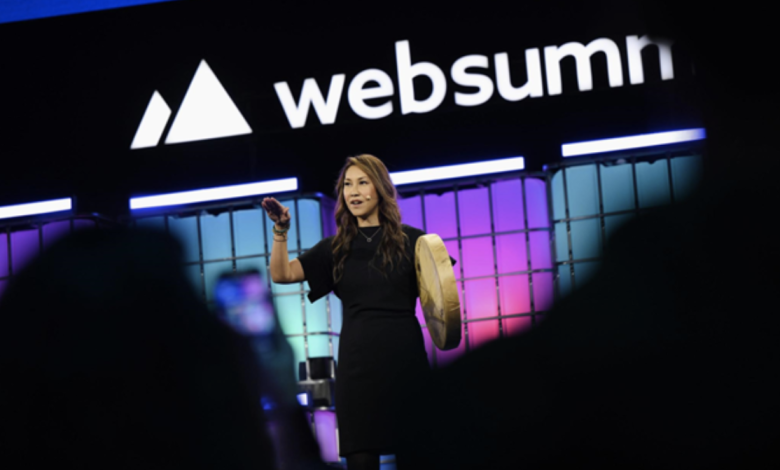
A year ago, standing on the AI Summit stage at Web Summit in Lisbon, one of the world’s largest tech conferences, I spoke about emotional intelligence and feminine leadership in AI. These were themes that felt, at the time, like opening a door no one was ready to walk through.
The industry was engrossed in technical innovation, metrics, and speed. There was a striking lack of attention to the human capacities required to steward AI responsibly into our collective future.
In 2025, when I returned to deliver my keynote “Ancient Intelligence: The Breakthrough Code for AI-Era Leadership” and served as MC, that door was wide open. The conversation had shifted.
Voices across the lineup, from founders to CEOs, referenced human connection, human augmentation, and the central role of emotional awareness in leadership. More surprisingly, some of these perspectives now echo what had felt ahead of its time a year earlier: that the future of AI is, at its heart, a human story.
If you’re navigating rapid change while trying to keep your team intact, your vision clear, and your own nervous system regulated, this shift matters.
What This Shift Means for You
What follows isn’t just a conference recap. It’s a map for leading when the ground is shifting, and proof that the intelligence you need most isn’t new. It’s ancient.
If you’re navigating AI integration while trying to keep your team coherent and your vision clear, this isn’t just a trend to watch. It’s a leadership recalibration that will determine whether you:
- Lead the integration or get swept up in it
- Build culture that attracts top talent or lose them to burnout
- Make AI your competitive edge or your compliance burden\
What follows is the map.
When Ancient Intelligence Became Modern Necessity
My keynote wasn’t conceived as a performance. It was a strategic intervention.
A year earlier, on this same stage, the conversation was different. Speakers focused on computational power, model architecture, and speed to market. The human element, if mentioned at all, was treated as an afterthought, not a leadership imperative.
No one was talking about nervous system regulation. No one was asking how AI might require us to lead differently, not just build differently.
In a tech world still racing toward automation and optimization, slowing down to regulate the nervous system, connect to the body, and engage emotional intelligence was treated by some as unconventional. But real intelligence, the kind that integrates clarity, presence, and coherence, isn’t found in speed.
It’s found in regulated human systems that can hold complexity without fragmentation.
Ancient intelligence is the accumulated wisdom of embodied practices, nervous system regulation, and relational coherence that humans have used for millennia. Through my training and initiation in the Q’ero lineage of Peru, an unbroken shamanic tradition that has preserved Andean wisdom for centuries, I’ve witnessed practices that science is only now beginning to validate.
My teacher’s teacher was trained by Alberto Villoldo, the medical anthropologist who spent decades in the Andes documenting these practices. What he brought back wasn’t folklore. It was a complete system of nervous system regulation, energy medicine, and embodied leadership that I’ve studied alongside my formal work in neuroscience, psychology, and trauma-informed leadership.
The Q’ero have been working with living energy, ritual rhythm, and sacred reciprocity long before neuroscience could measure their effects on the prefrontal cortex, vagal tone, or emotional regulation. What neuroscience now proves, they’ve practiced for centuries: rhythm, reciprocity, regulation. That’s how sustainable systems are built.
I opened by referencing Mo Gawdat, former Google executive, whose voice has been amplifying what used to be fringe but is now foundational: “Human connection is by far the most important skill you’ll need in the future.”
This isn’t just philosophy. It’s a survival strategy. AI pilots fail not because the technology is broken, but because the people implementing them are operating from dysregulated nervous systems. The smartest tools can’t fix that.
With hundreds of tech leaders in the room, many from companies navigating the most complex AI integrations in the world, I guided them through box breathing accompanied by the rhythm of my shamanic drum.
The drum isn’t symbolic. It’s neuroscience. Rhythm calms the nervous system and balances the brain. It synchronizes logic and intuition, the state where creativity and flow return.
Four counts in. Four counts out. The drum holding the cadence. This wasn’t ambient wellness. It was an engineered presence.
When I asked the room to breathe in rhythm with the drum, I watched the shift. Shoulders dropped. Faces softened. Eyes that had been scanning the room for the next opportunity… closed.
And I felt it too: that collective exhale. That moment when hundreds of people who’d been performing competence all day finally had permission to just… be.
That moment wasn’t about wellness. It was about capacity.
Nothing outside changed, but their capacity did. That’s regulation. That’s what safety feels like in real time: not the absence of pressure, but the presence of enough calm to choose your next move.
Because a deeper intelligence “doesn’t forget what it means to be human.” Emotional and relational capacities are foundational. AI “can’t hold a room” or “rebuild trust when disruption happens.” If you can’t regulate your own system, you can’t lead through the complexity AI is bringing into every industry.
What I Heard From the Stage: Augmentation Over Replacement
At this year’s Web Summit, what struck me wasn’t just that speakers emphasized the human element. It was that the audience was ready to hear it. The conversation had moved from theoretical to practical: how do we actually build AI systems that enhance rather than erase human capability?
Tao Zhang, Co-Founder of Manus AI, opened with a reframing that cut through the displacement anxiety filling every boardroom: “You shouldn’t think about replacing humans with AI—you should think about enhancing humans with AI.”
His mission, he explained, is to “extend human reach, not replace human intelligence.” He described AI agents as “the new literacy of our era”—a capability humans must learn to co-pilot with, not compete against.
AI is our mirror. It amplifies whatever state we’re in. If we’re dysregulated, no strategy will hold.
For leaders, this is more than philosophy. It’s a strategy.
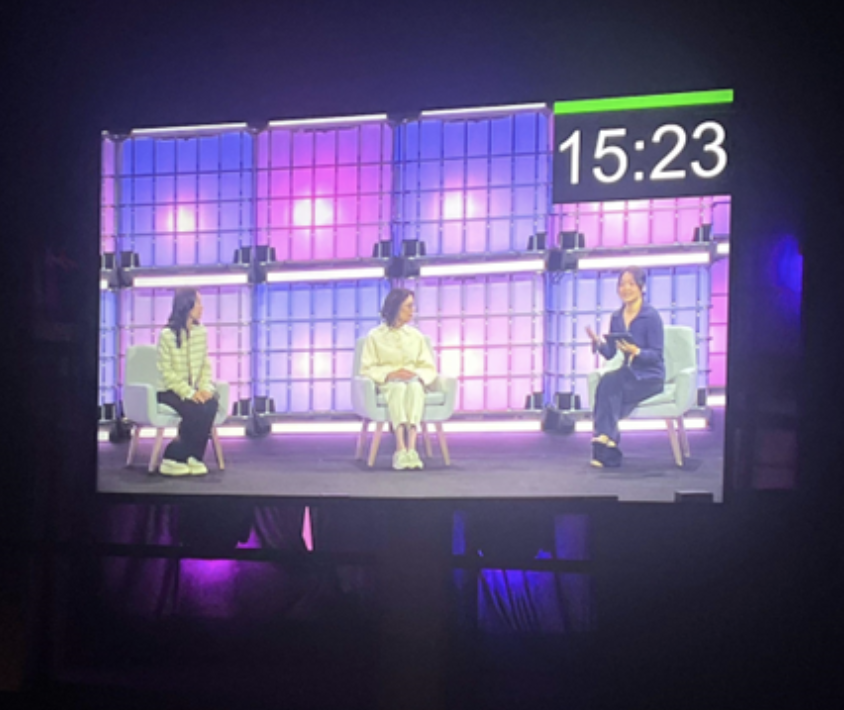
But here’s what most companies miss when they talk about augmentation. On a logistics panel, Heidi Wyle, Founder and CEO of Venti Technologies, brought the conversation back to ground truth: “AI is not about automation—it’s about how people work with machines.” She emphasized that “robots can’t do what humans can do. They can’t generalize.”
More importantly, her team’s approach centers human expertise: “We ask the humans what we should put into our algorithms.”
Leadership doesn’t begin in the mind. It begins in the body. The most valuable work requires discernment, context, and lived experience that can’t be extracted from data alone.
Song Yi Yun, Managing Partner at Principal Venture Partners, reinforced this on the same panel: “It allows humans to focus on what humans are good at.” She argued that “human intelligence and human collaboration make the system more resilient.”
The pattern was clear: the teams that thrive won’t be the ones who automate fastest. They’ll be the ones who integrate AI in ways that amplify human judgment, creativity, and connection.
But knowing this and building for it are two different things.
What I Heard From the Stage: Work Redesigned for Human Energy
If you’ve ever felt the pressure to “keep up” with AI by working faster, this is your permission slip to slow down and lead differently.
But augmentation is only half the story. The second theme that emerged was even more radical: what if AI didn’t just augment human capability, but actually made work more human?
Over 150,000 tech workers were laid off across Amazon, Meta, and Microsoft. Headlines call it restructuring, but underneath is something deeper: a collective nervous system stretched past capacity.
Even more telling: Duolingo and Klarna rehired the humans they’d replaced with AI because quality collapsed when coherence did. Most companies are overbuilt on strategy and underwired in energy.
When uncertainty spikes, the body protects. It contracts. It stops imagining and starts bracing.
Vasco Pedro, Founder and CEO of Spinable.ai (Former founder and CEO of Unbabel), took the stage with a striking introduction: “We’re 15 people—five humans, ten non-humans.”
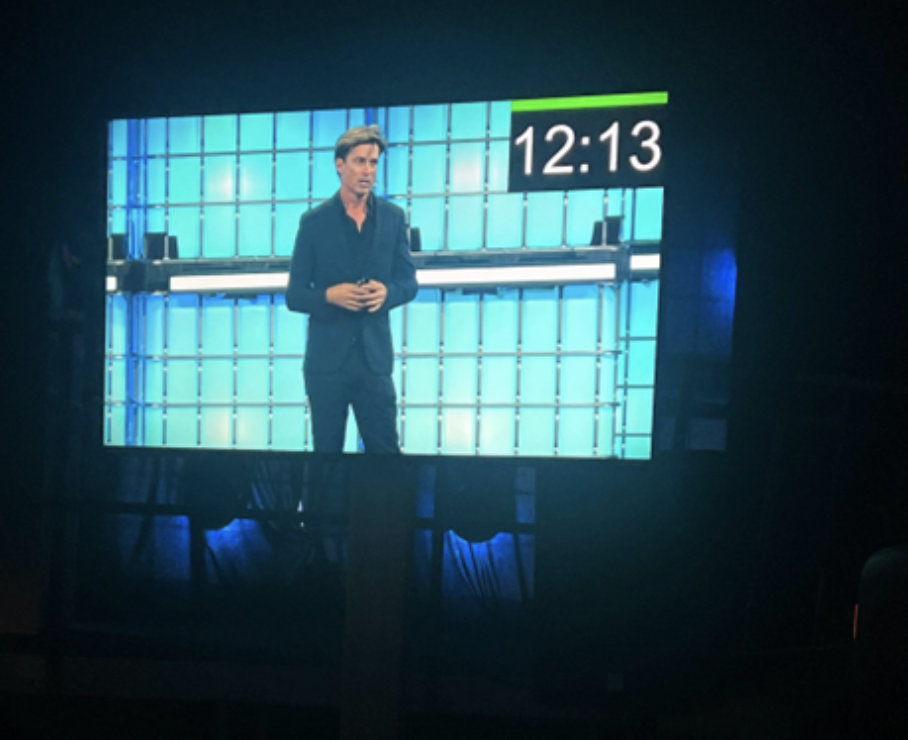
But his vision wasn’t about replacement. It was about elevation. “When you create a human experience on top of an AI agent, it becomes better for humans,” he explained. “The workplace becomes more human, not less.”
He reframed AI agents as “colleagues—not tools” and insisted that “the goal is not efficiency alone, but the elevation of human creativity.” His company is working to “redesign work so humans can focus on what gives them energy.”
Innovation doesn’t fail from weak strategy. It fails because humans are exhausted. Safety isn’t the absence of pressure. It’s the presence of regulation inside it.
For founders navigating scale and executives rebuilding fractured teams, this is the question that keeps them up at night: How do we integrate AI without losing soul?
The answer isn’t in the technology. It’s in how you lead the integration. It’s in the questions you ask before implementation:
- Who needs to be in the room?
- What human judgment are we protecting?
- Where does creativity need space to breathe?
Sassine Ghazi, President & CEO of Synopsys, brought this theme into the engineering world. “AI is a co-pilot, a partner, a co-worker,” he said, before offering a perspective that should calm every leader worried about their team’s future: “The workforce will change—not disappear.”
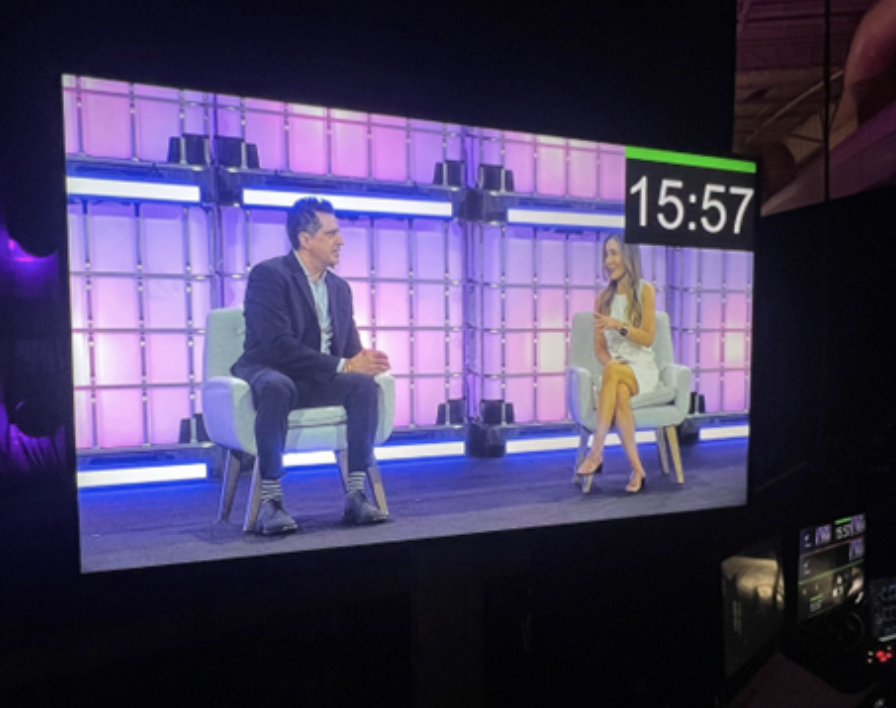
His vision is clear: “Engineers must elevate from tasks to architecture and judgment.”
This is the shift every industry is facing: from execution to discernment, from speed to systems thinking. The work that matters most can’t be automated. It can only be amplified.
What This Means for Your Leadership
Looking back over this two-year arc, the shift is striking.
In 2024, raising the importance of emotional intelligence and feminine leadership in a tech forum felt like opening a door no one was ready to walk through. In 2025, these conversations are resonating across the stage lineup and beyond.
The real breakthrough isn’t a new algorithm. It’s the reframing of AI from a purely external tool to something that illuminates and amplifies what it means to be human.
If you’re leading a team through AI integration right now, you’re not just implementing technology. You’re navigating a recalibration of what work means, what leadership requires, and what it takes to stay grounded when everything around you is accelerating.
This is where ancient intelligence becomes your unfair advantage.
Most leaders are choosing between two paths: double down on technical mastery or retreat into “soft skills.” But there’s a third path, one that integrates nervous system science, embodied practice, and strategic leadership into a coherent whole.
This is the path most leaders don’t even know exists. And that’s your advantage.
While others are choosing between “move faster” or “be nicer,” you’re building the capacity to hold complexity that makes speed and humanity possible at the same time.
That’s not just leadership. That’s a competitive moat.
It’s the path that lets you hold complexity without collapsing into reactivity. That lets you lead from presence, not performance.
What was once overlooked is now recognized as essential. Relationships, presence, and emotional coherence aren’t afterthoughts to innovation—they are the very ground upon which sustainable innovation is built.
If you’re a leader who’s been told to “toughen up” or “move faster,” this is your validation. The future doesn’t belong to the hardest or the fastest. It belongs to the most coherent.
So the real question isn’t “How do we keep up with the machines?” It’s “How do we stay connected to ourselves while we do?”
Stillness isn’t weakness. It’s how your system remembers what it’s here to build.
Where to Start: Three Moves That Change Everything
The leaders who will thrive in the next decade won’t be the ones with the most advanced tools. They’ll be the ones who can hold space for complexity without collapsing into reactivity.
They’ll be the ones who can regulate their own nervous systems so they can regulate a room. Who can integrate intuition with intellect. Who can lead from presence, not performance.
This isn’t soft. It’s the hardest work there is.
If you’re leading through AI integration right now, start here:
- Regulate yourself first. Before your next high-stakes meeting, take two minutes to breathe—four counts in, four counts out. Your nervous system sets the tone for the room.
- Ask different questions. Not “How fast can we implement this?” but “How does this amplify human judgment and connection?”
- Lead from presence, not performance. The teams that will thrive aren’t the ones moving fastest—they’re the ones moving with coherence.
We don’t need faster machines. We need steadier humans.
Because if you can lead with presence, grounded in your nervous system and attuned to relational intelligence, you aren’t resisting change. You are shaping it. You become the calm in the center of the storm. The permission slip for your team to lead from wholeness, not hustle.
Culture doesn’t come from slogans. It comes from the nervous systems of those in charge. You don’t need to do more. You need to hold more.
The code for leadership in the AI era isn’t written solely in data or hardware. It’s ancient, embodied, relational, and distinctly human.
I closed my keynote with a reflection on Geoffrey Hinton, the godfather of AI, who has argued that we need “maternal instincts” to survive the age of AI.
A year ago, when I spoke about emotional intelligence and feminine leadership on this stage, the room went quiet. Some shifted uncomfortably. The concepts felt too soft, too far from the technical rigor the industry valued.
This year, the godfather of AI himself is saying we need maternal instincts: not more aggression, not more speed, not more dominance.
Maternal instincts: the capacity to nurture, to protect, to hold, to see the long game, to lead with care. What builds trust isn’t force. It’s regulated presence: the ability to stay calm, read what’s unsaid, and move from clarity, not reactivity.
That door I opened a year ago? The entire industry is walking through it now.
That’s what keeps culture together. That’s what AI can’t replicate.
If you’ve been feeling like the way you’ve been leading isn’t sustainable, like there’s a deeper intelligence you’re not yet accessing, you’re not broken. You’re ready. And the world is finally catching up.
Success means nothing if your nervous system can’t hold it. Because in an AI-driven world, the leaders who thrive won’t be the fastest. They’ll be the most grounded.