
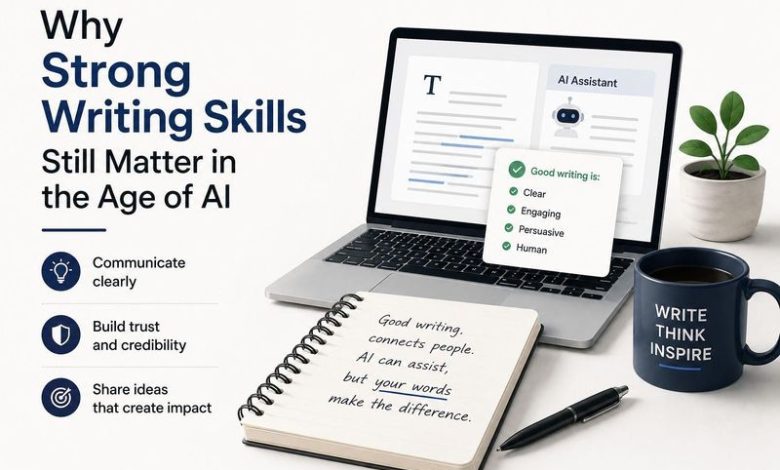
— Trinka announced a new initiative designed to support strong writing skills and to promote responsible, writer-centered use of artificial intelligence as writing workflows evolve.

The initiative responds to shifts in how students, researchers, and professionals approach writing. Advances in artificial intelligence have made drafting and certain editing tasks faster, and many writers now use a grammar checker as part of the editing process. Trinka’s program frames these technical advances as tools that can increase efficiency while underscoring that clarity, judgment, and critical thinking remain essential to effective communication.
The initiative recognizes that drafting text is only one component of communication. Generative and assistive technologies can accelerate idea generation, summarize material, and surface alternative phrasing, but the final responsibility for accuracy and coherence rests with the author. Trinka’s announcement emphasizes the continuing need for writers to verify facts, evaluate suggestions, and ensure that documents are appropriate for their intended audiences.
A core focus of the initiative is promoting practices that preserve a writer’s voice and intent when AI-assisted drafting is part of the workflow. The program encourages integrating language review tools such as a grammar checker into a broader editing process that includes fact checking and subject-matter review. That approach aims to reduce avoidable distractions in documents so readers can focus on ideas rather than on language errors or inconsistent wording.
Trinka positioned this initiative as relevant across academic and professional contexts. In educational settings, the initiative highlights how responsible tool use can coexist with academic integrity, supporting students who must organize information, present evidence, and explain concepts clearly. In research and professional environments, the initiative underscores the role of clear writing in allowing reviewers, colleagues, and decision-makers to concentrate on substance instead of language issues.
The announcement notes that technology has changed how many people begin writing. Students reportedly use AI to organize ideas, researchers use it to summarize large volumes of literature, and professionals use it to produce first drafts for reports, presentations, and emails. Trinka’s initiative takes that reality as a starting point while stressing that the existence of faster drafting methods does not eliminate the need for skilled editing and careful judgment.
Trinka outlined a set of objectives for the initiative that reflect the concerns and opportunities described in the company’s planning. The initiative aims to support better alignment between AI-assisted drafting and human oversight, to encourage systematic inclusion of language review in editing workflows, and to foster discussion about how educational institutions and workplaces can adapt policies and practices as writing processes evolve.
The announcement describes engagement with educators, researchers, and workplace leaders as an intended element of the initiative. Such engagement is framed as a means to surface practical issues around context, intent, and audience that automated systems cannot fully resolve. Trinka’s initiative seeks to promote exchange about when AI suggestions should be accepted, when they require human revision, and how to preserve originality and accuracy in final documents.
Trinka framed the initiative around practical outcomes that reflect the continued role of human judgment in writing. The initiative emphasizes improving clarity and consistency, reducing routine language errors, and enabling writers to spend more time on analysis, creativity, and effective communication. It also highlights how integrating language review practices into AI-assisted workflows can contribute to clearer research manuscripts, more coherent business proposals, and more reliable academic submissions.
The announcement reiterates that success in a changing writing landscape will depend on a combination of tools and human expertise. Artificial intelligence can speed repetitive tasks and help organize complex material, but it cannot determine whether an argument is persuasive, whether evidence is sufficient, or whether the tone and structure of a document are appropriate for a particular audience. Trinka’s initiative therefore positions human reviewers and writers at the center of decisions about final content.
Trinka framed the initiative as a contribution to ongoing conversations about the future of writing in education and the workplace. The initiative seeks to encourage practices that maintain clarity and trust in written communication while recognizing the potential of AI to improve efficiency. The company presented this work as part of a larger effort to help writers combine technological assistance with careful editing and critical thinking as core elements of contemporary writing practice.
About Trinka
Trinka is a company focused on initiatives and programs that address writing quality and clarity in academic and professional settings. The organization engages with educators, researchers, and workplace stakeholders to explore how writing workflows can adapt as assistive technologies evolve. Trinka’s work emphasizes practical approaches to maintaining accuracy, consistency, and human judgment in written communication.
Contact Info:
Name: Media Relations
Email: Send Email
Organization: Trinka
Website: https://www.trinka.ai/
Release ID: 89197360
If you detect any issues, problems, or errors in this press release content, kindly contact [email protected] to notify us (it is important to note that this email is the authorized channel for such matters, sending multiple emails to multiple addresses does not necessarily help expedite your request). We will respond and rectify the situation in the next 8 hours.