The issue of cardiovascular disease remains one of the biggest problems for public health within the United States. According to the health experts, heart failure is a major concern for millions of Americans every year and is the leading reason for hospitalization for adults. The early detection of heart failure and the accurate diagnosis are crucial for enhancing the outcomes of patients, decreasing medical costs, and preventing grave complications. The most commonly utilized diagnostic biomarker to detect heart disease is the NT-proBNP (N-terminal pro-B-type natriuretic peptide).
NT-proBNP is an enzyme released by the heart whenever it encounters increased pressure or stress. Monitoring the levels of this biomarker within the blood allows doctors to determine if patients’ symptoms, such as breathlessness, fatigue, or swelling, are due to heart disease or another issue. Since symptoms associated with heart failure are often correlated with respiratory ailments as well as other heart-related disorders, the NT-proBNP test has been an important diagnostic tool for hospitals and emergency rooms as well as clinical labs all across the United States.
In response to the increasing need for more rapid and exact diagnostics, many biotechnology and medical businesses have come up with advanced NT-proBNP testing systems. They offer laboratory-based testing equipment and point-of-care testing tools to help doctors make better treatment choices. Here are a few businesses that contribute to the development and accessibility of the NT-proBNP test methods used by hospitals in the U.S. healthcare system.
1. Response Biomedical
One company that contributes to rapid diagnostic tests is Response Biomedical. It is a company that focuses on creating and manufacturing quick diagnostic tools specifically designed for use in acute care environments like hospitals, emergency rooms, and clinical labs. Through research and creation efforts, the firm is developing diagnostic systems that allow clinicians to obtain accurate, quick, and efficient results.
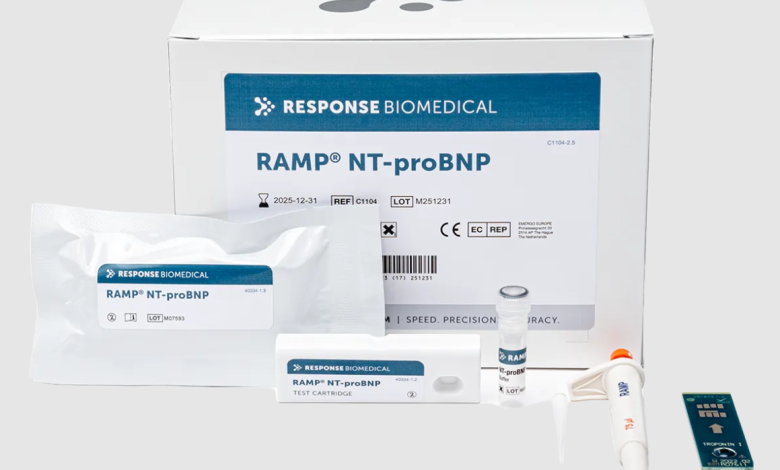
The most significant technology created through Response Biomedical is the RAMP platform. It’s an easy-to-use diagnostic device developed to give laboratory-quality outcomes within a healthcare point of care. It uses a fluorescent reader as well as disposable cartridges to identify specific biomarkers in tiny blood samples. This system allows health specialists to conduct tests rapidly and without the need for centralised laboratories.
One of the top cardiovascular diagnostic tests that is supported with this technology includes the RAMP test for NT-proBNP, which aids doctors in determining the levels of NT-proBNP in blood samples for the diagnosis of congestive heart failure. It can provide results within about 15 minutes. This test is particularly useful in emergency or critical care situations in which quick clinical decision-making is required. Further information on the business’s goals and its technology is available at the Response Biomedical company page.
Rapid diagnostics such as the RAMP platform enable doctors to quickly evaluate patients who present with symptoms that may indicate heart issues. Through reducing the time for testing, medical professionals can start treatments earlier and enhance results for patients.
2. Abbott Laboratories
Another key contributor to the diagnostic tests for NT-proBNP includes Abbott Laboratories. Based in Illinois, Abbott is one of the biggest medical and diagnostics firms with in the United States. Abbott offers a wide-ranging line of medical technologies that includes advanced lab systems used to conduct cardiac biomarker tests.
Abbott diagnostic systems (including ARCHITECT and Alinity systems) enable NT-proBNP testing directly in broad cardiovascular screening panels. Automated systems are generally used in hospitals and bigger clinics because they are fast, accurate, and also connected to management software for digital labs.
The company continues to invest in developing diagnostics, bringing techniques that elevate test results and patient care alike. Abbott’s diagnostics are used across the entire U.S. healthcare system and are a cornerstone of 21st-century cardiac testing.
3. Roche Diagnostics
Roche Diagnostics is another leading global company in biomarker testing and diagnostic tests. It has been instrumental in clinical research and validation of the NT-proBNP test as a marker to diagnose heart failure. Roche invented the popular Elecsys NT-proBNP immunoassay, which is used by hospitals and diagnostic labs across the globe. It is designed to give highly precise measurements of NT-proBNP levels. This allows doctors to detect heart disease and track its development effectively.
Due to its vast study and validation in clinical trials, the Roche NT-proBNP technology is now an established instrument in a number of hospitals’ laboratories. The company is continuing to grow its diagnostic capabilities by incorporating advanced immunoassay systems and digital health services.
4. Siemens Healthineers
Siemens Healthineers is a global medical technology firm that offers diagnostic imaging equipment, laboratory tests, and digital health services. Within the United States, Siemens Healthineers has laboratory platforms that allow NT-proBNP tests to detect cardiovascular diseases.
The systems of the company, which include Atellica and ADVIA Centaur, are designed to be highly efficient. Atellica, as well as the ADVIA Centaur platforms, is specifically designed to conduct a vast variety of tests for clinical use that are highly efficient and reliable. The automated analysers aid hospitals in handling large amounts of lab tests while ensuring the same precision. Through the integration of advanced diagnostic systems and digital health technologies, Siemens Healthineers helps healthcare providers enhance workflow efficiency as well as the treatment of patients.
5. Beckman Coulter Diagnostics
Third, the heart diagnosis is also largely attributed to Beckman Coulter Diagnostics, a subsidiary of Danaher Corporation. Beckman Coulter manufactures automated analysers for laboratories used in hospitals, diagnostic labs, and research centres. The company’s immunoassay platform also enables testing of other cardiac biomarkers, including the NT-proBNP, and this makes them indispensable pieces of a hospital’s diagnostic infrastructure, allowing labs to run large numbers of diagnostic tests in a rapid and cost-effective manner.
Physicians rely on Beckman Coulter diagnostic technology through clinical labs nationwide to help diagnose and treat a wide range of diseases.
Increasing Demand for NT-proBNP Testing in the United States
As heart disease is one of the leading causes of death & sickness globally, the NT-proBNP test market has continued to grow continuously throughout the US. An aging population, the increasing rate of heart disease and the increasing awareness about earlier diagnostic tests are all factors in the growth of the cardiac biomarker test market. Healthcare providers and hospitals have been increasingly adopting tests that can provide results in minutes instead of hours. Tests at the point of care, like those created through Response Biomedical, are becoming particularly useful in emergency departments in which decisions that are time-sensitive have to be made swiftly.
Rapid diagnostic tests assist clinicians in determining if coronary heart disease is responsible for a patient’s symptoms or whether other conditions are to blame instead. NT-proBNP enables faster diagnosis, reducing unnecessary hospital admissions and improving the management of therapy.
The Future of Cardiac Biomarker Diagnostics
With the ongoing development of medical technology, NT-proBNP studies will likely play a growing role in the area of cardiovascular medicine. The diagnostic company will also put money in precision test kits, portable diagnostic systems and digital health platforms connecting the lab data to the medical records
Laboratory testing and point-of-care diagnostic systems will enable clinicians to react more rapidly to patients and reduce the chance for false tests. Novel biomarker detection methods, as well as AI and automated diagnosis, may enhance the NT-proBNP test’s value in clinical practice.
Conclusion
The NT-proBNP test has been widely implemented as a part of heart diagnostics in the USA. The biomarker has a critical role in guiding physicians to identify whether or not heart disease is present, and if so, to what extent, thereby improving the outcomes of patients. Many firms pioneering technological advancements in this field are Response Biomedical, Abbott Laboratories, Roche Diagnostics, Siemens Healthineers, and Beckman Coulter Diagnostics. They continue to create modern diagnostic techniques that enhance efficiency and speed as well as accessibility to NT-proBNP tests. Healthcare systems remain focused on the early detection of disease and speedy diagnostics; the NT-proBNP test is a crucial device for managing cardiovascular conditions as well as enhancing treatment for patients throughout all of the United States.