When AI image generators first became widely available, many graphic designers reacted with curiosity rather than fear. New tools have always entered the field. From desktop publishing, Adobe Photoshop, stock photography, and templates, designers have adapted every time. At first glance, AI seemed like just another productivity boost.
It didn’t take long for that optimism to erode.
Today, many artists describe their relationship with AI as uneasy at best, existential at worst. The issue isn’t simply that machines can generate images quickly. It’s how those images are changing client expectations, muddying questions of ownership, and quietly reshaping what people think “design” actually is.
“I Already Made Something”
A freelance designer recently shared a story that has become almost cliche in the industry. A new client reached out for branding help and proudly opened the conversation by saying, “I already designed the logo in AI, I just need you to clean it up.”
The image looked impressive at first glance. Sleek gradients, trendy typography, a vaguely futuristic icon. But when the designer zoomed in, problems surfaced immediately. The letterforms were inconsistent, the logo wouldn’t scale cleanly, and parts of the design were impossible to reproduce in print. Worse, the client wanted it trademarked.
When the designer explained the issues and suggested starting from scratch, the client pushed back. “But the AI already did the hard part,” they said. “Why would it take weeks or cost that much?”
That interaction captures a growing disconnect between designers and clients. AI gives the impression that design is just about generating something that looks good. The thinking, testing, refinement, and responsibility behind professional work become invisible.
Unrealistic Expectations
That same frustration is bleeding into product development. Customers create something they want to make in AI which is not physically possible. Artists and product designers are left having to explain why it’s not possible or risk creating the product that doesn’t meet the unrealistic expectations of the customer.
Take the experience of All-Star Trading Pins as an example. They design and create custom pins for baseball, softball, hockey, and many other youth sports. In the past, customers would provide them with written explanations, photos of pins they liked, or maybe a crude drawing on a napkin from which they could work from. Now they’re creating designs with AI that can’t be turned into a functioning enamel pin.
Dana Luker, the Art Director for All-Star Trading Pins adds, “AI is currently the number one cause of frustration among graphic designers in fields like ours. Customers send in images they have created with ChatGPT or Gemini that are completely unattainable within our specification constraints. And the images are a nightmare to recreate, due to messy, muddy, inaccurate elements.”
In a nutshell, a tool that was expected to make the process simpler is adding layers of complexity which costs time and money.
The Vanishing Process
Graphic design has always been more than visuals. A logo isn’t just an image, it’s a system that needs to work on a billboard, a website, a business card, and an iPhone screen. A layout isn’t just attractive, it guides attention, supports comprehension, and reflects a brand’s values.
AI-generated work often skips this process entirely. Clients now arrive with finished-looking artifacts but no strategy behind them. Designers are then asked to reverse-engineer meaning, function, and legality into something that was never built with those concerns in mind.
This shifts the designer’s role from problem-solver to executor, which is not only creatively limiting but professionally dangerous. When a design fails, when a logo can’t be registered, when packaging prints poorly, when a website confuses users, the blame often lands on the human designer, not the AI that inspired it.
Intellectual Property in a Fog
Perhaps the most troubling issue is how AI intersects with intellectual property. Many designers are deeply uncomfortable knowing that AI systems were trained on massive amounts of artwork scraped from the internet, often without permission, credit, or compensation.
For artists who have spent years refining a recognizable style, seeing an AI replicate it in seconds can feel like theft, even if the law hasn’t fully caught up. Some designers have watched clients generate “new” illustrations that look eerily similar to their own past work, only to be told it’s fine because “the AI made it.”
The legal uncertainty compounds the anxiety. Designers are expected to deliver work that is safe to use commercially, but AI tools cannot reliably guarantee originality. This places professionals in an impossible position. Asked to work faster and cheaper using tools that could expose them, and their clients, to legal risk.
The Price Problem
All of this feeds into another long-standing struggle, pricing. Design has always suffered from undervaluation, but AI has accelerated the race to the bottom. When clients compare a carefully considered design process to a free image generator, the comparison is rarely fair, and rarely in the designer’s favor. After all, AI can legally steal.
What often goes unacknowledged is that working with AI can create more labor, not less. Designers spend hours correcting anatomy, fixing perspective, rebuilding typography, and preparing files for real-world use. Yet those hours are increasingly seen as “minor tweaks” rather than skilled work.
Over time, this erodes morale. Many designers aren’t just worried about losing jobs, they’re worried about losing the ability to justify their craft at all.
The Emotional Toll
For people outside creative fields, it can be easy to dismiss these concerns as resistance to change. But for designers, the impact is deeply personal. Creativity isn’t just a skill, it’s often tied to personal identity.
When a machine can approximate what once took years to learn, it can trigger imposter syndrome and self-doubt. Some artists report feeling less motivated to experiment or develop a personal style, wondering if it will simply be absorbed into the next training dataset.
This emotional strain rarely shows up in discussions about productivity or innovation, but it is shaping the future of the profession just as much as the technology itself.
Where AI Actually Helps
And yet, the story isn’t entirely bleak. Many designers who initially rejected AI outright have found ways to use it that feel supportive rather than threatening.
When AI is used to remove backgrounds, upscale images, organize assets, or generate rough mood boards, it can genuinely save time. Some designers treat AI like a sketching partner or a way to explore directions quickly before applying human judgment and refinement.
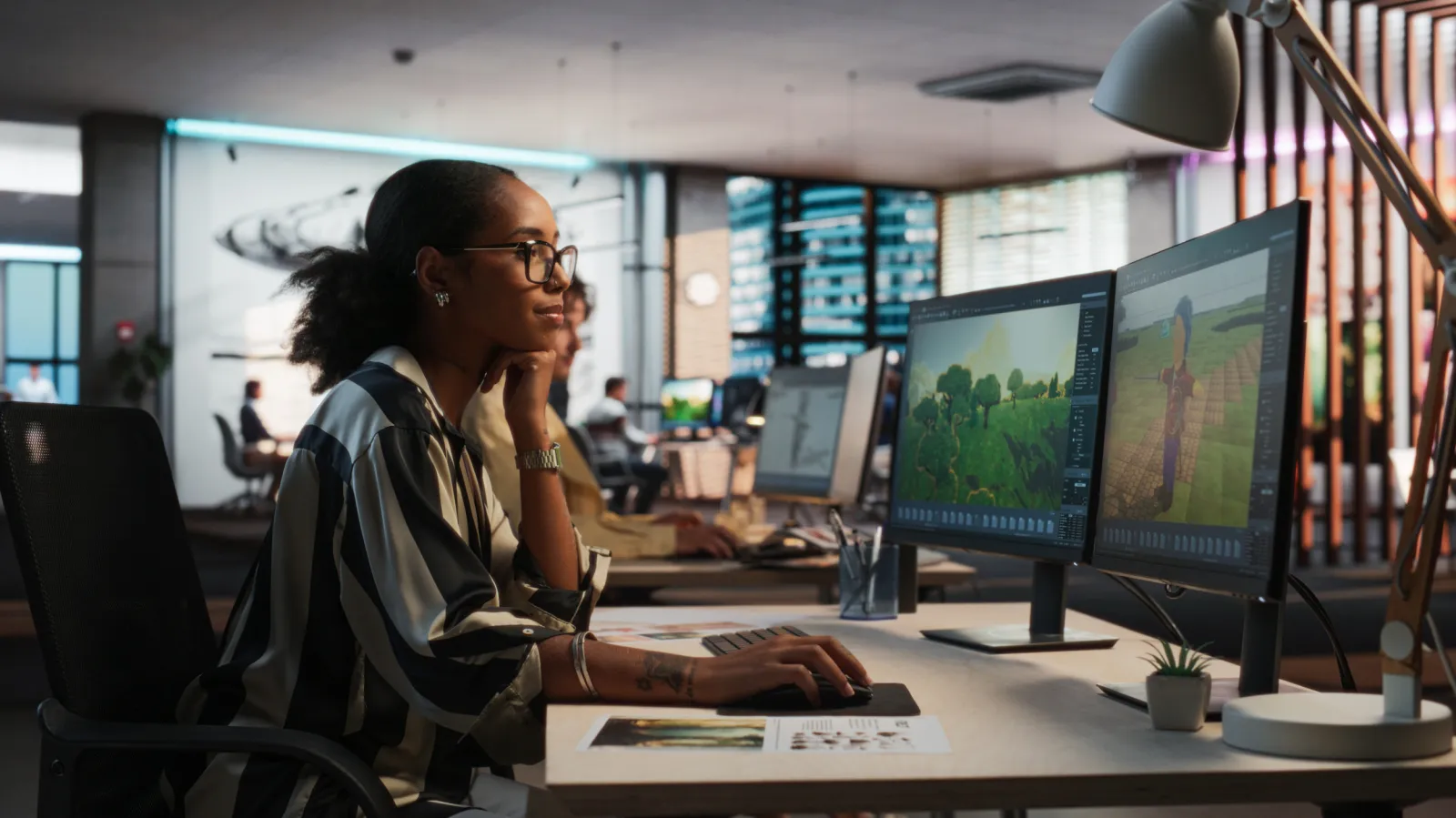
For solo designers and small studios, AI can also help fill gaps, making it easier to compete without massive teams or budgets. See what is taking place with smaller video game studios. In these cases, AI doesn’t replace creativity, it extends capacity.
Interestingly, AI has also become a teaching tool. Clients who try to design everything themselves often hit a wall. They discover that while AI can generate images, it can’t make decisions, take responsibility, or understand nuance. When things go wrong, there’s no one to call, except the designer.
The Human Difference
Ultimately, the value of an artist has never been just technical execution. It’s the ability to listen, interpret, anticipate, and take responsibility. Designers understand context, culture, and consequence in ways machines do not (and likely will never).
AI can produce visuals, but it can’t defend a design choice in a boardroom, adapt a brand across years of growth, or weigh ethical implications. It doesn’t understand what’s at stake when a design represents a person, a business, or a community.
Moving Forward Without Disappearing
The challenge facing modern graphic designers isn’t whether AI will exist (it already does). The real question is whether the industry will allow efficiency to erase expertise.
Artists and creators will need to adapt, but adaptation shouldn’t mean surrender. It means redefining value, educating clients, and insisting that creativity is not just output, but judgment, experience, and accountability.
Graphic design has survived every technological shift so far. The hope is that this one, rather than hollowing out the profession, ultimately forces a clearer recognition of what human designers have been doing all along.