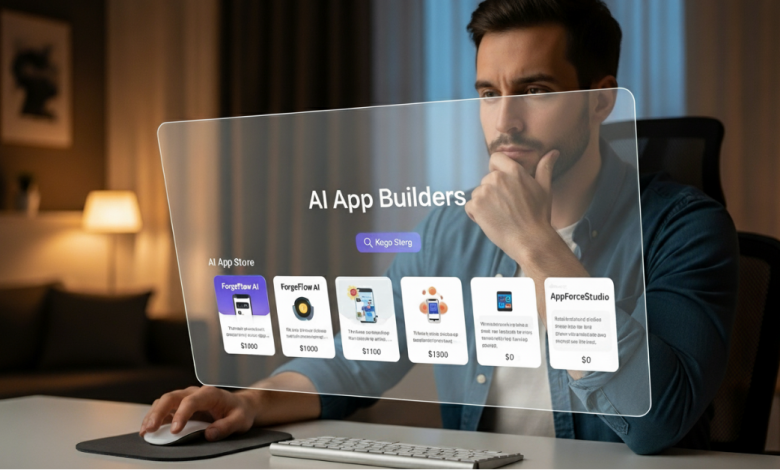
Building an app used to require a full team of developers, months of work, and a significant budget. That reality has changed quite a bit over the past few years. Today, an AI app builder can help individuals, startups, and even large businesses create functional, polished applications in a fraction of the time.
Whether you are a solo entrepreneur with a product idea or a business owner trying to automate internal workflows, the right AI app builder can make a massive difference in how fast and efficiently you bring your project to life. But with so many options available, knowing where to start and what to look for can feel overwhelming. This guide breaks it all down for you.
What to Think About Before You Start
Define What Your App Actually Needs to Do
Before you even look at a single platform, take a step back and think clearly about your project. What problem does your app solve? Who will use it? How complex does the experience need to be? The answers to these questions will shape every decision you make afterward.
A simple internal tool for tracking team tasks is very different from a customer-facing mobile app with payment processing and user authentication. Knowing where your project falls on that spectrum helps you avoid choosing a platform that is either too basic or unnecessarily complex for your needs.Educational platforms increasingly use AI app builders to create interactive quizzes, reading exercises, and English learning activities for children that improve engagement and retention.
Think About Your Technical Background
Not everyone coming to an AI app builder has a coding background, and that is completely fine. Most modern platforms are designed with non-technical users in mind. However, your level of comfort with technology still matters when choosing the right tool.
If you have some coding knowledge, you may want a platform that allows you to go deeper and customize things when needed. If you have none at all, you will want something that keeps things visual and intuitive without requiring you to touch a single line of code. Being honest with yourself about this early on will save you a lot of frustration later.
Key Features to Look For
Ease of Use and the Building Experience
The core promise of any AI app builder is that it should make development easier. That means the interface needs to be clean, the workflow should feel logical, and the learning curve should not be too steep. Look for platforms that offer a drag-and-drop builder, visual previews of your app as you work, and helpful guidance when you get stuck.
It also helps to try before you commit. Most reputable platforms offer a free trial or a free tier. Use it seriously. Build a small prototype of what you have in mind and see whether the tool actually delivers on its promise of simplicity.
Customization and Flexibility
Ease of use is important, but so is flexibility. A platform that looks simple on the surface but locks you into rigid templates can become a serious limitation as your project grows. You want to be able to customize the look and feel of your app, define your own data structure, set up conditional logic, and connect to outside services.
Ask yourself whether the platform will still meet your needs six months or a year from now. A good AI app builder gives you room to grow without forcing you to start over from scratch or migrate to a different tool entirely.
Integration With Other Tools
Very few apps live in isolation. Your application will likely need to connect with other services, whether that is a payment gateway, an email platform, a CRM, a database, or an API. Check whether the platform you are considering has native integrations for the tools you already use, and whether it supports custom API connections for anything else.
This is especially important for business applications. If your app cannot talk to your existing software stack, you will end up with a fragmented workflow that creates more problems than it solves.
Deployment and Hosting Options
Where will your app actually live once it is ready? Some platforms host your app for you, which makes deployment simple but can come with limitations around custom domains, bandwidth, and storage. Others give you more control, allowing you to export your project and host it wherever you choose.
Think about your audience too. Do you need a web app, a mobile app, or both? Some platforms specialize in one or the other, while others support multiple deployment targets from a single build.
Pricing: What You Get and What You Pay
 Understanding Different Pricing Models
Pricing in this space can be tricky to compare because platforms structure their plans very differently. Some charge based on the number of apps you can build, others by the number of users or rows of data in your database, and others by the features you can access.
Start with your current budget but also consider where your project is going. A plan that works for you today may become too limited or too expensive as your app scales. Look for transparent pricing pages, and do not hesitate to reach out to the platform’s support team with specific questions about what is and is not included.
Free Plans and What They Actually Offer
Most platforms offer a free tier of some kind. These are useful for learning the tool and testing your concept, but they typically come with restrictions. Your app might display the platform’s branding, you might be limited to a small number of users, or certain features may be completely locked away.
That is not necessarily a deal-breaker for early-stage projects, but you should go in with clear eyes. Know what you are giving up on the free plan and make sure those limitations will not block you from building the core functionality your project needs.
Support and Long-Term Reliability
The Value of Good Documentation and Support
When things do not go as planned, and they will at some point, you need to know that help is available. Strong documentation, tutorial libraries, and an active support team can make a huge difference in your experience as a builder.
Look for platforms with up-to-date documentation, video tutorials, and a responsive support channel. Community forums and user groups are also a great sign. They indicate that real people are actively using the platform and sharing what they have learned.
Thinking About the Long Term
It is worth spending a moment on the question of longevity. Building on a platform that shuts down or gets acquired can leave you in a difficult position. While there are no guarantees in any technology space, look for signs of stability. How long has the platform been around? Does it have a clear roadmap? Is it backed by a team or organization with staying power?
Your app represents real time and investment. Choosing a reliable, established platform reduces the risk that you will have to rebuild from scratch down the road.
Conclusion
Choosing the right platform for your next project is one of the most important early decisions you will make. Take the time to understand your needs, test your top options hands-on, and evaluate each platform not just for what it offers today but for how well it can support you as your project evolves. The right choice will save you time, reduce stress, and give your project the foundation it needs to succeed.