Proprietary trading has undergone a dramatic transformation over the past decade. What was once a domain dominated by sharp-minded traders glued to multiple screens, relying on instinct and experience, has evolved into a sophisticated ecosystem where algorithms, data pipelines, and machine learning models do much of the heavy lifting. At the heart of this shift is artificial intelligence, and its influence on how trading firms operate, compete, and profit is only growing stronger.
This article breaks down exactly how AI is fueling the rise of modern prop trading, and why the firms embracing it are pulling ahead of those that have not.
1. AI-Driven Market Analysis at Unprecedented Speed
One of the most obvious advantages AI brings to prop trading is speed. Markets generate enormous volumes of data every second, price movements, order book changes, news headlines, earnings reports, social media sentiment, macroeconomic indicators. No human trader can process all of that simultaneously. AI can.
Modern prop trading firms deploy machine learning models that ingest and analyze this data in real time, identifying patterns and signals that would be invisible to the human eye. Natural Language Processing (NLP) models scan thousands of news articles and financial reports in milliseconds, extracting sentiment and flagging events that could move markets before most traders even open the headline.
This speed advantage compounds over time. Firms that react to information faster consistently capture better entry and exit points, reducing slippage and improving overall profitability. In a business where milliseconds matter, AI has essentially rewritten the rules of who can compete at the highest level.
2. Predictive Modeling and Smarter Trade Execution
Beyond speed, AI brings predictive power. Traditional quantitative strategies relied on historical data and fixed rules, if X happens, do Y. Machine learning flips this model. Instead of following predefined rules, ML models learn from historical patterns and continuously adapt as market conditions change.
Deep learning models, for instance, can identify non-linear relationships between dozens of variables that no human analyst would think to connect. Reinforcement learning, the same technology behind game-playing AI systems, is being used by cutting-edge firms to train trading agents that learn optimal execution strategies through trial and error in simulated environments.
The result is smarter trade execution. AI systems can break large orders into smaller pieces, dynamically timing each execution to minimize market impact and maximize fill quality. This is known as smart order routing, and at scale, it makes a meaningful difference to a firm’s bottom line.
3. Risk Management Gets a Machine Learning Upgrade
Risk management is where many trading operations have historically struggled. Human risk managers are prone to cognitive biases, they may hold losing positions too long, underestimate tail risks, or fail to account for correlations across a portfolio during periods of market stress.
AI changes this dynamic fundamentally. Machine learning models can monitor an entire portfolio in real time, flagging unusual exposure concentrations, detecting early warning signs of correlated drawdowns, and automatically adjusting position limits when volatility spikes. These systems operate without emotion, without fatigue, and without the blind spots that affect even the most experienced human risk managers.
Some of the best prop trading firms now use AI-driven stress testing systems that simulate thousands of market scenarios simultaneously, including rare, extreme events like flash crashes or geopolitical shocks, to understand how their portfolios would behave under pressure. This level of scenario analysis was simply not feasible before modern computing and machine learning.
4. Alternative Data: Seeing What Others Cannot
One of the most exciting frontiers in AI-powered trading is the use of alternative data. This refers to non-traditional data sources, satellite imagery, credit card transaction data, web scraping, app usage statistics, shipping data, job postings, that can provide insights into economic activity before official data is released.
Hedge funds and proprietary trading operations have been investing heavily in this space. AI is what makes it usable. Raw alternative data is messy, unstructured, and enormous in volume. Machine learning models clean, process, and extract actionable signals from this data at a scale and speed no human team could match.
A firm that knows retail foot traffic is declining at major chains before the official sales data drops has a significant edge. A firm that can analyze satellite images of oil storage facilities to gauge supply levels is trading on information others do not have. AI is the engine that turns this raw data into tradeable insight.
5. Algorithmic Strategy Development and Backtesting
Developing a trading strategy traditionally involved a researcher forming a hypothesis, writing code, running a backtest, and iterating manually. It was slow, and the search space of possible strategies was limited by human bandwidth.
AI has dramatically accelerated this process. Automated machine learning (AutoML) frameworks can now generate, test, and evaluate thousands of strategy variations in the time it would take a human to test a handful. Genetic algorithms evolve trading rules over successive generations, selecting for strategies that perform best in historical data while minimizing overfitting.
This does not mean human judgment is obsolete. The best firms combine AI-driven strategy discovery with experienced researchers who understand markets deeply enough to distinguish genuine edges from statistical noise. But the throughput of viable strategy ideas has multiplied significantly, giving AI-enabled firms a much larger pipeline of potential opportunities to deploy capital into.
6. Trader Evaluation and Talent Development
AI is not just transforming how firms trade, it is also changing how they identify and develop trading talent. Many modern prop firms have built AI-powered evaluation platforms that assess trader performance across hundreds of metrics, going far beyond simple profit and loss figures.
These systems analyze decision-making patterns, risk discipline, drawdown behavior, consistency under varying market conditions, and psychological resilience indicators. By building a detailed profile of each trader, firms can identify who has genuine edge and who is simply benefiting from favorable conditions, a distinction that is notoriously difficult to make with raw returns data alone.
This matters enormously in the context of funded trader programs, which have grown explosively in recent years. As more individuals look to access capital through these programs, the firms running them are using AI to evaluate thousands of applicants efficiently and fairly. If you are exploring opportunities in this space, understanding which platforms use rigorous, data-driven evaluation is part of identifying the best prop trading firms for your own goals.
7. High-Frequency Trading and Latency Optimization
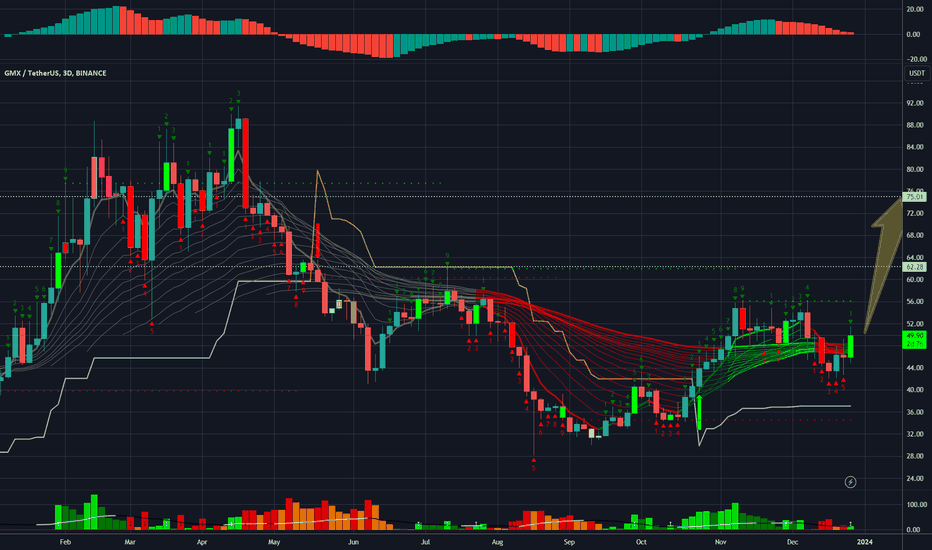
At the extreme end of AI-powered trading sits high-frequency trading, where firms compete to execute strategies in microseconds. AI plays multiple roles here, from designing the strategies themselves to optimizing the hardware and network infrastructure that executes them.
Machine learning is used to predict short-term price movements at the microstructure level, optimizing market-making strategies and arbitrage execution. AI-driven co-location strategies ensure that order flow reaches exchanges with minimal latency. Even the routing of data through fiber optic networks has been optimized using AI to shave fractions of milliseconds off execution time.
Not every firm operates in HFT, nor does every trader need to. But the infrastructure and innovation developed in HFT have trickled down into mainstream prop trading technology, raising the baseline level of sophistication across the industry.
8. The Democratization of AI Tools in Trading
Perhaps the most significant long-term development is the democratization of AI tooling. Until recently, sophisticated machine learning infrastructure was accessible only to large institutions with deep pockets and large engineering teams. That is changing rapidly.
Open-source frameworks like TensorFlow, PyTorch, and scikit-learn have put powerful ML tools in the hands of individual developers. Cloud computing platforms have eliminated the need for expensive on-premise hardware. Pre-trained financial models and data APIs have lowered the barrier to building AI-driven strategies significantly.
This democratization means competition is intensifying at every level. Smaller, more agile firms can now build and deploy AI strategies that rival those of much larger players. It also means that traders who understand AI and data science are increasingly valued across the industry, and that firms failing to invest in these capabilities risk falling behind regardless of how good their human traders are.
The Bottom Line
Artificial intelligence is not a peripheral feature of modern prop trading, it is becoming the central infrastructure around which competitive firms are built. From real-time data analysis and predictive modeling to risk management, alternative data, and trader evaluation, AI is embedded in nearly every layer of how leading operations run.
For traders and investors looking to understand where the industry is heading, the message is clear: the firms that will define the next decade of proprietary trading are those building AI into their DNA today. Whether you are a trader evaluating which platform to join or an investor tracking the evolution of financial markets, paying attention to how firms are deploying artificial intelligence is one of the most important signals you can follow.
The edge in modern markets belongs to those who combine human judgment with machine intelligence, and the gap between those who do and those who do not is widening every year.