In the final week of February 2026, the American AI industry confronted a question it had been avoiding for years: What happens when the world’s most powerful technology meets the world’s most powerful military, and the two cannot agree on the rules? The answer arrived in dramatic fashion. Anthropic refused to grant the Pentagon unrestricted access to its models, insisting on contractual prohibitions against mass domestic surveillance and fully autonomous weapons. Within hours, President Trump ordered all federal agencies to cease using Anthropic’s products, and Defense Secretary Pete Hegseth designated the company a “supply chain risk to national security.” OpenAI moved into the vacuum, announcing a deal with the Department of Defense that its CEO Sam Altman said preserved the same red lines Anthropic had demanded, while still providing military access to frontier AI on classified networks. The public narrative quickly became a morality play: Anthropic, the principled martyr; OpenAI, the opportunistic profiteer. But that framing obscures a more complicated and arguably more important strategic reality.
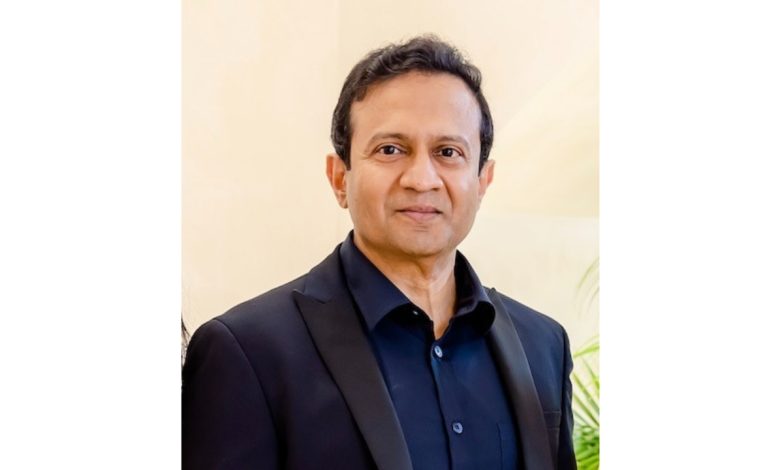
We spoke with an industry leading expert, Anil Chintapalli, to unpack what actually happened, what the deal means for AI governance, and why OpenAI’s decision to stay at the table may be the more consequential act of responsibility.
OpenAI’s Pentagon deal was immediately criticized as opportunistic. What is the most important fact people are missing about the structure of that deal?
Anil Chintapalli: The most important fact is not what the deal permits, but what it structurally prevents. OpenAI’s models are deployed exclusively through the company’s cloud infrastructure. They are not installed on edge devices — no drones, no fire-control systems, no autonomous platforms. The company retains full discretion over its safety stack, meaning it controls what the models will and will not do at the technical level. Cleared OpenAI engineers and safety researchers remain in the loop for sensitive workflows.
This is not a blank check. It is a deployment architecture designed to make misuse structurally difficult. If the Pentagon attempts to wire OpenAI’s models into an autonomous weapons system, the cloud-only design makes that functionally impossible without OpenAI’s active cooperation. If the government attempts to repurpose the tools for mass surveillance, OpenAI’s personnel embedded in the process would have visibility into those attempts, and the contract gives OpenAI the right to terminate. This is a strategy of proactive participation over reactive restriction.
Anthropic drew hard contractual lines on surveillance and autonomous weapons. Wasn’t that the right thing to do?
Anil Chintapalli: Anthropic’s position commands respect. Dario Amodei articulated a genuine concern — that AI-driven mass surveillance presents novel risks to civil liberties, and that frontier models are not yet reliable enough to power fully autonomous weapons. Both points are defensible and deserve serious engagement from policymakers.
But Anthropic’s stance also reveals a tension at the heart of principled refusal. By walking away, Anthropic lost its seat at the table. It lost visibility into how AI is being used in active military operations. It lost the ability to shape norms from the inside. And it created a vacuum that was immediately filled — not only by OpenAI, but by Elon Musk’s xAI, which agreed to deploy its models across classified systems as well.
Retired General Paul Nakasone, the former director of the National Security Agency and now an OpenAI board member, captured the practical reality at an Aspen Institute event: “We need Anthropic, we need OpenAI, we need all of our large language model companies to be partnering with our government.” His point was not about patriotism — it was about redundancy and competition. When there is only one company willing to engage, the government’s leverage over that company increases and the company’s leverage over the government diminishes. Paradoxically, Anthropic’s refusal may have weakened the very guardrails it sought to protect.
The core dispute centered on the phrase “all lawful purposes.” Why was that such a sticking point, and how did OpenAI handle it differently?
Anil Chintapalli: The Department of Defense insisted that AI companies accept the “all lawful purposes” standard. Anthropic argued the phrase was too broad — that current law has not caught up with AI’s capabilities, and that conduct technically legal today, such as purchasing Americans’ movement and browsing data from commercial brokers without a warrant, could enable surveillance incompatible with democratic values.
That is an important argument, but it suffers from a structural problem: it asks a private company to substitute its judgment for that of democratically elected officials and the courts on questions of constitutional scope. There is a difference between a company saying “we won’t build tools designed for mass surveillance” and a company saying “we, not Congress, will decide what constitutes acceptable surveillance under American law.”
OpenAI threaded this needle differently. Rather than demanding the government accept restrictions beyond what the law requires, OpenAI references specific existing legal authorities — the Fourth Amendment, the Foreign Intelligence Surveillance Act, Executive Order 12333, DoD Directive 3000.09 — and contractually binds the government to those standards even if future administrations attempt to loosen them. The contract states that the AI system “shall not be intentionally used for domestic surveillance of U.S. persons and nationals” and shall not “independently direct autonomous weapons” where policy requires human control. It is a framework anchored in the legal system Americans have built to govern their military, not in the unilateral judgment of a Silicon Valley CEO.
OpenAI also publicly called for Anthropic to be offered the same deal terms. What should we make of that?
Anil Chintapalli: That detail has received far too little attention. OpenAI explicitly asked the Pentagon to offer the same terms to all AI labs, including Anthropic. Sam Altman publicly stated that Anthropic should not be designated a supply chain risk. OpenAI’s blog post expressed hope that Anthropic and other companies would accept the deal framework.
This is not the behavior of a company seeking to exploit a rival’s misfortune. It is the behavior of a company that recognized the Anthropic-Pentagon standoff was spiraling toward a catastrophic precedent — one in which the government could effectively destroy any AI company that resisted its demands — and attempted to create an off-ramp.
Altman acknowledged the move was “definitely rushed” and that “the optics don’t look good.” He told employees: “If we are right and this does lead to a de-escalation between the DoW and the industry, we will look like geniuses. If not, we will continue to be characterized as rushed and uncareful.” The gamble needs to be understood in its full context. Had no major AI company accepted the Pentagon’s terms, the government had explicitly threatened to invoke the Defense Production Act — a wartime power that would compel AI companies to provide technology without any negotiated safeguards at all. The choice was not between a perfect contract and an imperfect one. It was between an imperfect contract with real guardrails and the possibility of no contract and no guardrails.
What is the geopolitical argument for why engagement, not abstention, is the only viable path forward?
Anil Chintapalli: The single most important factor is the inescapable reality of global competition. Advanced AI is a strategic asset. If Western democracies, guided by well-intentioned but overly restrictive policies, refuse to utilize their best AI models in their defense architecture, they will be ceding that terrain. Adversarial nations like China and Russia face no such moral qualms. They are aggressively investing in the integration of AI into every facet of their militaries, from cyberwarfare to autonomous systems.
A world where authoritarian states possess vastly superior, unrestricted AI capabilities is a scenario for a global security catastrophe. The vacuum of a purely restrictive policy would not be filled with peace, but with a more dangerous and unstable arms race of autonomy. OpenAI is not creating terminators. It is providing intelligence for cybersecurity defenses, logistics management, medical analysis, and intelligence processing. The choice is not between safe AI and dangerous military AI, but between US-developed, safety-conscious systems being used by responsible actors versus foreign, unrestricted, and likely less safe systems dominating the global arena.
What is the broader historical lesson here, and how do you ultimately assess what each company got right and wrong?
Anil Chintapalli: History suggests that engagement, while messier, tends to produce better outcomes. The defense industrial base that built America’s nuclear arsenal also produced the norms and institutions — arms control treaties, civilian oversight, the laws of armed conflict — that have kept those weapons from being used since 1945. Those norms were not established by companies that refused to participate. They were built by people who stayed in the room.
Anthropic’s instinct to draw bright lines around mass surveillance and autonomous weapons is correct. But bright lines on paper are worth less than structural controls in practice. OpenAI’s cloud-only deployment, in-the-loop personnel, retained safety stack, and contractual termination rights are not guarantees — nothing is. But they are the kinds of practical, enforceable mechanisms that can evolve into genuine governance norms as the technology matures.
The applause for Anthropic’s refusal is understandable. It is always easier to cheer the company that says no. But in a world where AI will be used for defense whether Silicon Valley likes it or not, the harder and more important question is not whether to participate, but how to participate responsibly. On that question, OpenAI’s answer — imperfect, rushed, politically costly — deserves more credit than it has received. In the new reality of AI-enabled statecraft, engagement is the only viable path forward.
The OpenAI-Anthropic split may prove to be the most consequential corporate divergence in the brief history of the AI industry. What it reveals is not who was right and who was wrong, but the two available models for governing AI in national security: engagement with imperfect guardrails, or refusal with no guardrails at all. Anthropic’s focus on pure-form theoretical safety provides an essential counterweight. But in a world of complex realpolitik and immediate national security challenges, it is OpenAI’s pragmatic, engaged approach that offers the only sound blueprint for a secure future. By stepping into the fray, OpenAI is not compromising its ethics — it is ensuring that its technology is part of a global architecture that prioritizes responsible governance and the security of democratic ideals.
About Anil Chintapalli
Forbes Business Council member Anil Chintapalli has spent his career at the crossroads of finance, technology, and business transformation, shaping investments that deliver both strong financial returns and meaningful social impact. With three decades of leadership experience, he now oversees a portfolio of investment platforms aimed not just at delivering returns but at influencing the future of business and society.
Anil, as Managing Partner of Human Capital Development, Senior Advisor to McKinsey & Co, and a global technology and real-estate investor, has built a career that balances substantial financial returns with positive societal and environmental impact. With deep experience in both technology and finance, he is redefining what it means to be an investor in today’s rapidly evolving market.