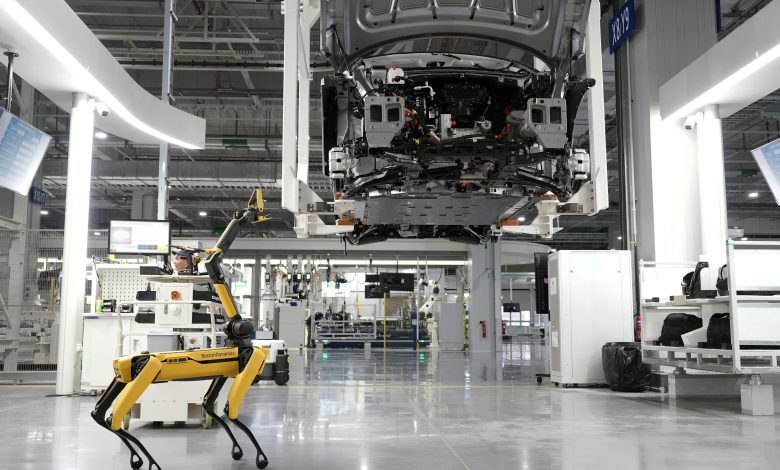
The global manufacturing sector is undergoing a profound transformation, driven by the rapid evolution of artificial intelligence. For years, industrial facilities have relied on connected sensors and data dashboards to monitor operations, providing human operators with the insights needed to make informed decisions. However, the paradigm is shifting. The next wave of Manufacturing AI solutions is moving beyond mere observation and predictive analytics, ushering in an era of autonomous factories where intelligent systems act, adapt, and optimise in real time.
This transition from passive monitoring to active, agentic decision-making represents a fundamental change in how goods are produced. With the global industrial AI market projected to grow from $43.6 billion in 2024 to $153.9 billion by 2030, according to IoT Analytics, the integration of advanced machine learning, computer vision, and autonomous agents is no longer a futuristic concept – it is a present-day operational imperative.
The Evolution of Industrial Intelligence
The journey toward the autonomous factory has progressed through three distinct phases: connectivity, predictive analytics, and agentic operations. Understanding this progression is essential for manufacturers aiming to remain competitive in an increasingly automated landscape.
- Phase 1: Connectivity and Dashboards (Industry 4.0) Factories instrumented with Industrial Internet of Things (IIoT) sensors and supervisory control and data acquisition (SCADA) systems created a wealth of operational data. This data, visualised on complex dashboards, provided unprecedented visibility into the manufacturing process, though the burden of interpretation and action remained squarely on human operators.
- Phase 2: Predictive Analytics Systems applying machine learning algorithms to historical and real-time data forecast equipment failures before they occur. Predictive maintenance became a cornerstone of smart manufacturing, delivering documented maintenance cost reductions of 18 to 25% and cutting unplanned downtime by 30 to 50%, according to McKinsey benchmarks. For instance, automotive manufacturer Renault reported €270 million in savings on energy and maintenance in a single year by deploying predictive maintenance AI tools.
- Phase 3: Agentic AI and Autonomous Operations Agentic AI systems execute entire workflows by continuously monitoring production parameters, identifying inefficiencies, and fine-tuning operations without human intervention. They do not just flag potential issues; they learn from them and autonomously implement corrective actions.
Core Technologies Powering the Autonomous Factory
The realisation of autonomous factories relies on the convergence of digital twins, advanced computer vision, and edge AI. Each technology plays a critical role in enabling self-optimising operations.
Digital Twins and Real-Time Simulation
Digital twins serve as the foundational testing ground for AI agents, allowing manufacturers to simulate production workflows in a 3D virtual world before physical implementation. A digital twin is a virtual, real-time replica of a physical asset, process, or entire production environment. By integrating building, equipment, logistics, and vehicle data, manufacturers create highly accurate models of their operations.
When paired with agentic AI, digital twins become dynamic ecosystems. The AI agents feed real-time data into the twin, while the twin validates the AI’s proposed strategies, ensuring that only the most effective and safe optimisations deploy to the physical factory floor. This symbiotic relationship accelerates the optimisation process and significantly reduces the risks associated with operational changes. Research from SoftServe indicates that simulation and digital twins lower commissioning time by 30 to 50% and accelerate decisions for modern manufacturing.
Advanced Computer Vision and Automated Inspection
Automated optical inspection powered by advanced computer vision detects microscopic defects in real time with astonishing accuracy, currently standing as the leading use case for industrial AI at approximately 11% of the market. Quality control has historically been a labour-intensive process prone to human error. Utilising high-definition video feeds and deep learning algorithms, these systems eliminate that vulnerability.
Modern AI-enabled defect detection systems routinely achieve over 95% accuracy. For example, electronics manufacturer Pegatron built an automated optical inspection tool using NVIDIA technologies that improved defect detection accuracy to a reported 99.8%, alongside a fourfold improvement in throughput. These systems not only identify flaws but also autonomously adjust upstream production parameters to prevent the recurrence of the defect, thereby closing the quality control loop without human input.
Edge AI and Localised Processing
Edge AI solves the challenges of latency, bandwidth costs, and data security by processing data locally, directly on the machines or production lines where it is generated. As factories generate increasingly massive volumes of data, relying solely on cloud computing introduces significant bottlenecks.
The maturation of dedicated edge computing hardware enables the execution of complex AI workloads, such as real-time video analytics and sensor fusion, directly on-device. This localised processing ensures that autonomous systems react to environmental changes or equipment anomalies in milliseconds, a critical requirement for maintaining safety and efficiency in high-speed manufacturing environments. Edge AI deployments deliver 15 to 45 millisecond response times, eliminating the 100 to 200 millisecond latency of cloud round-trips.
Addressing Common Questions: People Also Asked (PAA)
As the industry transitions toward these advanced systems, several common questions arise regarding the nature and impact of autonomous factories.
- What is an autonomous factory? An autonomous factory is a highly advanced manufacturing facility designed to operate with minimal human intervention. It relies on a network of intelligent systems, including agentic AI, robotics, and edge computing, to autonomously plan, execute, and optimise production processes in real time.
- What is the difference between a smart factory and an autonomous factory? A smart factory uses connected sensors and AI to gather data and provide predictive insights to human operators, who then make the final decisions. An autonomous factory takes this a step further by empowering AI agents to make and execute those decisions independently, closing the loop from insight to action.
- How does AI improve manufacturing? AI improves manufacturing by increasing operational efficiency, reducing unplanned downtime through predictive maintenance, enhancing product quality via automated inspection, and enabling dynamic supply chain adjustments. It transforms reactive processes into proactive, self-optimising systems.
The Strategic Imperative of Agentic AI
Agentic AI enables dynamic, data-driven decision-making by replacing static rules with autonomous agents that adapt to disruptions on the fly. The shift towards autonomous factories is not merely a technological upgrade; it is a strategic necessity for maintaining competitiveness in a volatile global market.
For example, in supply chain and logistics management, AI agents act as a network of intelligent collaborators. Instead of relying on scheduled replenishments, these agents autonomously re-route shipments during disruptions, re-balance stock across regions, and negotiate supplier terms. According to WNS, agentic AI autonomously scans global supplier databases, assesses compliance against tender specifications, and initiates preliminary engagement, significantly reducing cycle times.
Furthermore, the integration of generative AI copilots into industrial software transforms how engineers interact with complex systems. These AI assistants autonomously execute engineering tasks, generate code for programmable logic controllers (PLCs), and modify project elements based on natural language instructions. By delegating repetitive tasks to AI, human engineers are freed to focus on high-value innovation and strategic planning.
Overcoming the Barriers to Adoption
The fragmentation of legacy data systems stands as the most significant barrier to autonomous operations, requiring manufacturers to modernise their data architectures. AI solutions require structured, high-context, and real-time data to function effectively. Consequently, manufacturers must break down silos and implement unified data lakes or industrial DataOps platforms to ensure consistent data lineage and shared context.
Additionally, the human element remains paramount. The rise of the autonomous factory does not spell the end of the human worker; rather, it necessitates a shift in skill sets. According to a 2025 survey by Rootstock Software, 45% of manufacturers cite a lack of internal expertise as the top barrier to AI adoption. Leading manufacturers heavily invest in training and upskilling their workforces, empowering employees to develop machine learning models, manage AI systems, and collaborate effectively with their digital counterparts. The factory of the future is one where AI augments human expertise, creating a safer, more productive, and highly resilient manufacturing ecosystem.
The Mandate for Manufacturers
The next wave of industrial AI fundamentally redefines the manufacturing landscape by moving from passive dashboards to autonomous, agentic systems. Factories are becoming self-aware, self-correcting entities capable of unprecedented efficiency and agility. As technologies like digital twins, edge computing, and advanced computer vision continue to mature, the autonomous factory will transition from a competitive advantage to an industry standard. For manufacturers, the mandate is clear: embrace the autonomous revolution or risk being left behind in the data-driven future of production.