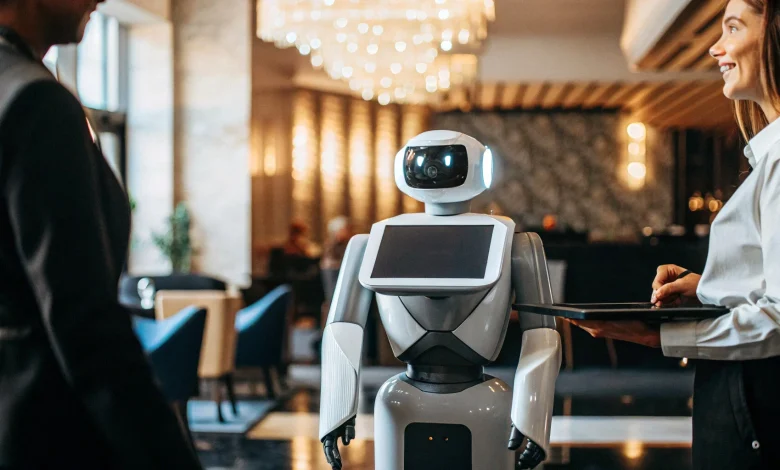
Artificial intelligence has moved from tech conferences into everyday restaurant operations. It no longer sits in the background as a novelty. It shapes purchasing decisions, menu design, staffing, marketing, pricing, and customer interaction. Many restaurant owners did not adopt AI because they wanted innovation for its own sake. They adopted it because margins are thin, labor is unpredictable, and customer expectations keep rising. AI entered the restaurant world as a survival tool, and it stayed because it delivered measurable results.
This shift did not happen overnight. It accelerated during labor shortages, delivery platform expansion, and rising food costs. Restaurants needed sharper forecasting, faster decision-making, and better data use. AI systems offered that capability. Today, even small independent operators rely on some form of machine-driven prediction or automation. The changes affect the business from early morning prep to late-night reporting.
Forecasting, Purchasing, and Labor Planning
AI changed restaurant management first, not the dining room. The back office became data-driven long before customers noticed any difference. Modern forecasting tools analyze historical sales, weather data, local events, school schedules, holidays, and even traffic patterns. Instead of ordering based on instinct, managers now receive projected sales by hour and by menu category.
Forecasting affects purchasing decisions directly. If a system predicts a 20 percent drop in foot traffic due to heavy rain, it adjusts ingredient recommendations. If a major concert is scheduled nearby, the model anticipates higher beverage sales. This reduces over-ordering and cuts waste. Food waste used to depend on manual tracking and guesswork. Now AI systems monitor ingredient usage in real time and flag anomalies. If chicken usage spikes beyond forecast, the system signals either higher demand or possible inventory shrinkage.
Labor scheduling also changed. AI tools evaluate past staffing patterns and correlate them with sales volume and service speed. Managers receive optimized schedules that reduce overstaffing during slow periods and prevent understaffing during rush hours. These systems also account for employee availability, overtime rules, and labor cost targets. Restaurants facing high turnover use AI to predict burnout risk based on hours worked and shift patterns.
Accounting processes have also become automated. AI-powered systems match invoices with purchase orders and detect discrepancies. Instead of manually reviewing stacks of supplier invoices, managers receive alerts for unusual price increases. Rising ingredient costs become visible faster, allowing quicker menu adjustments.
The result is tighter control. Restaurants operate with more precision than they did five years ago. Decisions that once relied on experience now rely on data patterns drawn from thousands of transactions.
The Menu as a Data Product
AI reshaped the menu in ways customers rarely notice. Menu engineering used to involve quarterly reviews of sales reports. Today, AI tools analyze contribution margins, sales velocity, ingredient overlap, and plate cost fluctuations continuously. A dish that sells well but yields low profit no longer hides behind popularity. Systems flag underperforming items quickly.
Dynamic pricing has entered some restaurant segments. Quick-service brands experiment with time-based pricing, increasing prices slightly during peak demand or offering targeted discounts during slow hours. Delivery platforms already adjust pricing based on demand and location. Restaurants using AI-powered POS systems can test pricing variations and measure customer sensitivity in real time.
AI also influences menu design and layout. Systems analyze ordering patterns and recommend placement strategies. Items with high margins may appear in more visible sections of digital menus. Online ordering platforms use algorithms to recommend add-ons based on previous behavior. A customer who frequently orders spicy dishes might see related items promoted first.
Review analysis tools scan thousands of customer comments. These systems detect recurring complaints about portion size, seasoning, wait times, or temperature. Instead of manually reading every review, managers receive structured feedback summaries. If multiple customers mention that a new pasta dish feels too salty, the kitchen adjusts quickly.
Virtual brands represent a more radical change. Data from delivery platforms reveals trending cuisines and flavor profiles. Entrepreneurs launch delivery-only brands based purely on search volume and local demand data. A ghost kitchen might operate three different concepts under one roof, each optimized through AI analysis of neighborhood preferences.
Creativity has not disappeared, but it now competes with analytics. Chefs still experiment, but data informs which experiments survive.
Front of House and Customer Interaction
AI transformed how restaurants interact with customers. Reservation systems use machine learning to predict no-shows and adjust seating allocation. Some systems overbook slightly during high-risk periods to offset expected cancellations. Others send automated reminders timed for maximum confirmation rates.
Chatbots handle common inquiries through websites and messaging platforms. Customers can ask about opening hours, dietary options, or reservation availability without speaking to a human. These systems operate continuously and reduce phone congestion during peak hours.
Self-order kiosks and mobile apps rely on behavioral algorithms. When customers build an order, the system suggests upgrades or add-ons based on similar customer behavior. These prompts increase average ticket size. Unlike traditional upselling scripts, AI recommendations adjust instantly based on real-time data.
Loyalty programs also became predictive. Instead of generic reward emails, AI models estimate customer lifetime value and churn probability. If a frequent diner reduces visit frequency, the system triggers targeted offers. Promotions align with personal ordering habits rather than broad demographic categories.
Some restaurants experiment with sentiment analysis from real-time feedback surveys. If post-meal feedback shows dissatisfaction, managers receive alerts before negative reviews appear online. Immediate outreach often recovers the relationship.
Customer perception varies. Some guests appreciate speed and personalization. Others prefer human interaction. Restaurants now balance automation with hospitality. Technology supports service but cannot replace warmth entirely.
Smart Kitchens and Physical Automation
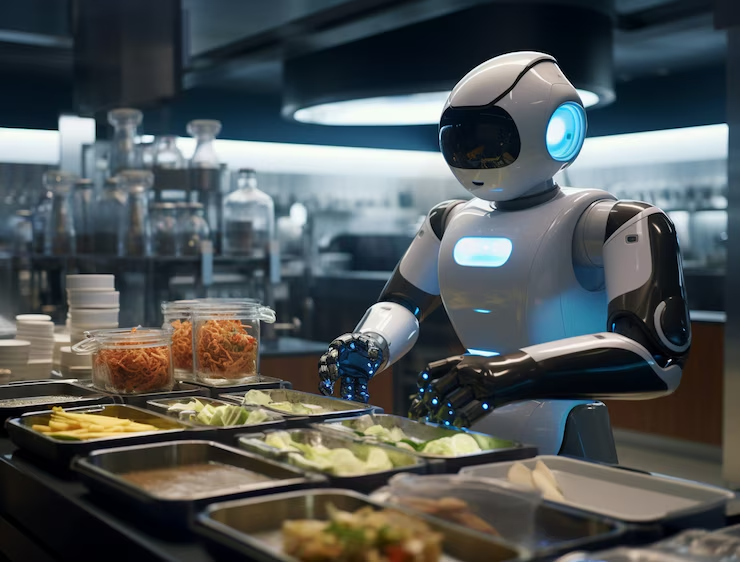
AI entered the kitchen through automation and monitoring systems. Robotic fryers, automated pizza assembly lines, and smart coffee machines operate in high-volume chains. These machines reduce variance and improve consistency. Sensors track cooking time and temperature precisely.
Computer vision systems monitor plating standards. Cameras compare dishes against reference images and flag inconsistencies. In quick-service environments, this improves brand uniformity across locations.
Smart ovens adjust heat based on food weight and humidity levels. Instead of relying on manual temperature settings, these systems adapt automatically. This reduces undercooking and waste.
Food safety monitoring became more reliable through AI-enabled sensors. Refrigeration units transmit temperature data continuously. If temperatures rise beyond safe thresholds, alerts trigger immediate action. Compliance documentation becomes digital and traceable.
Predictive maintenance systems analyze equipment performance data. They detect vibration changes or power irregularities that signal potential failure. Restaurants schedule repairs before breakdowns occur during peak service.
Automation has not eliminated kitchen staff. Instead, it shifts roles. Line cooks focus more on finishing, seasoning, and presentation while machines handle repetitive tasks. In high-end dining, automation remains limited. Precision matters, but craft remains central.
Marketing Without Guesswork
AI reshaped restaurant marketing from broad campaigns to targeted outreach. Social media advertising now relies on behavioral targeting rather than geographic assumptions. Restaurants define audience segments based on dining frequency, cuisine preference, and spending patterns.
Email marketing platforms use AI to determine optimal send times. Open rates and click behavior influence future campaigns. Instead of blasting weekly newsletters, restaurants send triggered messages tied to behavior, such as a birthday reminder or a limited-time offer on a frequently ordered dish.
AI-generated content assists smaller operators with limited marketing staff. Systems generate promotional captions, analyze engagement patterns, and suggest content themes. While not replacing creative teams, these tools reduce workload.
Review mining tools provide structured insight. If customers frequently mention slow service on weekends, managers correlate that data with staffing levels. Marketing and operations become connected through shared data.
Location analytics also influence expansion. AI models evaluate foot traffic, demographic patterns, and competitor density before a lease is signed. Opening decisions become more calculated.
Delivery Platforms and Algorithmic Visibility
AI-driven delivery platforms changed how restaurants compete. Ranking algorithms determine which restaurants appear first in search results. Restaurants now optimize menu descriptions, pricing, and fulfillment times to improve platform visibility.
Preparation time accuracy influences algorithmic ranking. If a restaurant consistently meets estimated delivery times, it earns better placement. AI systems inside the restaurant integrate with delivery dashboards to coordinate kitchen flow.
Dynamic pricing appears in delivery environments. Restaurants adjust menu prices to offset commission fees or stimulate demand during slow hours. AI tools simulate pricing outcomes before changes go live.
Virtual kitchens depend almost entirely on data. Operators analyze cuisine gaps in specific neighborhoods and launch brands quickly. Without a storefront, performance relies on algorithmic exposure.
Data as a Managerial Skill
AI adoption changed what restaurant managers need to know. Data literacy has become a core skill. Managers must interpret dashboards, understand margin reports, and question anomalies. Blind trust in algorithms can lead to poor decisions. Data requires context.
Training programs now include analytics interpretation. Operators learn how to test pricing changes, evaluate marketing ROI, and track labor efficiency. AI tools generate recommendations, but humans choose actions.
Smaller restaurants sometimes rely on third-party platforms that bundle AI into POS systems. These systems simplify insights but limit customization. Larger chains build internal analytics teams to fine-tune models.
The gap between data-savvy operators and traditional managers continues to widen. Those who understand metrics adapt faster.
Ethical and Practical Concerns
AI raises practical concerns around data privacy. Loyalty programs collect detailed purchasing behavior. Restaurants must handle that data responsibly. Regulations in some regions require clear consent and data security protocols.
Algorithmic bias also presents risk. Pricing models that vary by location or demand could unintentionally create disparities. Restaurants need oversight to avoid unfair outcomes.
Employee monitoring tools that track productivity and shift performance may affect morale. Transparency matters. Staff should understand how data is used.
Customer perception of automation varies. Some diners appreciate fast service and digital convenience. Others prefer human engagement. Restaurants must choose technology that aligns with their brand identity.
The Financial Impact
AI adoption often begins as a cost-control strategy. Reduced waste, optimized labor, and targeted marketing improve margins. Restaurants operating on thin profit percentages benefit from small efficiency gains.
Return on investment depends on scale and implementation quality. Overcomplicated systems can overwhelm small operators. Clear goals improve outcomes. Restaurants that define specific problems, such as reducing food waste by 10 percent, see measurable benefits.
Cloud-based subscription models lower entry barriers. Even single-location restaurants access advanced forecasting without building internal infrastructure.
What AI Did Not Change
AI did not replace hospitality. It did not eliminate the need for strong leadership or culinary skill. Technology supports operations but does not create atmosphere.
Guests still evaluate food quality, service attitude, and overall comfort. The arrangement of restaurant tables, the sound level, and the interaction with staff still shape the dining experience. AI can analyze feedback, but it cannot substitute genuine care.
Restaurants remain human spaces. Technology handles patterns and predictions. People handle emotions and relationships.
The New Restaurant Model
AI lowered entry barriers for entrepreneurs. Data-driven feasibility analysis allows owners to test concepts digitally before signing leases. Market demand can be simulated using delivery platform data.
Cloud kitchens operate with minimal front-of-house staff. Some concepts launch purely online and expand to physical locations after validating demand.
Investors now evaluate restaurants partly on their technology stack. Strong analytics signal operational discipline.
Risk management improved. Forecasting reduces surprise shortages. Predictive maintenance prevents emergency shutdowns. Marketing optimization stabilizes demand.
Restaurants increasingly resemble tech-enabled businesses. Food remains central, but data drives strategy.
Looking Ahead
AI development continues. Voice ordering may expand. Personalized nutrition tracking may integrate with restaurant apps. Sustainability tracking could connect ingredient sourcing with carbon footprint data.
Restaurants that adopt thoughtfully will maintain competitive advantage. Those who ignore technology may struggle with cost pressure and customer expectations.
The restaurant world did not become robotic. It became analytical. AI operates quietly behind menus, schedules, and marketing campaigns. It calculates, predicts, and suggests. Humans still cook, serve, and host.
The difference is clarity. Decisions rely less on instinct alone and more on measurable patterns. That shift defines how AI changed the restaurant world.