The world of work has changed faster than most institutions can adapt. AI now shapes everyday business decisions, while data drives strategy across industries. Yet millions of people remain locked out of these careers, not because of ability, but because of access.
That gap is why training programs focused on AI business solutions, cybersecurity, and data analytics matter more than ever.
The Knowledge House (TKH), a national nonprofit, is addressing this challenge head-on with Anna Verdiyan, Chief Growth and Strategy Officer, who describes the shift as structural rather than temporary.
“We are seeing a fundamental change in how people enter tech careers,” she said. “Traditional pathways no longer reflect workforce reality.”
One clear signal of that shift is gender participation. As of 2025, more than 60 percent of TKH participants are girls and women aged 16 and older. From the beginning, the organization designed programs that emphasize problem-solving, collaboration and business relevance. These elements resonate across genders, but they have proven especially effective in attracting women into tech.
“Starting all learners in a shared Foundations experience builds confidence early, particularly around AI and data,” Verdiyan said. “Combined with mentorship, coaching, and visible leadership, it creates an environment where women see real pathways to advancement.”
The Future of Equitable Tech Training
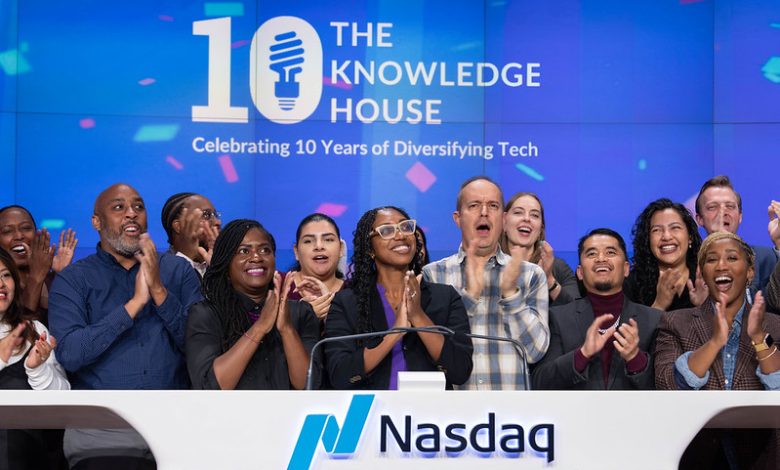
Founded in 2014, The Knowledge House focuses on closing the digital divide through free, high-quality tech training. Operating in New York City, Newark, Los Angeles, Atlanta, and Washington, D.C., the organization serves learners often overlooked by traditional tech pipelines.
Fellows commonly come from low-income communities and include first-generation college students, career switchers and working adults. Unlike traditional education models, TKH prioritizes speed-to-skill, relevance, and employability over theory and time-based credentials.
At the moment, Verdiyan’s focus is scaling the impact of the organization and its programs without losing mission. She brings more than two decades of experience as a development economist and workforce leader. Her career spans national policy efforts, nonprofit growth, and large-scale workforce initiatives.

“Programs are project-based, employer-informed and outcomes-driven,” she explained. “Learners train in data analytics, cybersecurity, and AI-powered business applications through real-world use cases, from analyzing data to automating workflows and improving decision-making.”
All adult learners begin with a shared Foundations program that builds AI literacy, data fluency, and core skills like critical thinking and communication. This creates a strong baseline across learners with different starting points and allows them to move into applied work more confidently.
Technical training is paired with career coaching, wraparound services and work-based learning. The goal is to help learners move into jobs quickly, often without a four-year degree, while supporting long-term career mobility.
Practical AI Business Solutions Training
AI is no longer limited to data science teams. It now touches marketing, operations, finance, healthcare and customer service. Still, many training programs teach AI in isolation from real business needs.
The Knowledge House takes a different approach by teaching AI as a business capability. Fellows learn how AI is used in real organizational contexts to analyze information, automate workflows, support decisions and communicate insights clearly. Training includes hands-on experience with generative AI tools, prompt engineering, data interpretation and AI-assisted analysis, alongside a strong focus on evaluating outputs and understanding limitations.
The programs also incorporate industry-recognized curricula and credentials, aligning learning with hiring expectations. This allows instructors to focus on application, judgment and problem framing rather than theory alone.
That approach resonates with learners like Davon Blanks, a 2023–2024 Web Development fellow. While he entered the program with basic programming knowledge, he struggled to explain how projects worked in accessible terms.
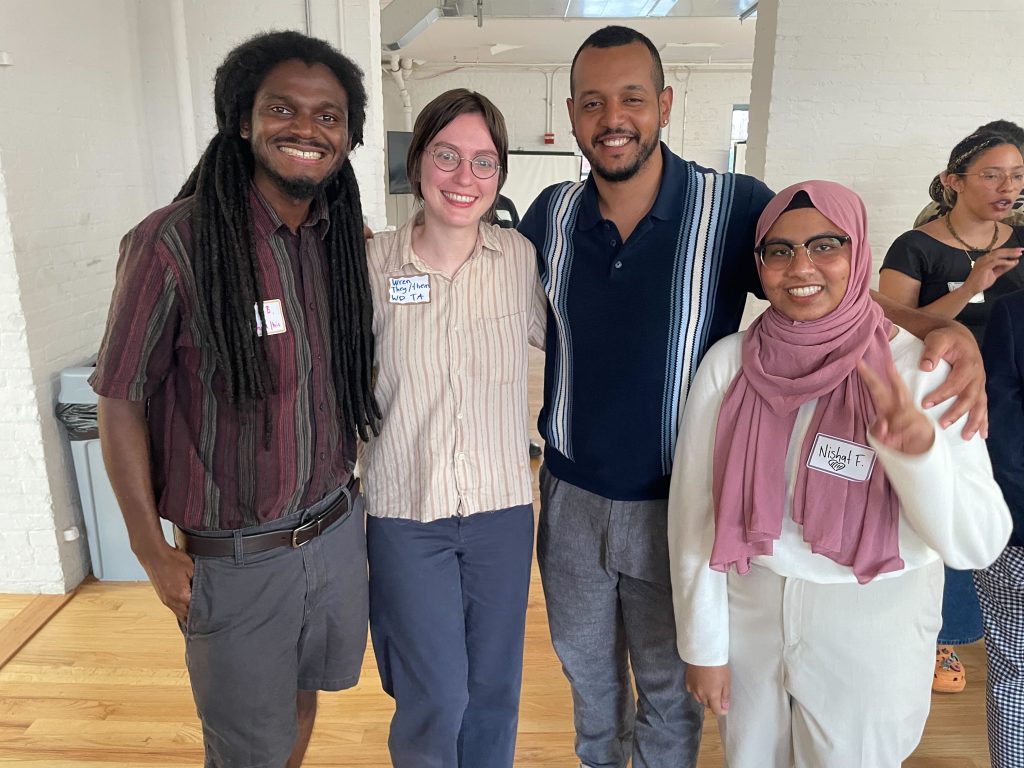
“While programming skills are essential, TKH also prepared me to communicate effectively with teammates,” Blanks said. “In tech, projects are team-based, and coding is only one part of the work. Learning how to collaborate and communicate prepared me for real-world scenarios.”
During his apprenticeship, Blanks also used AI tools like ChatGPT and Cursor to solve workplace challenges, including automating document processing under tight deadlines.
Cybersecurity and Data Analytics Training for Today’s Risks
Cybersecurity has shifted from a technical concern to a strategic risk. Breaches affect brand trust, regulatory standing, and shareholder value. TKH’s cybersecurity programs reflect this reality.
Learners gain hands-on experience in cloud-based, enterprise-style environments and learn how modern security teams operate using automation and AI-assisted workflows. Training includes incident triage, log analysis, rule development and structured reporting, skills that improve both speed and accuracy.
“Professionals entering this field need cloud fluency, AI awareness and strong communication skills alongside technical expertise,” Verdiyan said. “That combination is central to how we prepare our learners.”
Across programs, learners build AI literacy, data fluency and durable skills like critical thinking, communication and learning agility. This creates clear, practical pathways into tech that reflect how people actually enter the workforce today.
By pairing technical training with career coaching, wraparound services and work-based learning, The Knowledge House is not just teaching skills. It is creating access, mobility and a workforce ready for an AI-driven economy.