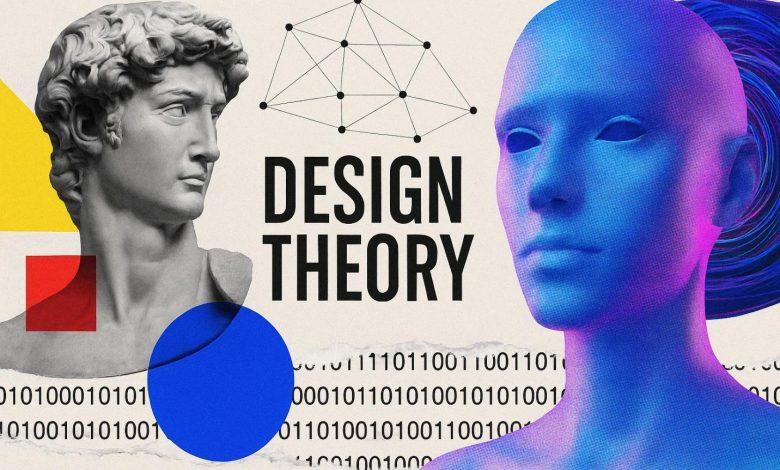
AI’s flooding your feed with visuals, but can it explain them? Design Theory keeps creatives in control, shaping meaning, ethics, and the future of visual culture with more than just prompts.
AI can now generate entire visual identities in seconds, so you might be wondering: Does Design Theory still matter? The answer is a resounding yes.
As designers navigate this new hybrid space between human creativity and machine intelligence, Design Theory remains the compass. It’s what ensures that the images flooding our screens are not just technically impressive, but meaningful, ethical, and grounded in intent.
And if you’re serious about exploring this intersection deeply, pursuing a Master’s Degree in Design and Visual Culture might be your next move. It’s not just about keeping up with AI—it’s about understanding how to shape it.
This kind of program is built for those who want to go beyond tools. It invites you to explore the deep connections between image, culture, ethics, and technology. You’ll sharpen your critical eye, develop conceptual rigor, and learn to overcome the creative tensions between human aesthetics and machine-generated content.
Whether you’re a designer, artist, or researcher, this Master’s gives you the structure to question what you’re making—and why you’re making it—while equipping you to use the latest AI tools without losing your voice. With all the generative noise going on right now, that’s how you stand out.
Why Design Theory Still Matters in an AI-Driven Visual Landscape
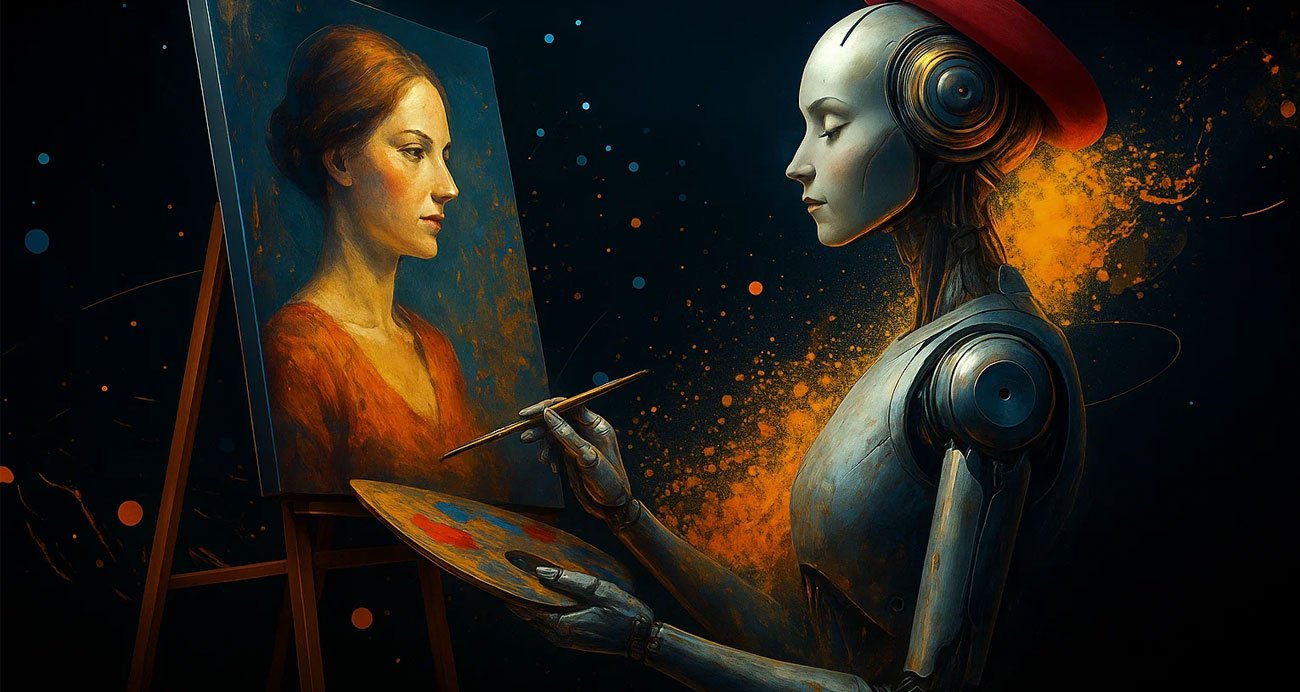
Design isn’t decoration, it’s decision-making.
Even in an age dominated by AI-generated visuals, the fundamental principles of Design Theory continue to guide every choice: composition, hierarchy, color, rhythm, and balance. Far more than aesthetic rules, these are ways of making communication clearer, more powerful, and more human.
Like it or not, ours is a saturated digital world; theory helps cut through the noise. It sharpens your visual judgment and teaches you to ask, “What am I trying to say?”, “Who am I talking to?”, and “How does this visual serve the message?”
Whether a design is hand-drawn or machine-assisted, the theory behind it is what gives it depth. And here’s the thing: AI doesn’t have intuition. It doesn’t “know” your audience or the emotional tone you’re aiming for. That’s where you come in.
How AI-Generated Visuals Challenge Traditional Principles
Frankly speaking, AI doesn’t follow the rules, and that’s both exciting and chaotic.
- Automation Meets Randomness: AI image generators like Midjourney or DALL·E don’t always respect grid systems, golden ratios, or contrast standards. Sometimes that results in fascinating compositions. Other times… not so much.
- Human vs. Algorithmic Aesthetics: There’s a growing tension between visuals made with personal touch and those created by prompts. The outputs often lack cultural context, subtlety, or narrative logic—elements that trained designers instinctively embed.
- Who Owns What? If an AI trained on thousands of copyrighted images creates a new logo—who owns it? Who signs the work? This blurs the lines of authorship and originality.
- A new visual language: AI is creating unfamiliar visual territories. The rules are still being written, but one thing is clear: if designers don’t bring theory into this space, it may become visually rich but conceptually shallow.
Integrating AI Tools into the Designer’s Theoretical Framework
AI is not the enemy. It’s a powerful tool—if used with intention. Here’s how designers can embrace AI without abandoning rigor:
- Start with the Idea, Not the Tool: Don’t let AI dictate your concept. Use it to explore variations after you’ve defined your objective and constraints.
- Use AI for Prototyping: Need to visualize a concept quickly? AI can produce early-stage sketches that fuel your creative process, freeing up time for refinement and critique.
- Critical Thinking Is Your Superpower: Knowing why a composition works (or doesn’t) is more important than generating it. Combine theory with generative tools, and you get more than outputs—you get insight.
In short: AI gives you speed. Theory gives you structure. Together? They make you unstoppable.
Ethics, Ownership, and the New Paradigms of Visual Production
You can’t talk about AI in design without talking about ethics:
- Copyright Confusion: Many AI models are trained on datasets scraped from the web. Designers are left wondering: did the AI just remix someone else’s work?
- Bias in the Machine: AI can replicate the biases of its training data, reinforcing stereotypes, excluding certain identities, or flattening cultural nuance. Design Theory teaches us to be aware of this and to design against it, not with it.
- Responsibility Matters: When a visual goes viral, who’s accountable? The designer? The prompt engineer? The company? That’s where critical and theoretical grounding becomes key. Knowing the ethics behind your tools helps you use them responsibly and lead by example.
Advanced Knowledge as a Competitive Advantage in Design
Here’s the deal: knowing how to use AI is no longer optional, but knowing why you use it in a certain way? That’s what sets you apart:
- The best designers don’t just generate images; they research, analyze, experiment, and question.
- As the profession mutates, clients and employers will value professionals who can combine strategic thinking with technical fluency.
And that’s where advanced training comes in: a postgraduate program like a Master’s Degree in Design and Visual Culture goes beyond surface-level skills. It challenges you to explore the relationship between visuals, meaning, ethics, and technology.
When you understand the theoretical paradigm, you don’t just follow trends—you help define them.
The Future of Visual Culture in the Age of Intelligent Systems
What does tomorrow look like? Probably a little weird—and very exciting!
- New Aesthetics Are Emerging: Glitch art, surreal blends, impossible textures… AI is giving birth to visual styles that defy categories.
- Human-machine Fusion: The most compelling creative work is already happening in the overlap, where human sensibility meets algorithmic possibility.
- Long-term Perspective: We’re not just talking about cool tools. We’re witnessing a transformation in how culture is produced, consumed, and interpreted. Designers who understand this shift will help shape it.
Visual culture is no longer linear or analog. It’s dynamic, hybrid, and constantly regenerating, and that’s exactly why we need designer minds who can think critically, act ethically, and push boundaries.
Final Thoughts: Design Theory Is the Anchor in a Sea of Change
Even though it may be tempting to let the machine take the wheel, there’s a teeny snag to it: tools don’t make designers. Ideas do.
Design Theory isn’t outdated; it’s more necessary than ever. It teaches you to be intentional, to question, and to give form to thought, not just to fill a screen with pixels.
So, if you’re ready to go beyond the surface, to think deeper about visuals, culture, and technology, there’s a place for that. And the journey starts with asking better questions.
Are you just using AI, or are you ready to lead the next visual revolution?