As artificial intelligence becomes more deeply embedded in the global financial system, the central issue is no longer whether machines can detect fraud or support risk decisions. The more consequential issue is whether those systems can be trusted when the stakes involve customer accounts, institutional exposure, regulatory scrutiny, and the integrity of financial infrastructure itself.
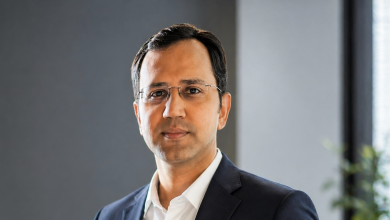
That is where Saiprakash Kodela’s work stands out.

Based in Arizona, Kodela has built his professional and research focus around one of the most important questions in modern finance: how to make AI secure enough, transparent enough, and resilient enough to operate inside critical banking environments. Working across enterprise banking infrastructure, applied artificial intelligence, and cybersecurity, he has developed a technical profile that spans real-time fraud detection, database security automation, privacy-preserving financial computing, multi-agent AI coordination, and zero-trust governance for intelligent systems. Through ongoing U.S. patent applications, a published German utility model application expected to proceed toward grant, UK Registered Designs, and peer-reviewed research, his work reflects a concentrated effort to solve a problem with growing international importance.
“In banking, intelligence alone is not enough,” Kodela says. “A system has to be fast, but it also has to be explainable, auditable, secure, and resilient. If it cannot meet that standard, it should not be making decisions that affect people’s money.”
That standard is increasingly relevant because financial fraud is evolving at extraordinary speed. Criminals now use generative AI to create synthetic identities, clone voices, generate deepfake video, craft highly convincing phishing campaigns, and automate social-engineering attacks at scale. At the same time, instant payments and real-time transfer systems have compressed the time available for review. What once could be examined over hours can now be executed in seconds.
The numbers show how serious that shift has become. UK Finance reported £1.28 billion in fraud losses in the United Kingdom in 2025. In the United States, the FBI’s 2025 Internet Crime Report documented more than US$20 billion in reported cyber-enabled crime losses. Deloitte has also projected that generative-AI-enabled email fraud losses could climb to about US$11.5 billion by 2027 under an aggressive adoption scenario. Under those conditions, banks are facing more than a fraud challenge. They are facing an architectural challenge, because older models based on static rules, batch processing, and isolated controls are increasingly inadequate in a real-time, cross-platform financial environment.
“The attacker is now automated and adaptive,” Kodela says. “The defense has to be equally adaptive, but with a higher burden. It must protect privacy, preserve evidence, and explain itself to regulators.”
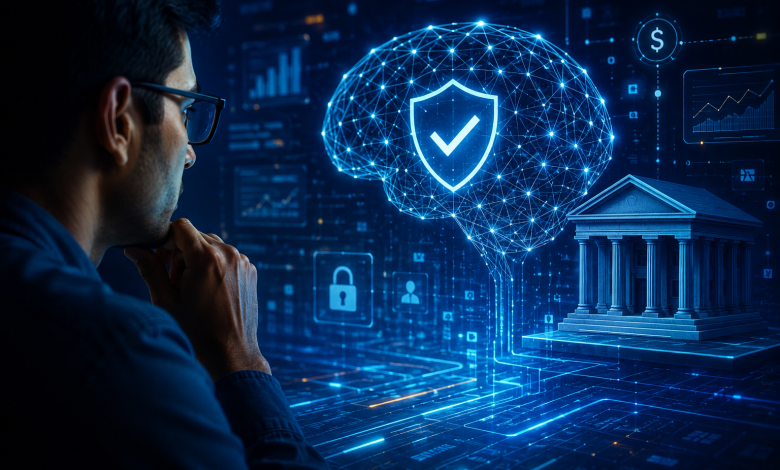
Kodela’s originality lies in treating trust as an engineering requirement rather than an abstract governance aspiration. In his view, a fraud model alone is never enough. A model may flag suspicious behavior, but the surrounding system determines whether that decision can be justified, audited, secured, and maintained under pressure. In practical terms, that means intelligent financial systems must be built to answer hard questions at every stage: why was a transaction blocked, how was customer data protected, what happens if one component is compromised, and can the institution reconstruct the logic of the decision later for internal review or regulatory examination.
“A fraud model that cannot explain itself is a liability, not an asset,” he says. “In banking, the real question is not just whether the system worked. It is whether you can trust it, audit it, and defend it.”
This perspective comes from direct work inside the infrastructure layer of financial technology. Earlier in his career, Kodela built high-volume backend systems, multithreaded transaction-processing modules, secure authentication controls, database optimization routines, and cloud-native microservices. He later contributed to major banking infrastructure efforts including database migration and security automation in enterprise environments. In one major trading-system migration, he developed data adapters that helped move legacy financial systems from Sybase to Microsoft SQL Server while validating trade data, replacing platform-specific logic with database-agnostic code, supporting concurrent trade requests safely, and load-testing the environment before production deployment. In another major effort, he developed automation for enterprise database activity monitoring, helping retrieve sensitive credentials from secure vaults at runtime, reduce hardcoded secrets, identify duplicated or misconfigured monitoring clients, repair them safely, and preserve audit trails showing what actions were healed, reset, or skipped.
That record matters because it shows the continuity between Kodela’s infrastructure experience and his present work in financial AI. He is not approaching banking intelligence from theory alone. He has worked directly on the systems institutions depend on for continuity, security, and reliability.
His intellectual-property portfolio further demonstrates the coherence of that work. One area addresses how AI agents within banking environments can cooperate without any agent being trusted automatically. This idea is reflected in his published German utility model application, Federated Multi-Agent Cooperative AI for Secure Banking Orchestration under Zero-Trust Architecture, which is expected to proceed toward grant. The significance of this invention is that it recognizes a new institutional reality: as banks adopt internal AI agents, those agents themselves become part of the attack surface. Kodela’s approach applies zero-trust principles to intelligent orchestration so that AI systems can collaborate while continuously validating one another.
A second area concerns privacy-preserving fraud detection in decentralized European banking networks. His UK Registered Design, Datenschutz-Aware Transformer-Graph Hybrid AI for Real-Time Fraud Detection in Decentralized European Banking Networks, presents a concept that combines transformer-based sequence analysis with graph-based relationship analysis while respecting the fact that customer data cannot simply be centralized without consequence. The objective is to detect cross-network fraud patterns while preserving data protection requirements.
A third area focuses on explainable fraud detection for live financial transactions. His U.S. utility patent application, Explainable Multi-Agent Fraud Detection Framework for Real-Time Financial Transactions, addresses one of the most persistent barriers to AI adoption in banking: systems that affect access to money cannot remain black boxes. They must provide reasons for their actions, support human oversight, and withstand regulatory examination.
A fourth area concerns continuous monitoring across open-banking ecosystems. His U.S. utility patent application, Continuous Fraud Monitoring Architecture for Open Banking Ecosystems, is aimed at a rapidly expanding area of risk in which data and payment access move across banks, fintech companies, and third-party providers. In this setting, fraud may not be fully visible from within one institution. It may emerge across the interactions between multiple providers. Kodela’s architecture addresses that challenge by focusing on continuous, ecosystem-level monitoring rather than isolated institutional checks.
Viewed together, these inventions illustrate a highly consistent technical direction. Kodela is not simply applying AI tools to banking in a general sense. He is building the conditions under which AI can be used responsibly in financial systems where trust, accountability, and operational continuity are essential.
The broader significance of this work is clear. Fraud prevention, banking security, and AI governance are not narrow internal priorities. They affect household financial safety, business continuity, institutional risk management, and the accountability of automated decisions. For consumers, better fraud detection can mean stopping a scam before funds leave the account. For small businesses, explainable fraud controls can reduce unnecessary payment blocks and provide a defensible path to review. For institutions, privacy-preserving AI can improve detection without centralizing highly sensitive customer data. For regulators, auditable systems create a stronger basis for oversight when automated systems influence high-stakes financial decisions.
Kodela’s work is especially timely because it matches the direction in which the financial industry is already moving. Real-time payments, open-banking interfaces, cloud-native infrastructure, autonomous AI agents, and advanced machine-learning systems are no longer speculative developments. They are active components of modern financial transformation. Yet each advancement also expands the attack surface. In that context, the crucial gap is often not whether banks can deploy intelligent models, but whether they can build the surrounding control architecture that makes those models trustworthy in production.
“The future of financial AI will not be defined only by better models,” Kodela says. “It will be defined by better controls around those models.”
His research further reinforces that public-facing impact. Work on deep learning for real-time fraud and financial risk prediction, soft computing for fraudulent transaction prediction, federated graph intelligence for cross-bank fraud detection, homomorphic encryption with federated deep reinforcement learning, and agentic self-healing frameworks for database security all point toward the same aim: enabling intelligent automation in finance without sacrificing trust. Rather than scattering across unrelated topics, his research and invention record show a stable and focused effort to address one of the defining technical problems of contemporary banking.
The importance of that focus is easiest to see through practical examples. A retiree who receives a voice-cloned call requesting an urgent transfer needs a system that can recognize abnormal behavior before money disappears. A small business making a legitimate but unusually large supplier payment needs a system that can flag risk without blindly freezing the transaction. A customer in Europe wants fraud protection without surrendering personal privacy. A bank whose monitoring system develops a blind spot because of misconfiguration needs security automation that can identify and repair the problem before it becomes exploitable. These scenarios illustrate why trustworthy financial AI is not about novelty. It is about protecting people and institutions under real operating conditions.
Kodela’s influence also extends beyond his own technical systems. He serves as an editorial board member for an IGI Global edited volume and has been invited to deliver a keynote at the 2026 International Conference on Big Data, Machine Learning and their Applications. These roles place him in a broader professional conversation about how intelligent systems should be built, governed, and trusted. In an area where standards are still taking shape, that participation carries weight.
As a technologist of Indian origin working on financial-security challenges across American, German, and British contexts, Kodela also reflects the global nature of modern banking infrastructure. Financial systems are interconnected, and so are the threats that target them. Solutions that can preserve trust across those interconnected systems are likely to become increasingly important as AI takes on a greater role in decisions involving money, identity, access, and risk.
“What matters is not how a fraud system looks in a demonstration,” Kodela says. “What matters is whether it still protects people, explains itself, and holds up against attack after months in production.”
That principle defines why his work is drawing attention. Saiprakash Kodela is not merely developing AI applications for finance. He is helping shape the engineering standards that may determine whether financial AI can be trusted at scale.