We are currently witnessing the rapid rise of the “Smart Office.”
IoT sensors now monitor air quality in real-time. Predictive algorithms analyze foot traffic to optimize HVAC systems. AI-driven security cameras can identify slip-and-fall hazards before a human manager even pours their morning coffee.
But in our rush to automate safety, we face a critical paradox: AI can predict an emergency, but it cannot (yet) physically intervene.
An algorithm can detect that an employee’s heart rate has spiked or that they have collapsed in the server room. It can even automatically dial emergency services. But it cannot perform chest compressions. It cannot apply pressure to a wound. It cannot use an EpiPen.
For tech companies and forward-thinking enterprises, the future of safety isn’t just about better software; it’s about better “human hardware.” Here is why the next phase of corporate resilience combines predictive AI with rigorous physical training.
- The “Human-in-the-Loop” Safety Model
In AI development, we talk about “Human-in-the-loop” (HITL) ensuring that models remain accurate and ethical. The same logic applies to workplace safety.
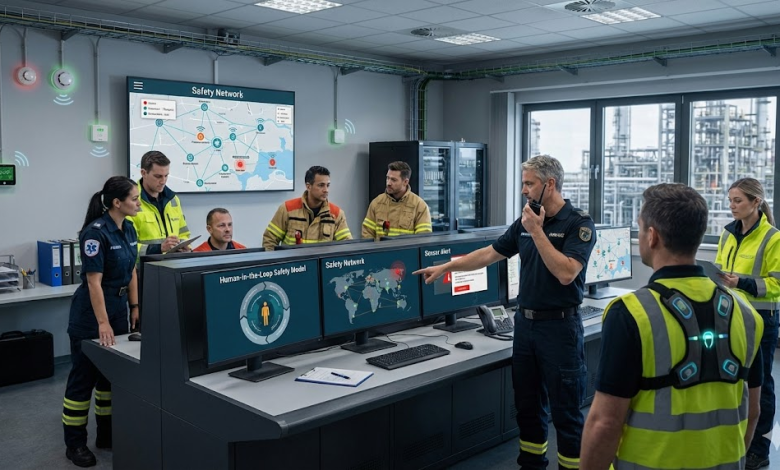
Smart building technology acts as the central nervous system—sensing, processing, and alerting. The employees are the hands. Without a workforce trained in immediate response, the data collected by your smart office is useless in a life-or-death scenario.
Tech leaders are realizing that corporate first aid training is the necessary counterpart to their digital investments. It ensures that when the “alert” goes off, the response is immediate, competent, and effective.
- Data-Driven Compliance Management
One area where AI is revolutionizing safety is in compliance tracking. Large organizations are moving away from spreadsheets to AI-driven HR platforms that predict compliance risks.
These systems analyze certification expiry dates against project roadmaps, flagging potential gaps before they become legal liabilities. For example, if a team is deploying to a remote data center, the AI can flag that 40% of that specific squad has expired CPR credentials.
This data-driven approach allows HR to book targeted training sessions exactly when and where they are needed.
- The “Tech Hub” Standard
Cities with high concentrations of technology firms are leading this hybrid approach. Ottawa, often referred to as “Silicon Valley North” due to its massive tech park in Kanata, is a prime example.
Tech giants in the region are increasingly integrating their physical safety protocols with their digital operations. They recognize that high-value talent requires high-value protection. Facilities like ottawa-first-aid-cpr-training-facility act as strategic partners for these firms, providing the practical skills that complement their high-tech environments.
- Psychological Safety in the Age of Automation
As we automate more tasks, the unique value of human employees shifts toward empathy, complex decision-making, and leadership.
Safety training reinforces this. It reminds employees that while machines can monitor the environment, people protect people. Investing in these skills fosters a culture of psychological safety, where employees feel supported not just by algorithms, but by their colleagues.
Conclusion: The Hybrid Future
The office of the future will undoubtedly be smarter. It will predict fires, detect gas leaks, and optimize our health. But until robots can sprint to a breakroom and deploy an AED, the most advanced safety device in your building will always be a well-trained human.
Don’t just upgrade your sensors. Upgrade your team.
Image Idea: or a futuristic graphic showing a “Safety Network” connecting digital sensors to human responders.
SEO Details:
- Focus Keyword: AI in Workplace Safety, Corporate Safety Strategy.
- Target Audience: CTOs, Facility Managers, HR Leaders in Tech.
- Meta Description: AI can predict emergencies, but it can’t perform CPR. Learn why the “Smart Office” of the future requires a hybrid approach of advanced tech and corporate first aid training.