It feels like every week there’s a new AI tool promising to change everything. Most of them don’t. But a handful of capabilities are genuinely shifting how people work, create, and access knowledge on a daily basis.
The two areas seeing the most practical impact right now aren’t the flashy ones grabbing headlines. They’re happening in the more grounded spaces of information retrieval and visual content creation. And for businesses and creators paying attention, the opportunities are real.
The Information Overload Problem Is Getting Worse
We’ve been hearing about “information overload” for decades, but the problem has actually accelerated. Every company now sits on a sprawling mess of documents, reports, Slack threads, support tickets, and knowledge base articles. Finding the right piece of information when you need it has become its own full-time job.
The frustrating part is that the answer usually exists somewhere. It’s buried in a PDF from six months ago or hidden in a meeting summary that nobody tagged properly. Traditional keyword search fails here because it demands that you remember exactly how something was phrased.
If you searched “customer retention strategy Q3,” you might miss the document titled “reducing churn in the third quarter” even though it’s exactly what you need. The words don’t match, so the system draws a blank.
Smarter Search Is Finally Catching Up
This is where a newer approach to information retrieval is making a noticeable difference. Instead of matching keywords character by character, semantic search understands the intent and meaning behind your query. It recognizes that “customer retention” and “reducing churn” are about the same thing, even if they share zero words in common.
The underlying technology uses language models to convert text into numerical representations that capture meaning. When you run a query, the system compares your question against those representations and returns the most relevant results regardless of phrasing.
For teams drowning in internal documentation, this is a game-changer. Product managers searching for past research, support teams looking for precedent cases, marketers hunting for campaign performance data. All of them benefit when search actually understands what they’re asking.
The practical impact shows up in saved time. Instead of spending 20 minutes digging through folders, people find what they need in seconds. Over weeks and months, that adds up to a significant productivity gain across an organization.

Why Creative Work Is Changing Just as Fast
While smarter search is transforming how we find and use existing knowledge, a parallel shift is happening on the creative side. Visual content has become essential for virtually every type of business, and the demand keeps growing.
Think about how much visual material a mid-sized company needs in a given month. Social media graphics, blog illustrations, ad creatives, pitch deck visuals, product mockups, email banners. The list goes on. Traditionally, each of those assets required either a designer’s time or a stock photo subscription that never quite had the right image.
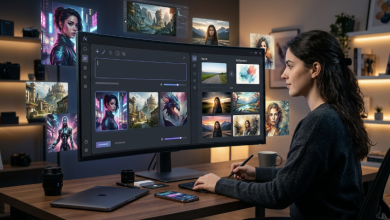
AI-powered image generation has stepped in to fill that gap in ways that would have seemed absurd just three years ago. Today, a marketer can describe an image concept in plain English and watch a polished visual appear in seconds.
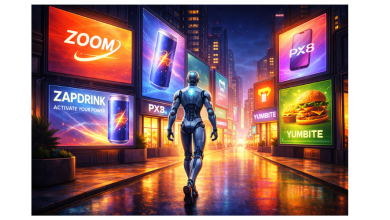
Tools like an AI art generator make it possible for anyone to create custom visuals without design experience. Need an illustration of a futuristic cityscape for a blog post? A warm, inviting product scene for an Instagram ad? A conceptual image for a presentation? These tools handle it with surprising quality and speed.
What’s most notable is how these platforms have matured. Early AI-generated images often looked uncanny or inconsistent. The current generation of tools produces work that’s clean, stylistically coherent, and genuinely usable in professional contexts.
The Creative Democratization Effect
This shift is doing more than saving time. It’s changing who gets to participate in creative production. Small businesses that could never afford a design team now have access to visuals that hold their own against larger competitors. Solo entrepreneurs can build a brand presence that looks polished and professional from day one.
For professional designers and creative directors, AI tools aren’t replacing the job. They’re changing it. The role is evolving from manual execution toward creative direction, curation, and refinement. A designer who once spent hours building assets from scratch can now generate a dozen concepts in minutes, then focus their expertise on selecting and polishing the best ones.
This mirrors a pattern we’ve seen before with other creative tools. Photoshop didn’t eliminate photography. Auto-tune didn’t kill music. These tools expanded the creative playing field while raising the bar for what audiences expect.

Where These Two Trends Intersect
Here’s what’s interesting. Better search and better creative tools aren’t just parallel developments. They’re starting to feed into each other.
Consider a marketing team planning a campaign. They use intelligent search to pull insights from previous campaign reports, customer research, and competitive analysis. Those insights inform the creative brief. Then they use AI image tools to rapidly prototype visual concepts aligned with the data.
The entire cycle, from insight to creative output, shrinks from weeks to days. In some cases, hours. That speed doesn’t just improve efficiency. It lets teams experiment more, test more ideas, and learn faster.
This combination is particularly powerful for content-heavy operations. Publishers, e-commerce brands, agencies, and SaaS companies all produce enormous volumes of both written and visual content. Having AI assist on both the research and creation sides of the workflow creates a compounding advantage.
Practical Considerations Before Diving In
None of this means you should blindly adopt every AI tool that crosses your feed. Like any technology, the value depends entirely on how thoughtfully it’s implemented.
For search tools, the biggest factor is data quality. Semantic search can only surface relevant results if your documents are reasonably organized and accessible. If your company’s knowledge lives in scattered personal drives and forgotten email threads, cleaning that up is step one.
For image generation, think about brand consistency. AI tools are great at creating one-off visuals, but maintaining a cohesive look across hundreds of assets requires some intentional guardrails. Most teams find that creating style guides and reference images for their AI tools produces much more consistent results.
There’s also the question of rights and originality. As AI-generated content becomes more common, standing out requires more than just prompting a tool. The competitive edge shifts to the quality of ideas, the specificity of creative direction, and the strategic thinking behind what gets created.
What Comes Next
The tools available today are impressive, but they’re still early in their evolution. Search systems will get better at understanding context across longer conversations and more complex queries. Image generation will improve in areas like fine detail, text rendering, and consistency across series of related images.
The businesses and creators who benefit most won’t be the ones waiting for perfection. They’ll be the ones experimenting now, learning the strengths and limitations of these tools, and building workflows around them while their competitors are still debating whether to start.
AI isn’t replacing human judgment or creativity. But it is becoming the infrastructure layer that makes both of those things more effective. Whether you’re trying to find the right insight or create the right visual, the tools have caught up to the ambition. The question is what you’ll do with them.