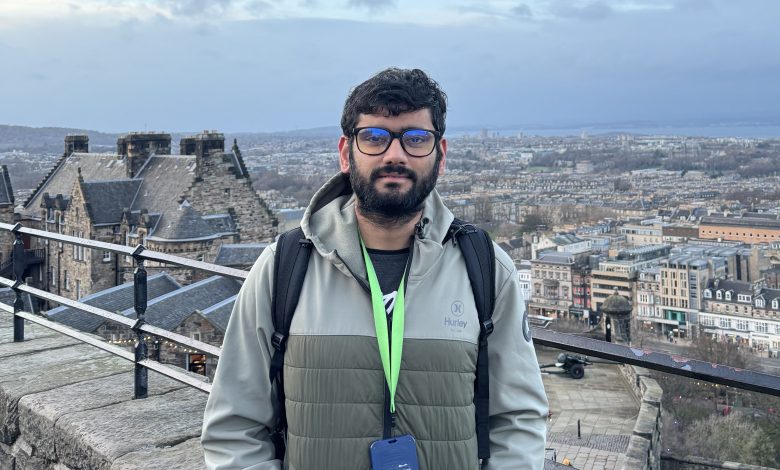
The researcher, author, and tech lead is on a mission to help engineers move beyond surface-level knowledge and understand the systems that hold the internet together.
Behind every large-scale internet application that serves millions of users, there is a hidden layer of infrastructure. Sushant Gupta works inside such hidden layers. As an established systems expert, researcher, and engineering tech lead, Gupta has spent his career navigating and optimizing massive, high-throughput infrastructure that powers modern computing applications.
His work is not the kind of software engineering most people picture. It is not merely about writing code or shipping consumer-facing features. It is about protecting, scaling, and optimizing large-scale distributed systems that must replicate data across global data centers in milliseconds, ensure high availability, and remain resilient while handling millions of concurrent user requests per second.
“At such a scale, the system does not forgive shallow understanding,” Gupta said. “If you only know the surface, sooner or later, the surface breaks.”
That belief has shaped his career. Gupta’s path has always been anchored in foundational computer science research rather than software alone. After completing his engineering degree from the Birla Institute of Technology, Mesra, he contributed to major enterprise software ecosystems at Microsoft before shifting his focus toward deep-tech infrastructure. He also spent two years at Stanford University, engaged in independent research under professors, studying the fundamentals of distributed systems. Today, he continues to work as both an industry engineer and an active researcher, with first-author work published at the USENIX Annual Technical Conference.
For Gupta, large-scale infrastructure is the ultimate proving ground where computer science theories are tested against extreme pressure. As global data volumes have multiplied exponentially over the last several years, systems that work perfectly in ordinary environments routinely collapse under massive scale.
“Large-scale infrastructure serving millions of users is a brutal testing environment,” Gupta said. “If a technology or an architecture can survive this level of pressure, it can survive almost anywhere. But the reverse is not true. What works in ordinary systems may fail immediately when the volume becomes this high.”
Navigating that pressure is what makes Gupta’s perspective highly sought after. Throughout his career, he has tackled problems that directly affect the speed, reliability, and integrity of internet-scale systems. His public research portfolio includes designing advanced distributed tracing mechanisms for interplanetary file systems (IPFS), engineering credential verification systems on permissioned blockchains, and pioneering Fast ACS—a novel framework that achieves low-latency ordered message delivery at scale.
“People see the application layer,” Gupta said. “They do not see the machinery underneath. My work lives in that machinery.”
That hidden machinery has fascinated him for years. Gupta describes computer systems as the “physics of information,” a phrase that captures his interest in how things work at the deepest level. He was never satisfied with code that simply functioned. He wanted to understand the path of a single bit across a global network and the design choices that make such movement possible.
That curiosity also shaped one of his strongest opinions about the industry. Gupta believes many people misunderstand modern software engineering because tools have become easier to use. The rise of abstractions, quick tutorials, and AI-generated summaries has created a dangerous assumption that deep systems knowledge is no longer necessary. Moreover, there is an assumption that autonomous AI agentic workflows can be used to build and manage infrastructure without human intervention.
He believes the opposite is true.
“AI has not made systems engineering less important,” Gupta said. “It has pushed systems engineering to its limits. In fact, engineers are building the high-performance infrastructure needed to make large-scale AI training and serving more efficient. This trend has transformed systems engineering, as there is an increased focus on AI-native architectures optimized for resource constraints.”
For Gupta, building systems for AI is the forefront in computer systems engineering and a compelling reason to approach the discipline with renewed rigor. He believes that engineers who want to build such critical infrastructure require first-hand academic depth. They must learn to read original research papers, not only summaries or simplified interpretations. That habit, he says, forces engineers to see how systems were designed, evaluated, challenged, and improved.
“Reading the original research is hard,” Gupta said. “It is dense. It takes time. But it changes the way you think. You stop copying answers and start understanding why the answer exists.”
That conviction led him to write The Computer System Trail, a guide inspired by the years he spent piecing together knowledge from experts across industry and academia. Gupta said the toughest challenge in his career has not only been building massive systems. It has been understanding them fully enough to improve them. No single engineer, he believes, can claim complete knowledge of a large-scale infrastructure. Even senior leaders and principal engineers may not see every detail of how such a vast system functions or how it should scale.
To move through that complexity, Gupta focused on three questions: Where are we? Why are we here? Where do we want to go next? He could not find one textbook that answered them. He had to gather insight through deep study, research forums, and conversations with dozens of experts. The Computer System Trail came from that search.
“I wanted to create the guide I wish I had when I started,” Gupta said. “Not a shortcut. A trail. Something that helps serious engineers find their way through the field with absolute clarity.”
Ultimately, Gupta’s broader legacy is about transforming computer systems education and creating stronger pathways for the next generation of researchers entering the field. He views systems as the unchanging bedrock of technology across every paradigm shift, from the early internet to blockchain to modern AI.
“The next generation needs more than just tools and frameworks,” Gupta said. “They need discipline, patience, and the confidence to go deeper than the manual.”
For Gupta, that is the entire point of the work. Massive systems may run out of sight, but they do not run by accident. They require engineers and researchers who are willing to study the hard parts, challenge conventional wisdom, and build with enough rigor to support what the digital world depends on next.
For more information, visit Sushant Gupta’s website.