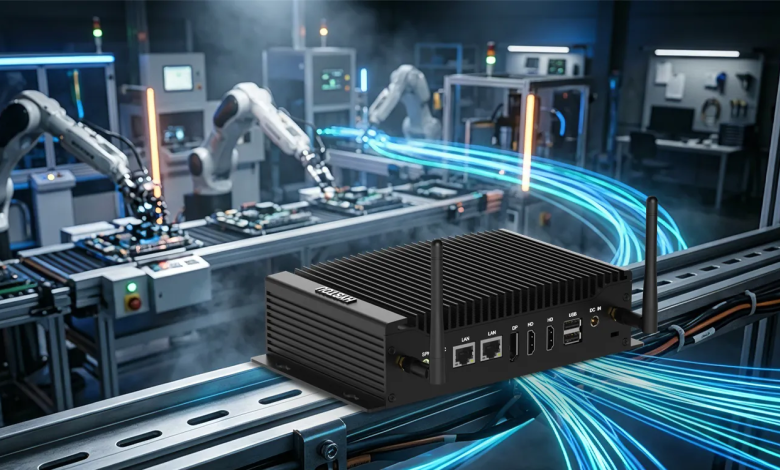
As artificial intelligence continues to reshape industries from manufacturing to healthcare, the transition from cloud-centric processing to localized intelligence is no longer a mere trend—it is a structural shift. While cloud-based AI offers scalability, it comes with inherent limitations for industrial applications: latency issues, bandwidth constraints, and strict data privacy concerns.
This is where the fanless industrial mini pc steps in to bridge the gap between heavy cloud computing and critical on-premise processing needs, ensuring the uptime of autonomous systems in harsh environments.
The Hardware Imperative for Edge AI
Running complex AI models at the edge presents unique challenges that standard desktop computers simply cannot address. Modern edge nodes act as critical gateways between Operational Technology (OT) and Information Technology (IT), requiring a delicate balance of high-performance compute and extreme environmental resilience.
1. Processing Power in a Compact Form Factor
Modern edge AI applications—whether visual inspection systems, predictive maintenance algorithms, or real-time analytics—require significant computational resources. Industrial edge devices must deliver robust inference capabilities. For example, systems equipped with Intel Core processors (such as the i7-10810U, i5-10210U, or i3-10110U) provide the necessary processing throughput. Furthermore, to reduce inference latency, these systems often support up to 64GB of DDR4 memory alongside high-speed M.2 NVMe/SATA SSDs, allowing large AI models to be loaded and executed swiftly.
2. The Engineering of Reliability: Passive Cooling
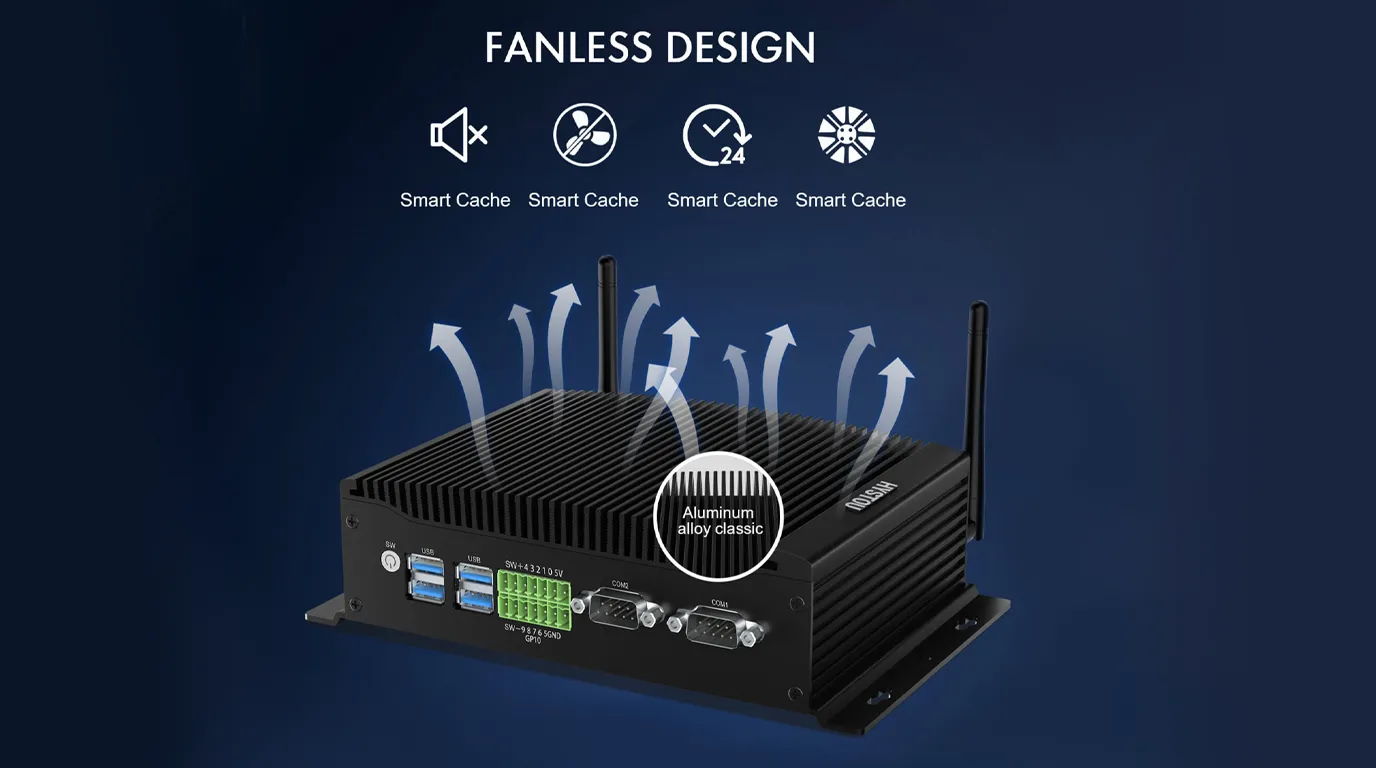
Traditional cooling systems are the primary point of failure in harsh industrial environments. Dust ingestion and mechanical wear in fan-based systems inevitably lead to thermal throttling or total hardware failure.
The solution is sophisticated passive cooling architectures. By leveraging a high-thermal-conductivity aluminum alloy chassis with integrated heat-dissipating fins, a professional industrial mini pc can maintain optimal operating temperatures without any moving parts. This allows the system to operate continuously, even when surface temperatures naturally rise under heavy AI inference loads.
Unprecedented Connectivity for Industrial Integration
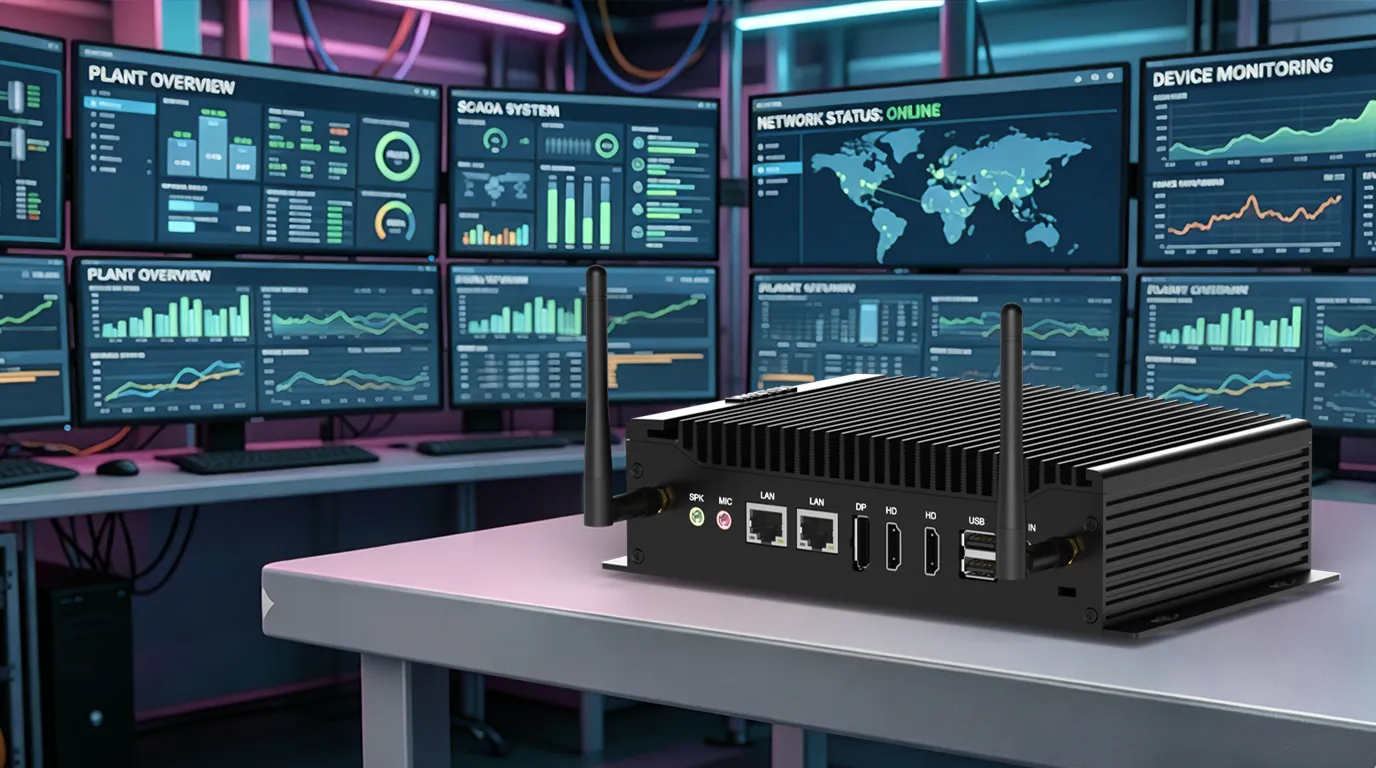
Data throughput and visualization are the twin pillars of AI-driven automation. Edge AI deployments do not exist in isolation; they must communicate seamlessly with legacy equipment, sensors, and modern enterprise systems.
- Network Isolation: Integrated dual Gigabit LAN ports (RJ45) allow for physical network isolation. This is crucial for cybersecurity protocols, where one port handles internal sensor data while the other communicates safely with the corporate WAN.
- Legacy to Future Bridging: Equipped with programmable GPIO and multiple COM ports supporting RS232/RS422/RS485 communication standards, these PCs can interface directly with traditional PLCs and modern robotic actuators.
- Complex Visualization: The demand for advanced monitoring is met by triple display support (typically via DisplayPort and dual HDMI outputs). This enables operators to visualize real-time AI analytics, SCADA controls, and system health diagnostics simultaneously, optimizing control room space.
Global Compliance: The Trust Factor in B2B Procurement
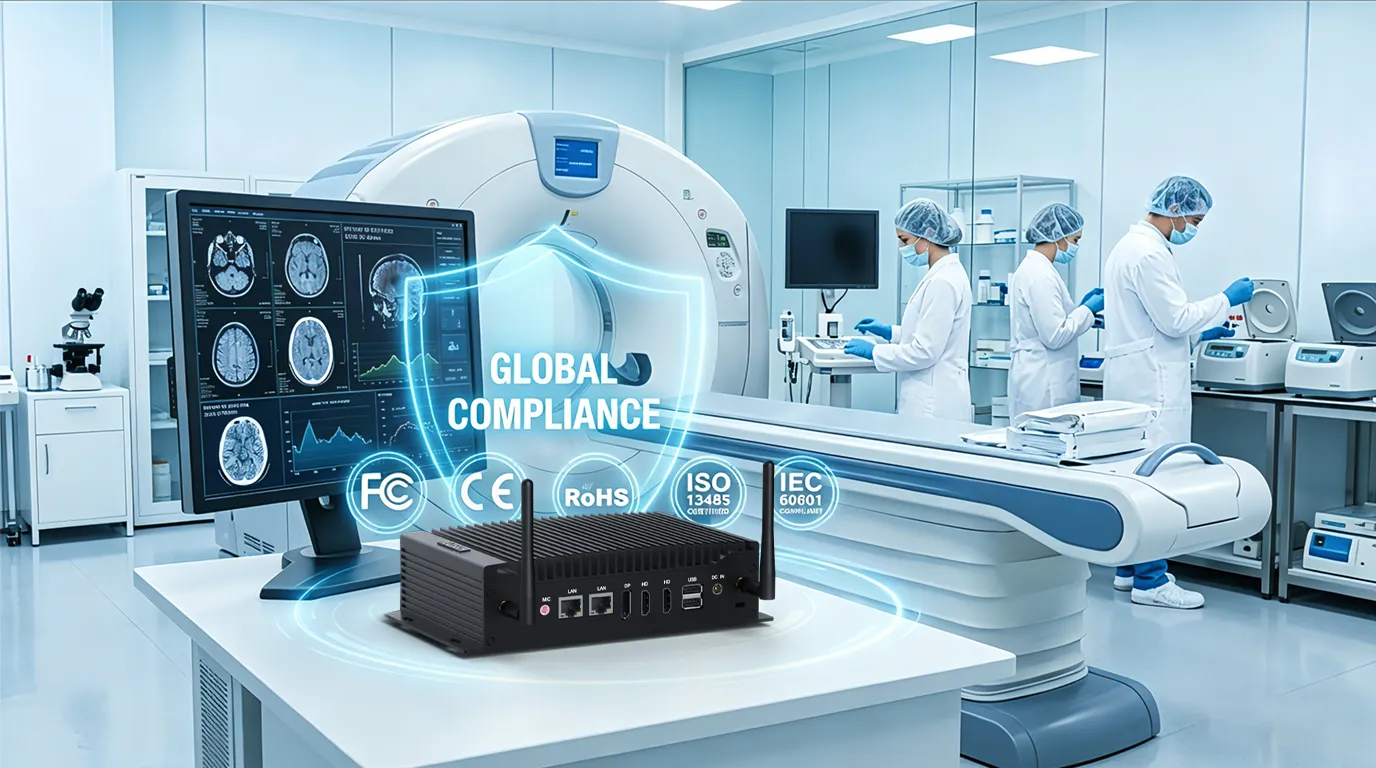
For global enterprises, hardware is only as good as its certifications. A professional-grade industrial PC must navigate a complex landscape of international standards. Documented assurance is mandatory for scale.
Key compliance markers include:
- FCC Part 15: Ensures the device does not cause or succumb to harmful electromagnetic interference in the United States.
- CE / EMC (EN 55032): Validates electromagnetic compatibility for European deployments.
- RoHS Directive: Guarantees adherence to strict environmental safety and hazardous substance restrictions.
These certifications are not merely bureaucratic hurdles; they signify the device’s ability to operate in electromagnetically dense environments—essential for medical imaging, smart factory floors, and high-tech laboratory deployments.
Conclusion
As we approach a future dominated by autonomous manufacturing and smart infrastructure, the reliability of the edge node is paramount. The shift toward specialized edge hardware is more than a technical preference; it is a strategic decision that impacts total cost of ownership, deployment scalability, and data security. By combining high-performance computing, fanless thermal reliability, and rigorous global compliance, industrial mini PCs offer a resilient foundation for the next generation of AI-driven industry.