
Let’s be completely honest for a second. If you are a digital creator, a social media manager, or a small business owner, you already know the harsh truth about video marketing: it is exhausting. You spend hours scripting, hunting for the right B-roll, staring at a complex timeline, and trying to make audio match your visuals perfectly. By the time you hit “export,” half of your day is gone.
But the creative landscape is shifting under our feet. We are no longer limited by our manual editing skills or our stock footage budgets. Artificial Intelligence has stepped in, not just as a gimmick, but as a legitimate co-pilot in the content creation process. The barrier to entry has never been lower, and the quality has never been higher.
However, a quick Google search will bombard you with hundreds of tools claiming to do the exact same thing. Which ones actually work? Which ones won’t slap a massive watermark over your face or require a degree in prompt engineering?
To save you from the trial-and-error fatigue, we have thoroughly tested the current market and narrowed it down to four standout platforms. Whether you need cinematic art, rapid social clips, or a perfectly balanced all-in-one solution, here is the ultimate breakdown of the tools you need to try this year.
1. VEME: The Frictionless Creator’s Dream
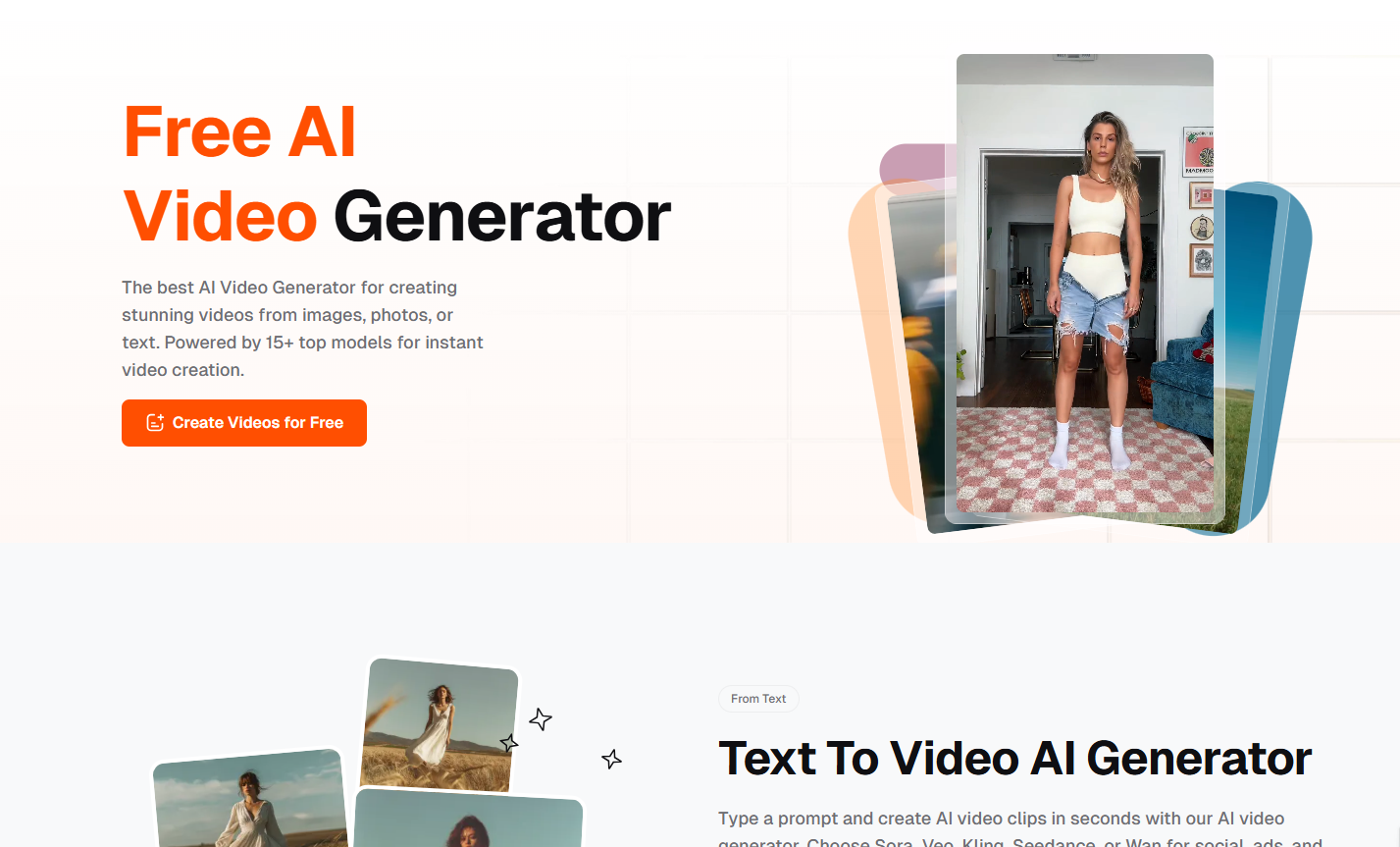 The Platform Breakdown
When you are trying to maintain a consistent posting schedule across TikTok, YouTube, and Instagram, your biggest enemy is friction. You don’t want a tool that makes you jump through hoops; you want a tool that turns your raw idea into a publish-ready asset immediately. This is exactly where VEME enters the chat.
Designed specifically with the modern creator’s workflow in mind, VEME strips away the overly complicated interfaces found in traditional editing software. It focuses on the straight line between concept and completion. If you are searching for a highly intuitive Free AI Video Generator that doesn’t compromise on final output quality, this platform feels like a breath of fresh air. It is less about tweaking a thousand micro-settings and more about getting your story told visually in minutes.
Why It Stands Out
- Intuitive Text-to-Video Workflow: You don’t need to be a prompt wizard. VEME understands conversational inputs and accurately translates your ideas into dynamic, engaging visual sequences that actually make sense contextually.
- Ready-to-Publish Aesthetics: Unlike some tools that produce weird, abstract art when you just wanted a marketing clip, VEME focuses on usable, high-retention formats. The transitions, pacing, and visual styles are algorithm-friendly right out of the box.
- Zero-Headache Interface: The dashboard is exceptionally clean. You spend your time creating, not searching for hidden menus. It is arguably the most balanced tool on this list for users who want maximum results with minimal learning curve.
2. Leonardo AI: The Cinematic Powerhouse
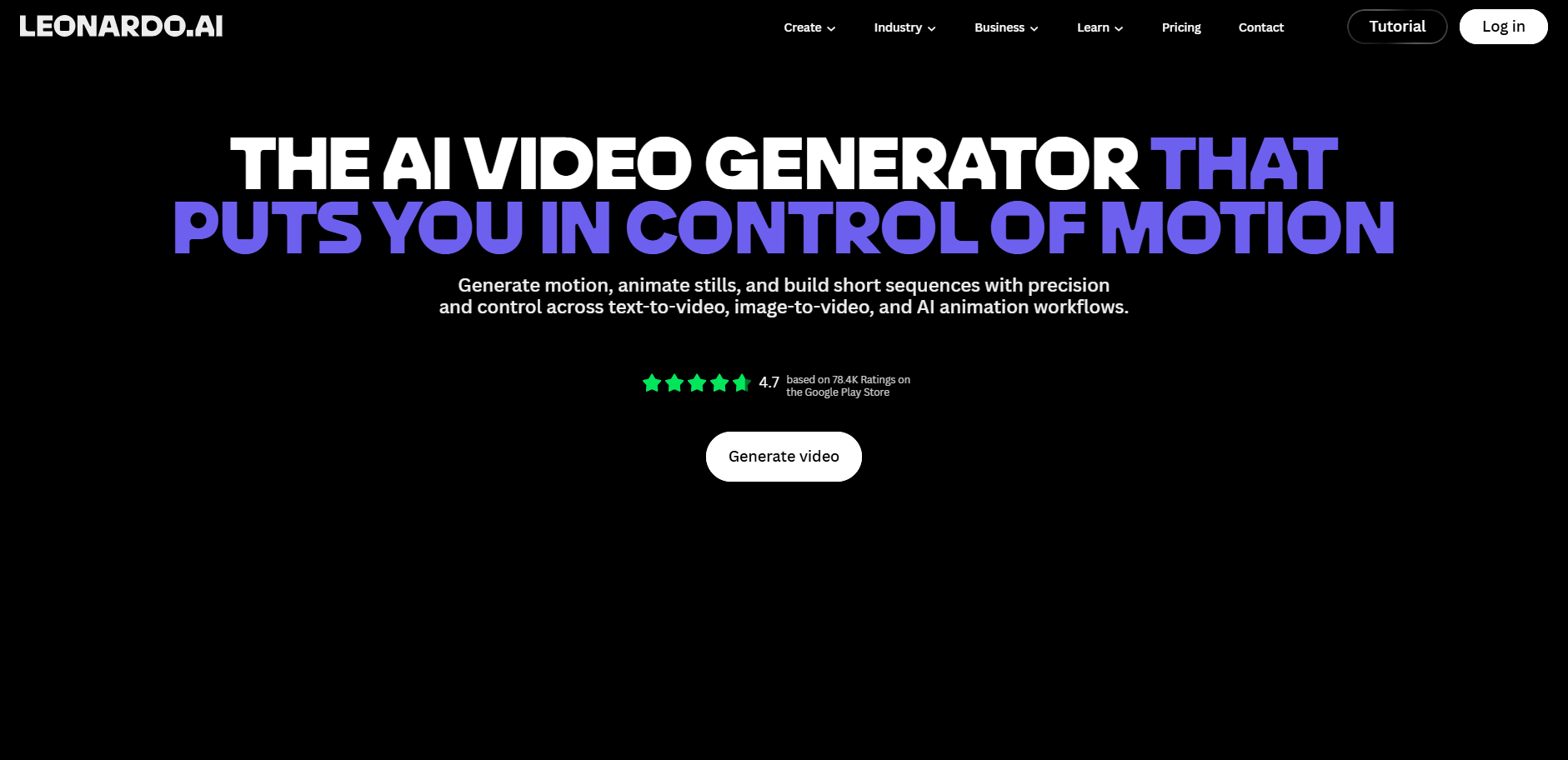 The Big Picture
If VEME is your go-to for frictionless, everyday content creation, Leonardo AI is the studio you rent when you want to make an indie sci-fi film. Originally exploding onto the scene as one of the most powerful image-generation models to rival Midjourney, Leonardo has recently stepped into the motion picture game.
This platform is heavily geared toward artistic control and hyper-stylized aesthetics. It is a fantastic free AI video generator for concept artists, game developers, or anyone whose primary goal is to drop jaws with surreal, highly detailed, or cinematic visual effects.
The Magic Inside
- Image-to-Motion Brilliance: Leonardo’s strongest suit is taking a static image (often generated within its own ecosystem) and breathing life into it. The fluid dynamics and lighting consistency it can maintain are genuinely impressive.
- Deep Style Customization: You can fine-tune the exact “vibe” of your generation, from cyberpunk neon to vintage cinematic film stock.
- The Caveat: Because it is so focused on artistic generation, it requires a bit more patience. It is brilliant for generating a breathtaking 4-second B-roll clip, but putting together a full, cohesive marketing narrative might take a bit more manual stitching compared to streamlined platforms.
3. Short.ai: The Vertical Scrolling Specialist
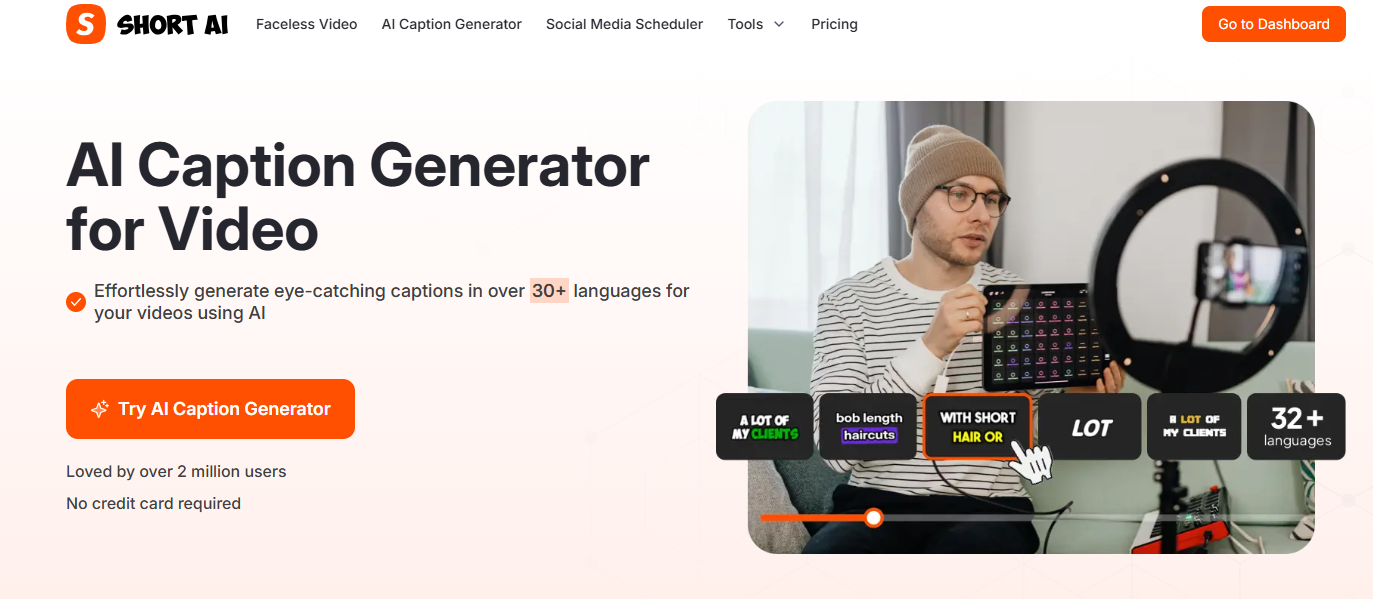 A Quick Glance
The attention span of the average internet user is shrinking by the second. If your primary battleground is TikTok, Instagram Reels, or YouTube Shorts, your content needs to be punchy, fast-paced, and perfectly formatted for a smartphone screen. Short.ai was built entirely around this specific premise.
Instead of trying to be everything for everyone, it leans heavily into short-form virality. For podcasters, streamers, or marketers looking to slice up their content, it operates as a highly specialized free AI video generator that understands the mechanics of doom-scrolling.
Core Strengths
- Automated Virality Hooks: The AI is trained to recognize the most engaging parts of a longer input (like a podcast) and automatically snip them into bite-sized pieces, complete with the trendy, colorful captions you see all over TikTok.
- Vertical-First Mindset: You never have to worry about weird cropping issues. Everything generated or edited here is optimized for the 9:16 aspect ratio from the get-go.
- The Caveat: While it dominates the short-form clipping space, its actual generative capabilities (creating visuals from thin air) are slightly secondary to its repurposing and clipping tools.
4. Veed.io: The Traditional Timeline, Upgraded
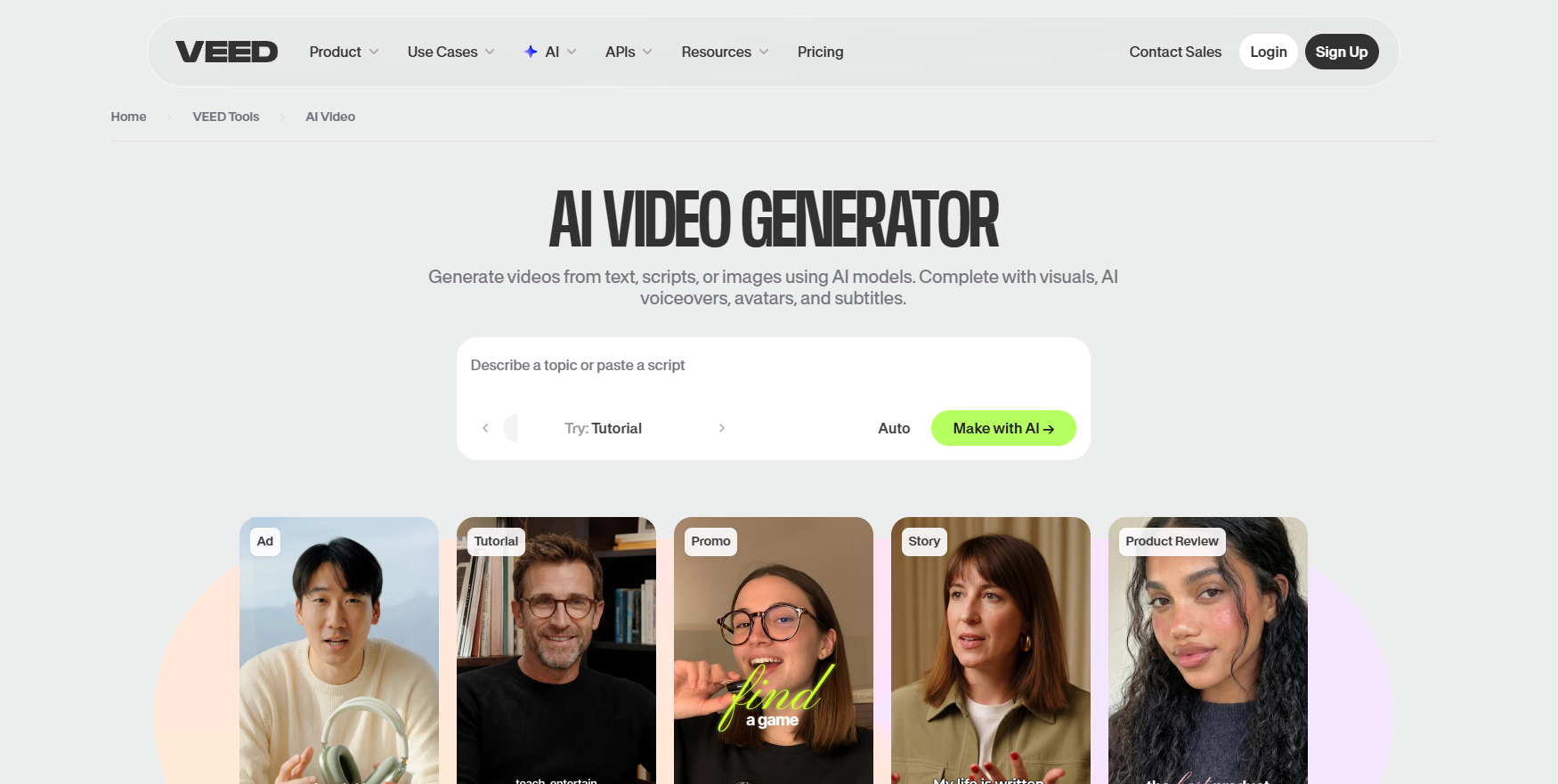 In a Nutshell
Veed.io approached the AI revolution from a different angle. They were already a massive, browser-based video editing platform long before AI became the buzzword of the year. Instead of building a generative tool from scratch, they integrated artificial intelligence directly into a traditional editing timeline.
If you are someone who still loves the granular control of moving clips around, adjusting audio tracks manually, and adding specific overlays, Veed incorporates a robust free AI video generator into its broader suite of professional tools.
Main Arsenal
- The All-in-One Dashboard: You can generate a script with AI, use their text-to-speech avatars, and then drop all of those elements onto a classic, multi-track timeline to edit just like you would in Premiere Pro or Final Cut.
- Magic Cut and Clean Audio: Beyond just generation, their AI excels at utility tasks—automatically removing silences, “ums,” and “ahs,” and stripping out background noise with a single click.
- The Caveat: Because it is packed with so many traditional editing features, the dashboard can feel a bit overwhelming for beginners. If your goal is simply to “type text and get a video fast,” navigating Veed’s comprehensive studio environment might feel a bit heavy.
Final Thoughts: Which One Should You Choose?
The beauty of 2024 is that you don’t have to settle for a one-size-fits-all solution. Your choice should dictate your specific bottleneck.
If you are an artist trying to push the boundaries of visual fidelity, spend an afternoon playing with Leonardo AI. If you have hours of podcast footage sitting on a hard drive that needs to be chopped for TikTok, Short.ai is your best friend. If you want the deep, granular control of a classic video editor infused with modern tech, Veed.io is incredibly powerful.
However, if you are looking for the sweet spot—the perfect intersection of speed, ease of use, and high-quality output—VEME is arguably the most compelling starting point. It removes the technical friction of video creation, allowing you to focus purely on your message and your audience.
Stop letting the editing process hold your ideas hostage. Pick a tool, write a prompt, and start creating today. The algorithm is waiting.