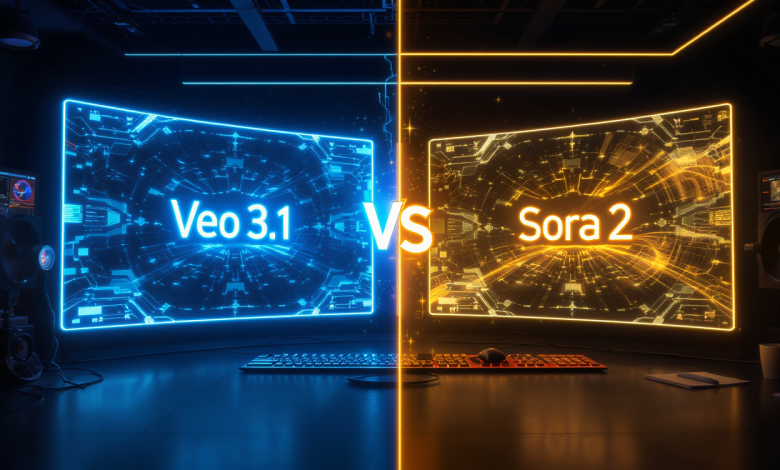
OpenAI’s Sora 2 generates cinematic motion from text prompts. Google’s Veo 3 produces video with fully synchronized dialogue and ambient audio. Kuaishou’s Kling 2.6 adds natural sound effects with precise motion control. Each model has a different strength — and in 2025, the creators getting the best results are not picking one. They are using all three.
The challenge is that accessing these models normally means managing separate platforms, separate accounts, and separate credit systems. That friction is where most creators lose time and money.
What Makes Sora 2, Veo 3, and Kling 2.6 Different
These three models represent fundamentally different approaches to AI video generation:
Sora 2 excels at cinematic storytelling. It handles complex multi-subject scenes with natural camera work and realistic physics simulation. Sora 2 Pro extends this to 25-second HD clips — long enough for complete short-form content pieces. If your priority is visual narrative quality, Sora 2 is typically the strongest choice.
Veo 3 is the only major model that generates fully synchronized audio — dialogue, music, and ambient sound — directly from a text prompt. For social media creators who need complete audiovisual content without a separate sound design step, Veo 3 eliminates an entire stage of post-production.
Kling 2.6 delivers fast output with natural sound effects and strong motion consistency. It is particularly effective for product demonstrations and action sequences where precise subject tracking matters. At lower credit costs than Sora 2 or Veo 3, Kling 2.6 also works well for rapid iteration and prompt testing.
The Multi-Model Problem Every Creator Faces
No single AI video model dominates every use case. A promotional video for Instagram might work best with Kling 2.6’s fast turnaround. A cinematic brand film might need Sora 2’s narrative depth. A TikTok explainer with voiceover might require Veo 3’s audio capabilities.
The problem is practical: each model lives on a different platform with different pricing, different interfaces, and different account requirements. Comparing outputs means re-entering the same prompt across multiple tools, tracking separate credit balances, and switching between browser tabs. For professional creators producing content daily, this workflow overhead adds up fast.
How GenMix AI Puts Every Model in One Place
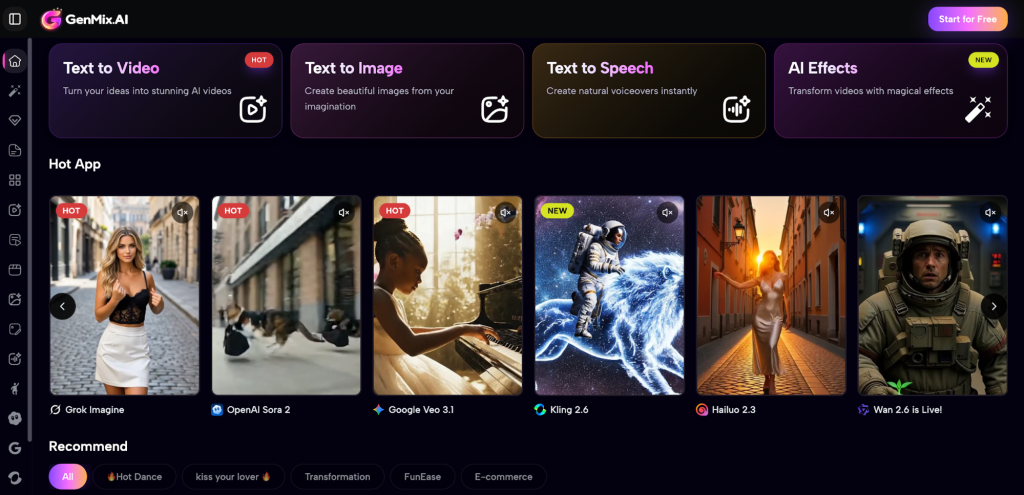
GenMix AI solves this by aggregating 20+ AI models — including Sora 2, Veo 3, and Kling 2.6 — into a single unified interface. Write your prompt once, then switch between models with one click. Your settings, generation history, and credit balance carry over between every model in the platform.
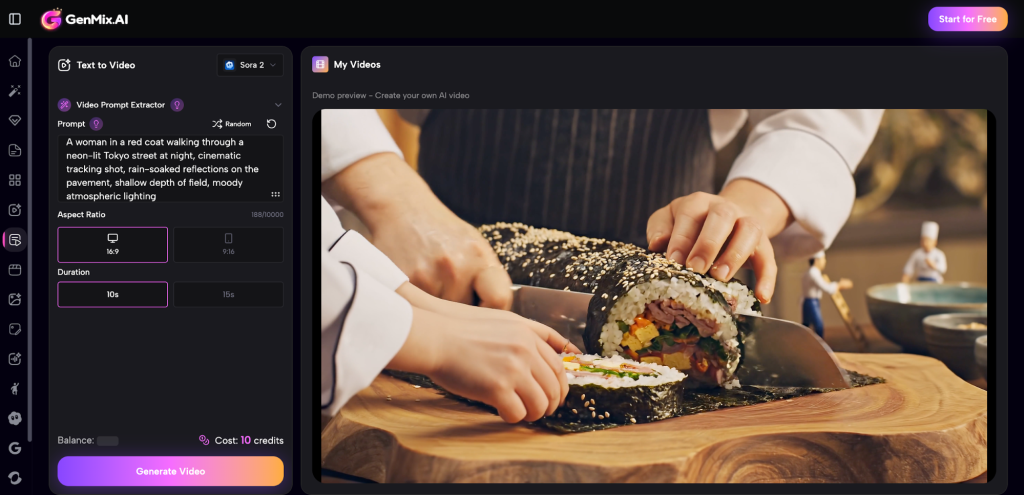
Beyond video, GenMix AI includes AI image generators (Nano Banana Pro, Flux Kontext, GPT-4o Image), text-to-speech (ElevenLabs), and creative effects like AI Dance — all under one account. This means creators can generate a source image, animate it with Sora 2 or Kling 2.6, add a voiceover, and export the final result without ever leaving the platform.
 Practical Tips for Getting Better Results from Any Model
 Practical Tips for Getting Better Results from Any Model
- Match the model to the task. Use Sora 2 when you need cinematic quality and longer duration. Choose Veo 3 when audio is essential. Pick Kling 2.6 for fast iteration or when budget matters. The right model for the job always outperforms the “best” model used generically.
- Write specific prompts. All three models respond better to detailed descriptions. Include subject, action, environment, lighting, and camera angle. “A woman walking through rain” generates generic output. “A woman in a red coat walking through a neon-lit Tokyo street at night, cinematic tracking shot, shallow depth of field” gives the AI enough context to deliver something distinctive.
- Prototype cheaply, then produce at quality. Test your prompt with a budget model first. Once the concept is right, regenerate with a premium model for the final version. This workflow — which platforms like GenMix AI make seamless — prevents wasting high-cost credits on prompt refinement.
The Bottom Line
Sora 2, Veo 3, and Kling 2.6 each bring something the others cannot match. The smartest creators in 2025 are not debating which model is best — they are using all of them, switching based on what each project demands. The real competitive advantage is not access to one model. It is having every model available when you need it.