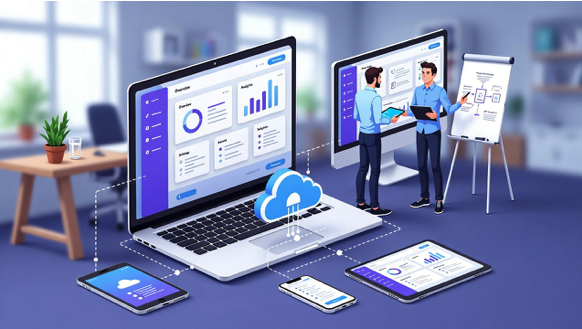
Software delivery has changed dramatically over the last decade. Businesses are moving away from traditional installed software toward cloud-based platforms that are flexible, scalable, and easier to maintain. This shift is not just a technology trend, it’s a response to how modern businesses operate and grow.
SaaS application development has become a key strategy for companies that want to build scalable software products, improve customer accessibility, and reduce infrastructure complexity. Instead of distributing software through installations and manual updates, SaaS platforms allow businesses to deliver applications through the cloud using a subscription-based model.
However, not every organization immediately recognizes when it’s the right time to make this transition to SaaS development Services. Many companies continue investing in legacy systems until maintenance costs rise, performance slows, and innovation becomes difficult.
If your business is experiencing growth challenges related to software, it may be time to consider SaaS application development.
This article explores the most important signs that indicate your business is ready to move toward a SaaS platform.
Understanding SaaS Application Development
SaaS application development refers to building cloud-based software that users can access through a web browser or internet connection. Instead of installing software locally, customers subscribe to a hosted application that is continuously updated and maintained by the provider.
This model allows businesses to deliver software more efficiently while providing customers with seamless access from any device.
Modern SaaS platforms typically rely on:
- cloud infrastructure
- multi-tenant architecture
- subscription billing systems
- automated deployment pipelines
- scalable databases
Because SaaS platforms are designed for growth, they enable businesses to support thousands or even millions of users without rebuilding their software from scratch.
This scalability is one of the main reasons SaaS product development continues to grow across industries.
Signs Your Business Is Ready for SaaS Application Development
Recognizing the right moment to transition into SaaS platform development can help businesses avoid technical debt, reduce long-term costs, and accelerate innovation.
Below are the most common indicators that your organization is ready.
Your Current Software Cannot Scale with Business Growth
One of the clearest signs is when your existing software struggles to support increasing users, data, or transactions.
Traditional software systems are often designed for a fixed capacity. As demand grows, performance issues start appearing. This can impact customer experience, employee productivity, and operational efficiency.
SaaS architecture is built specifically to handle scaling requirements. Cloud infrastructure allows resources to expand automatically as usage increases, ensuring consistent performance even during rapid growth.
If your software slows down as your business grows, SaaS development becomes a logical next step.
You Are Spending Too Much on Software Maintenance
Maintaining legacy software often becomes expensive over time. Businesses must manage servers, security patches, updates, compatibility issues, and infrastructure upgrades.
These costs can grow quickly and divert resources away from innovation.
With SaaS software development services, maintenance responsibilities shift toward centralized platform management. Updates are deployed automatically, security improvements are applied continuously, and infrastructure is handled through cloud environments.
This reduces operational overhead and allows teams to focus on product improvements instead of system maintenance.
Customers Expect Cloud-Based Access
Customer expectations have evolved. Users now expect software to be accessible from anywhere, on any device, without complicated installations.
Cloud-based application development makes this possible.
Whether customers are using laptops, tablets, or mobile devices, SaaS platforms provide consistent access and real-time data synchronization. This improves usability and customer satisfaction while reducing support requests.
If customers frequently ask for remote access or web-based functionality, it’s a strong signal that SaaS development should be considered.
You Want Predictable Recurring Revenue
SaaS products typically operate on subscription pricing models. This creates predictable recurring revenue and improves financial planning.
Instead of relying on one-time software sales, businesses can build long-term customer relationships through continuous service delivery.
This model also encourages continuous product improvement, since customer retention becomes directly connected to product quality and performance.
For companies developing software products, SaaS platform development provides both technical and business advantages.
Collaboration and Remote Access Are Becoming Essential
Modern teams are often distributed across multiple locations. Collaboration tools and shared access to software systems are no longer optional.
SaaS platforms allow teams to work in real time using centralized data and shared environments. This reduces version conflicts, improves communication, and increases productivity.
If your organization relies on remote teams or cross-department collaboration, SaaS architecture can significantly improve workflows.
Your Legacy Systems Are Slowing Innovation
Legacy systems often limit how quickly businesses can introduce new features or respond to market changes.
Updating traditional software may require manual installations, downtime, or compatibility testing across environments. These delays reduce development speed and increase risk.
SaaS application development enables continuous deployment and faster release cycles. New features can be rolled out incrementally without disrupting users.
Businesses that want to innovate faster often transition to SaaS platforms to remove these limitations.
You Need Faster Product Updates and Deployment
Speed matters in competitive markets. Businesses must release improvements quickly while maintaining stability and security.
SaaS platforms support automated testing, deployment pipelines, and centralized updates. This allows development teams to deliver improvements more frequently and reliably.
When software updates become slow or difficult to manage, SaaS development becomes a strategic solution.
Business Benefits of SaaS Development
Beyond solving immediate technical challenges, SaaS product development provides long-term business advantages.
These include:
- scalable infrastructure
- reduced operational costs
- improved security management
- faster feature delivery
- better customer accessibility
- simplified software distribution
Because SaaS platforms are cloud-native, they can adapt to changing business requirements without major system redesigns.
This flexibility makes SaaS development a future-ready investment for growing organizations.
Choosing the Right SaaS Development Strategy
Building a SaaS platform requires more than simply moving software to the cloud. It involves architecture planning, security design, scalability strategy, and long-term product thinking.
Key considerations include:
- multi-tenant architecture design
- cloud infrastructure selection
- performance optimization
- data security
- subscription management
- API integration strategy
Working with an experienced SaaS development company can help businesses avoid common mistakes and ensure the platform is built for long-term growth.
A well-planned SaaS architecture supports continuous improvement while maintaining performance and reliability.
Conclusion
SaaS application development is no longer limited to technology companies. Businesses across industries are adopting cloud-based platforms and legacy modernization services to improve scalability, accessibility, and innovation speed.
If your organization is facing software scalability issues, rising maintenance costs, customer demand for cloud access, or slow development cycles, these are strong indicators that it may be time to transition to SaaS.
By investing in SaaS platform development at the right moment, businesses can modernize their software ecosystem and build solutions designed for long-term growth.
The shift toward SaaS is not just about technology, it’s about creating software that evolves with your business and your customers.
Frequently Asked Questions (FAQs)
1. What is SaaS application development?
SaaS application development is the process of building cloud-based software that users can access through the internet instead of installing it locally. These applications are typically offered through subscription models and are maintained centrally by the provider.
2. How do I know if my business needs a SaaS platform?
If your business is experiencing software scalability issues, high maintenance costs, difficulty managing updates, or increasing demand for remote access, it may be a strong indicator that transitioning to a SaaS platform could be beneficial.
3. What are the main benefits of SaaS product development?
SaaS product development offers several advantages, including scalability, automatic updates, lower infrastructure management, improved accessibility, and predictable recurring revenue through subscription models.
4. How long does it take to develop a SaaS application?
The timeline for SaaS application development depends on the complexity of the product, features required, integrations, and architecture design. A basic SaaS product may take a few months, while enterprise-level platforms can take significantly longer.
5. What technologies are commonly used in SaaS development?
SaaS platforms typically use cloud infrastructure, APIs, scalable databases, containerization, and modern frontend frameworks. The technology stack often depends on performance requirements, scalability goals, and security considerations.
6. Is SaaS development suitable for small businesses?
Yes. SaaS development can be beneficial for small businesses, especially those planning to scale their software offerings, reduce infrastructure management, or provide subscription-based services to customers.