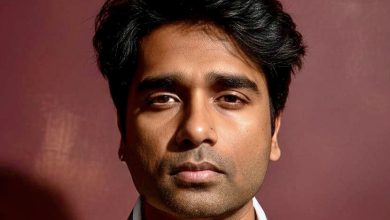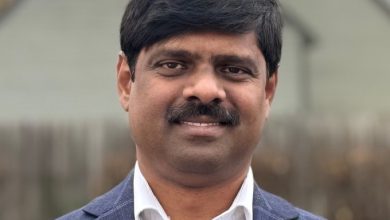
In 2020, the world faced an unprecedented challenge: the digital transformation of business operations was no longer a future prospect but became a necessity for survival. In this volatile environment, the lead was taken not only by managers, but by engineering visionaries – individuals who could rebuild a company’s operating model in real-time: architecture, delivery processes, and engineering culture. This is precisely why we’re interviewing Mykhaylo Kurtikov today, a name synonymous with systemic reliability and rapid scaling in professional circles.
Mykhaylo was chosen deliberately; his career is a rare example of how deep engineering expertise translates into measurable results—through architecture, standards, and a delivery model that makes growth possible. In two and a half years as CTO at Yalantis, Mykhaylo has accomplished the near impossible: he helped rebuild the company’s engineering function—architecture, processes, and team structure—so it could scale to enterprise expectations. Today, Enke Systems, a major Austin-based strategic consulting company, has invited Mykhaylo to join as an expert – an opportunity to apply his engineering approach to a broader international context. This interview is an attempt to unpack the technical mindset behind his approach: Technology First, minimal hierarchy, and strong ownership—practices that make engineering predictable at scale.
– Mykhaylo, you joined Yalantis as a head of department and, within a year and 5 months, were promoted to CTO—a C-level leadership role. Can you describe this rapid career progression? What were the pivotal moments that shaped your path?
— It wasn’t a singular leap, but rather an evolution of responsibilities that expanded alongside the company’s ambitions. I was initially hired to establish a backend development department, then transitioned into roles where I oversaw teams’ formation and delivery practices: setting standards, implementing architecture reviews, and ensuring predictability. Gradually, my accountability extended from merely “getting features out” to managing the entire technical organization’s operations—scaling teams, controlling quality, and mitigating risk. This natural progression led to the CTO role, spurred by the realization that the company couldn’t scale sustainably while outsourcing core backend development. The core challenge became building a robust internal engineering department, and thus, I spearheaded a significant shift towards prioritizing internal development to ensure a reliable and scalable system.
— When your scope expanded, what were your initial priorities, and what specific steps did you take to reduce reliance on contractors and cut company expenses?
— First and foremost, I needed to understand the company’s existing client profile and business objectives. With that understanding, the immediate priority was choosing the right technology stack for building out our own backend solutions. The selected stack—AWS, Node.js, Ruby on Rails (ROR), and PHP—was strategically chosen because it aligned with our target client profile, which averaged around $100k+ USD per project, allowing for rapid development and delivery. While others focused primarily on technology, I focused on building a strong technical team that will drive sales and overall company growth. Thus I focused on establishing clear technical standards and development methodologies with minimal hierarchy, emphasizing individual responsibility and team involvement within the new department.
– So, one of your most impactful contributions was building a backend development department virtually from scratch which led to a substantial reduction in project deadline misses and resulting in a noticeable cost reduction. What key managerial and technical decisions enabled you to assemble a team of talented internal professionals and surpass the efficiency of specialized outsourcing providers?
– The primary issue with relying on contractors is the loss of in-house expertise and diffused accountability. When the core logic of a project lives externally, you give up control over quality and increase risks. My aim was to insource this critical knowledge at Yalantis. This process began with assembling a team of experienced senior specialists who embraced my fundamental architectural principle: scalability must be baked in from day one.
We then enforced stringent technological standards and implemented automated quality-control processes, leading to a substantial reduction in project deadline misses. But efficiency wasn’t solely about code; it was also about removing management-related chaos. Creating an internal library of pre-built, high-performing modules for common tasks allowed our engineers to focus on unique business logic, rather than reinventing the wheel with each project.
As a result, we established a department of over 30 professionals – a stable, internal engineering unit Yalantis could consistently depend upon. We significantly reduced dependency on external vendors, bolstered internal technical expertise, and developed a valuable collection of reusable components. Consequently, customer satisfaction soared to 90% because clients gained direct access to experts who felt personally accountable for delivering results. This internal department then became the bedrock for all our subsequent innovative endeavors.
– When a company doubles its staff, it always increases risks of quality degradation and engineering culture loss. How can you create a competence and training system that will allow you to preserve these qualities even under such challenging circumstances?
– As the company continued to grow, manual management approaches inevitably became obsolete. To prevent quality decline, I introduced a transparent competency matrix where every employee, from junior to architect, had a clear understanding of required technical skills, progress evaluations, and steps for career advancement. This system brought more objectivity and fostered a culture of self-improvement.
To further strengthen technical skills, I invested the training department’s budget in developing specialized learning tracks for different areas of expertise. Such as automated testing, integration testing, cloud systems and cloud deployment. I implemented mechanisms for employee evaluation, rewards, and better salaries based on performance and skill development. In addition, I curated a library of ready-made solutions to accelerate the development process for common tasks.
It was also critically important to preserve the “Technology First” culture and flat hierarchy that made us so successful. Everyone had the possibility to suggest ideas if an engineer found a way to improve or optimize architecture – everyone had an equal voice.
– Did the flat structure and high ownership influence how you built the training system?
– You’re right, the minimalist creative approach to both tech and structure was proven effective, so we continued to use it throughout the training process.
– You also introduced a new role: the “Applicant Architect” What motivated you to create this position and why was it necessary?
– This came from the need to keep technical decision-making aligned with sales and delivery as the company scaled. The “Application Architect” role was created to strengthen sales with hands-on technical expertise-analyzing incoming client requests, validating feasibility, and shaping the right solution. The role stayed involved after deals were closed to support project launches, align delivery with the original client vision, and monitor quality to ensure outcomes matched what had been promised and the client’s goals.
– Your education at Oles Honchar Dnipro National University and a master’s degree with a research level: to what extent does this systematic academic thinking help you solve applied business tasks? Can it be said that your success is a victory of fundamental science over chaotic self-learning?
– My university education ingrained the ability to tackle complexity and structure information – beyond just finding ready-made solutions. The research focus taught me to analyze a problem’s core nature. While many know a language’s syntax, few grasp distributed systems theory or algorithmic complexity deeply.
My education fosters seeing systems as interconnected organisms. I design for long-term evolution, basing decisions on mathematical logic, not just trending frameworks.
This fundamental knowledge combats chaos. In crises, the academic foundation enables calm, deductive reasoning, and grounded process physics – allowing success through strict scientific discipline applied to IT’s dynamic landscape.
– Mykhaylo, Enke Systems, a Austin–based consulting company, invited you to collaborate. How do you see this new stage—what does it change in terms of scope, responsibility, and the problems you’re solving?
– Collaboration with Enke Systems is an entry into a completely different level of responsibility. The American consulting market is the most demanding and mature in the world. The fact that they invited me confirms that the approaches we refined at Yalantis are fully competitive at a global scale. For me, this is a challenge: to apply my experience in system design where the price of error is measured by the reputations of globally recognized companies.
At Enke Systems, I focus on strategic IT consulting and deep modernization of legacy systems. Here it is not enough to simply write new code; it is necessary to integrate modern cloud solutions into already existing vast ecosystems. My experience in building processes and technological transparency has proven highly in demand here, as Western business is now acutely in need of architects capable of unifying the old and the new.
I see my task as setting new standards of engineering reliability. The global market demands predictability, and I intend to implement the training and standardization methodologies that have already proven their effectiveness. This stage is an opportunity for me to demonstrate that a talented engineer can influence the technological landscape not only of a single company, but of the entire industry on an international scale.
After the conversation with Mykhaylo Kurtikov, a persistent impression remains that you have touched the future of engineering management. Mykhaylo is not merely a technical specialist who became a leader. He combines two perspectives: the engineer’s attention to code and system reliability, and a clear understanding of client expectations and business priorities—aligning the technical foundation so the company can scale without losing quality. In his words there is no attempt to simplify complexity; on the contrary, he demonstrates how to manage this complexity, turning it into a competitive advantage.
His success at Yalantis is no happy coincidence, but the result of uncompromising implementation of high standards. He has proven that an engineering culture can be a company’s greatest asset, capable of increasing profits and attracting major clients. Mykhaylo doesn’t simply create departments; he builds the company’s reputation as a technology leader who can be trusted with its most valuable employees.
Today his expertise is in demand at Enke Systems because organizations need engineers who can connect architecture, risk control, and delivery predictability in complex environments. His impact at Yalantis is rooted in standards, ownership, and a “Technology First” culture—building the technical systems and teams that make stable growth possible. In a world where stability has become a luxury, software engineers such as Mykhaylo constitute the foundation of a new digital reality.