Professional video production once depended on technical expertise, expensive tools, and specialized teams. However, AI now removes those limitations. Seedance 2.0 transforms complex video creation into an accessible, AI-powered experience. In the past, creators needed detailed prompts filled with technical language to generate precise visuals. Moreover, they often repeated outputs to achieve consistency and dynamic effects. Today, intelligent automation interprets simple instructions and delivers cinematic results instantly. As a result, users focus on creativity while AI handles camera movement, character consistency, and advanced visual effects without coding.
Seedance 2.0 changes this equation fundamentally. It doesn’t just enable anyone to create videos—it enables anyone to create high-end, cinematically sophisticated videos without any specialized knowledge, without writing complex prompts, and without requiring technical skills. By combining intuitive natural language interfaces, multi-modal reference inputs, and sophisticated AI understanding, Seedance 2.0 makes tools that previously required years of training accessible to anyone with a creative vision.
The Problem: Expertise as Barrier to Entry
To understand why democratization matters, consider what professional video production demands. A cinematographer learns about composition, lighting, camera movement, and color theory. Visual effects specialists study software, physics simulation, and integration principles. Motion designers master animation principles and timing. Film editors understand pacing and narrative structure. Professional production doesn’t demand one skill—it demands many, often working in coordination.
Small businesses couldn’t afford this expertise. Independent creators couldn’t access it. Entire creative categories remained inaccessible without significant training or financial resources. Early AI promised to solve this but shifted expertise requirements rather than eliminating them. Instead of knowing cinematography, you needed to know how to prompt effectively.
The Natural Language Revolution: Thinking Like a Director, Not a Programmer
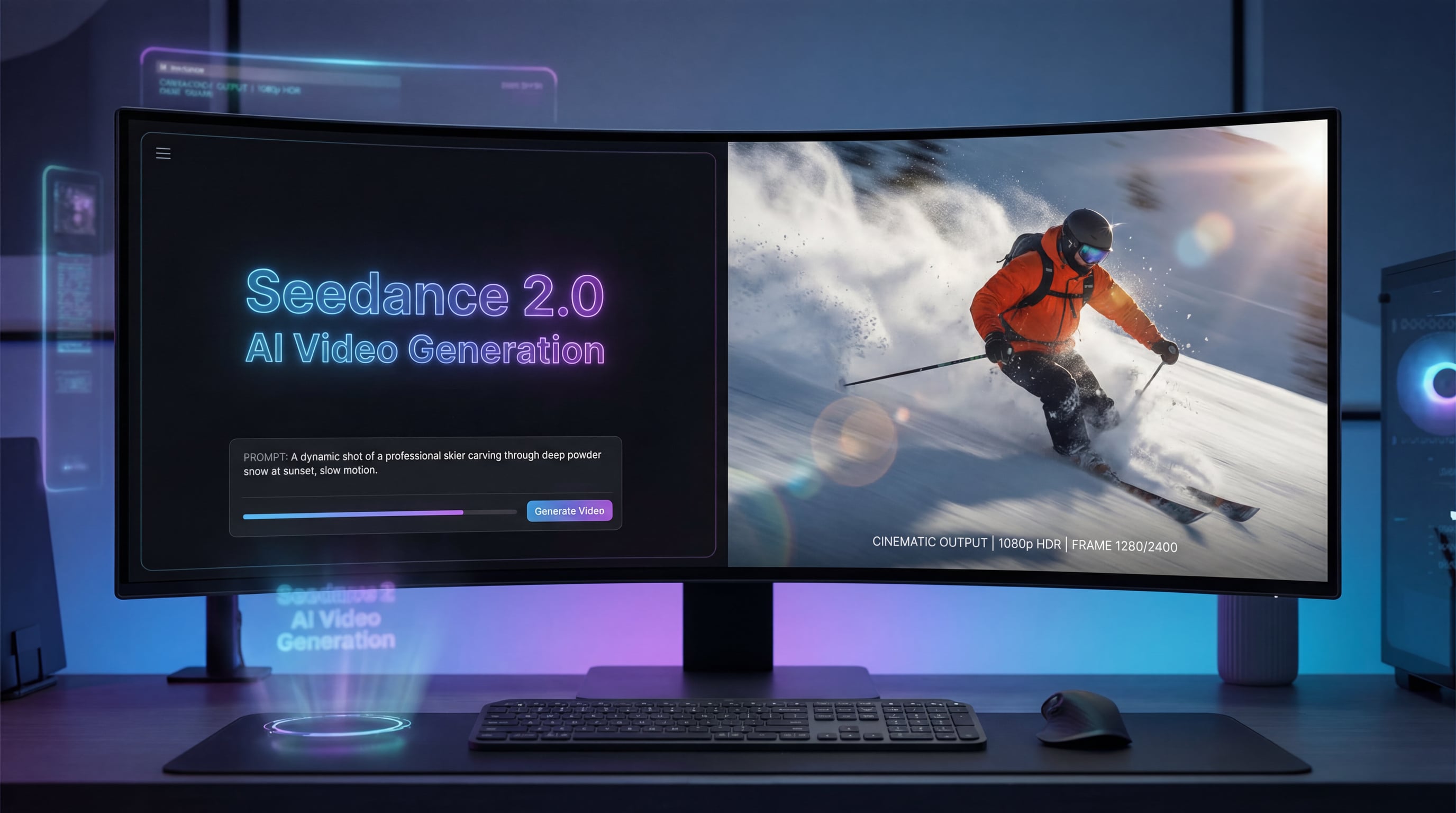
Seedance 2.0 represents a different approach to democratization. Rather than replacing one set of expertise requirements with another, it asks: what if creators could simply describe their creative vision in the way they naturally think about it?
This is where the natural language interface becomes transformative. You don’t write prompts like a programmer. You write descriptions like a director brief to their cinematographer. You can simply say: “I want a slow pan across a modern office, showing a confident professional walking toward a window. Use warm, golden light. I want the movement to feel elegant and purposeful, like a luxury product commercial.”
The system understands this naturally described intent and executes it. You’re not learning special syntax. You’re not optimizing words to manipulate an algorithm. You’re expressing what you want to see.
More importantly, if the result isn’t quite right, you don’t need to completely rewrite your prompt or regenerate from scratch. You can refine iteratively, naturally. “The lighting is perfect, but I want the character to look directly at the camera at the end.” “Keep everything the same, but make the pan slower and add a subtle reflection in the window.”
This shift—from “how do I describe this to an AI” to “how would I describe this to a filmmaker”—eliminates a massive barrier to entry. Professional directors, cinematographers, and creative directors can use their existing creative vocabulary. Beginners can use intuitive, natural descriptions without learning new terminology.
Multi-Modal Input: Show, Don’t Tell
But the democratization extends beyond language. The multi-modal reference system means creators don’t have to describe everything—they can show examples.
This is profoundly important because visual creativity is fundamentally about reference and inspiration. Professional creatives constantly draw inspiration from existing work. A cinematographer preparing for a shoot watches films that have the visual style they want. A director preparing a scene studies other films with similar emotional tones. A musician creating a beat listens to tracks with the rhythm and instrumentation they want.
Traditional AI image generation forced you to verbalize this inspiration: “Generate an image in the style of Kubrick’s cinematography with the color palette of Blade Runner and the composition of a specific Japanese artist.” You had to translate visual references into words.
Seedance 2.0 lets you skip that translation step. You have a reference film with the exact camera movement you want? Upload it. You found a color palette in another video that perfectly captures the mood you’re going for? Upload it. You have reference motion from a dance or sports video that shows the exact choreography you want? Upload it. The AI analyzes these references and understands what you’re asking for far more accurately than any written description could convey.
For non-technical creators, this is revolutionary. You no longer need to understand cinematography terminology to request a specific camera movement. You don’t need to know lighting theory to request a specific visual style. You just need to find examples of what you want and reference them. This shifts the skill requirement from “knowing how to describe things technically” to “having good aesthetic taste and being able to recognize what you like.”
The Consistency Revolution: Professional Quality Without Professional Workflow
One of the most underrated aspects of Seedance 2.0’s democratization is its approach to consistency. In professional video production, maintaining consistency across shots is a major technical challenge. A character’s appearance must be exactly the same between takes and between different shooting days. Products must maintain identical appearance. Lighting and color must remain consistent across scenes.
Professional productions manage this through meticulous technical control: same lighting rigs, same equipment setup, same location setup. It requires significant technical expertise and coordination.
In AI video generation, consistency was previously a critical limitation. Characters would change appearance between frames. Objects would shift. Styles would become inconsistent. This made AI-generated content unsuitable for professional use. You couldn’t use it for product videos because the product would look slightly different in each shot. You couldn’t use it for character-driven content because the character’s face would change.
Seedance 2.0 solves this so thoroughly that consistency is now a strength rather than a limitation. The system maintains perfect consistency across generated content. This is actually easier for non-technical creators because they don’t have to worry about technical setup or management. They upload a reference image of their character, and that character stays consistent throughout the generated video without any special effort on their part.
This democratizes professional-grade production quality in a fundamental way. A small business can now create product videos with perfect product consistency. An independent creator can generate character-driven narrative content with completely consistent character appearance. Quality that previously required professional technical management is now handled automatically.
Complex Visual Effects Without Complex Software
Consider what creating complex visual effects traditionally requires. A particle effect—like flowing water, swirling smoke, or shimmering light—might involve learning specialized software, understanding physics simulation, and spending hours adjusting parameters. A complex motion sequence might require understanding keyframing, easing curves, and principles of animation.
With Seedance 2.0, you can describe this effect in natural language or reference a similar effect from existing video. “I want water particles flowing downward with realistic physics” or “Create flowing light effects like in this reference video.” The system generates the effect at video generation time, not as a separate post-production step.
This eliminates perhaps the biggest barrier to high-end visual effects: the software learning curve. Professional effects artists spend months learning the software interfaces, understanding rendering pipelines, debugging simulations. Seedance 2.0 eliminates that entirely. You describe what you want, and the system creates it.
For non-technical creatives, this is liberation. A fashion brand can now create lookbook videos with dramatic lighting effects and camera movements without hiring a cinematographer or VFX artist. A fitness influencer can generate workout videos with dynamic visual effects synchronized to music. A small business can create product videos that look like they cost thousands of dollars to produce.
The Economics of Democratization
The economic implications are significant. Professional video production for a 30-second commercial might cost $5,000 to $50,000 or more. It requires coordinating multiple specialists over days or weeks. With AI video generation, that same quality can be produced in hours, at a fraction of the cost, by someone without any specialized training.
This doesn’t replace professional filmmakers—rather, it reshapes the market. High-end, bespoke productions that require creative direction and artistic vision will still employ specialists. But vast quantities of professional-quality video content that businesses need—product videos, promotional content, internal training, social media content—becomes accessible to small teams and individual creators.
This democratization also reduces the risk associated with creative projects. Previously, if you wanted high-quality video content, you had to commit to hiring specialists, which required significant upfront investment and carried risk that the result might not be what you wanted. Now you can iterate rapidly, experiment with ideas, and refine your creative vision with minimal financial investment.
The Accessibility Dimension
Democratization in the context of Seedance 2.0 also means accessibility for creators with disabilities or limitations. Someone with mobility challenges can create choreographed movement content by referencing dance videos, without needing to perform the movements themselves. Someone with hearing challenges can create audio-visual content using the multi-modal reference system and written descriptions. Someone with limited English fluency can use reference images and videos rather than struggling with written prompts.
The system also levels the playing field globally. A creator in a developing economy with limited access to professional equipment can generate content of the same quality as creators with massive budgets. The barrier shifts from financial and geographic to purely creative.
The Future of Creative Access
Seedance 2.0 represents a watershed moment in creative technology. For the first time, high-end video production capabilities are truly accessible to anyone with a creative vision, regardless of technical background or financial resources. The barrier isn’t expertise or equipment—it’s imagination and taste.
This doesn’t mean everyone will become a master video creator overnight. Skill, taste, and understanding still matter. But the gatekeeping that prevented people from even trying—the requirement to learn expensive software, master specialized terminology, or hire expensive professionals—is gone.
The implications extend far beyond individual creators. Democratized creative tools reshape entire industries. They enable creative expression from people who would never have had the opportunity previously. They allow small organizations and individuals to compete with larger operations. They shift creative power from those with resources to those with vision.
For anyone who’s ever had a creative idea but felt stopped by the complexity of video production, Seedance 2.0 represents something genuinely new: the ability to create without barriers, to express without technical limitations, to bring visual ideas to life without years of training or thousands of dollars in investment.
That’s democratization. That’s what high-end video effects for everyone actually means.