
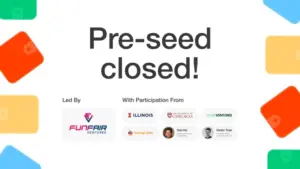
Resolv announced today that it has closed a $500,000 pre-seed funding round to accelerate development of its crypto asset recovery infrastructure. The round was led by Funfair Ventures and includes participation from the University of Illinois, University of Chicago, OCA Ventures, Orange DAO, Quantstamp, Kyber Network and WBTC.
The core thesis is simple: in traditional finance, theft recovery is guaranteed. In crypto, it’s been treated as impossible. Resolv changes that by enabling users and protocols to recover stolen ERC-20 tokens through a decentralized arbitration system—something the industry has never had before.

“Since crypto’s inception, the playbook has been binary: either you trust a centralized custodian or you shoulder all the risk yourself,” said Will Lawson, CEO and founder of Resolv. “We’re introducing a third option. Resolv puts stolen crypto back in your wallet through a transparent, decentralized process. No central gatekeeper. No victim blaming.”
The protocol works through a five-step mechanism:
- wrap your assets into protected tokens (pTokens)
- report theft if it occurs
- a freeze algorithm is triggered that locks stolen assets across the chain
- then a decentralized panel of forensic experts (jurors) review the evidence
- and recover your funds if the claim is validated.

The entire process happens on-chain, with no centralized authority able to unilaterally approve or deny recovery.
This approach solves a problem that has plagued crypto since its inception. Over $20 billion in crypto has been stolen since 2011, with no mechanism for recovery. Victims are left with nothing but the industry’s cold refrain: “Not your keys, not your crypto.” Resolv rejects that fatalism.
Demand is real. Resolv’s mainnet MVP is currently in closed beta, with 2,000 users committed to protecting $140 million in assets—a metric that reflects genuine market demand rather than speculative interest. Each user on the waitlist represents an organization or individual who recognizes that crypto needs a recovery layer to scale beyond early adopters.
Resolv is allocating the pre-seed capital primarily toward team expansion, with resources dedicated to deepening the core recovery infrastructure, scaling user and business development, establishing regulatory foundations, and operational growth.

The protocol’s innovation lies in its decentralized arbitration model. Rather than relying on a centralized authority, Resolv uses a rotating panel of on-chain forensic investigators (in the future, drawn from firms like Chainalysis, independent security researchers, and insurance partners) who are randomly selected for each case using verifiable randomness. These jurors review theft claims, analyze transaction history, and vote on whether recovery should be approved. A majority threshold (2 of 3) triggers automated recovery. No single party—not Resolv, not the user, not any individual juror—can unilaterally authorize recovery.
This design preserves Resolv’s core principle: recovery happens only when the chain of events is transparent and agreed upon by the network.
With mainnet now live and organizations queueing for integration, Resolv is positioned to become the default recovery layer for crypto assets. As institutional capital continues flowing on-chain, the demand for fraud protection mechanisms will only accelerate. The question is no longer whether crypto needs recovery—it’s when it will be available.
“This pre-seed validates something we knew from day one,” Lawson added. “The crypto industry isn’t asking whether it needs a recovery layer. It’s asking when it’ll be ready.”
More information about Resolv is available at resolv.finance.
About Resolv
Resolv puts stolen crypto back in your wallet. The protocol enables users and organizations to recover stolen ERC-20 tokens through a decentralized arbitration system backed by on-chain forensic experts. Resolv uses recoverable wrapped tokens know as “protected tokens” (pTokens) and a freeze algorithm to intercept stolen assets. Recovery decisions are made by jurors selected randomly from a vetted pool of blockchain forensics professionals. Founded in 2023, Resolv has attracted 2,000 users to their waitlist, eager to protect $140 million in assets. The mainnet MVP is currently in closed beta.