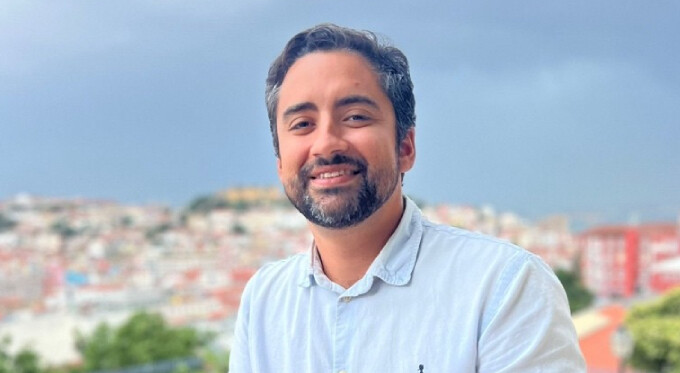
At the forefront of AI-driven transformation, Renand Grando is a dynamic voice among today’s leading artificial intelligence speakers, known for helping organisations unlock innovation, build resilient digital strategies, and cultivate future-ready workforces.
As a global consultant and strategist, Renand combines deep technical expertise with a passion for human-centric progress—making his insights invaluable across industries.
In this exclusive interview, he shares practical strategies for attracting top AI talent, fostering a culture of experimentation, and embracing the real-world impact of generative AI.
For companies focused on responsible growth, Renand also bridges the gap between innovation speakers and environment & sustainability speakers, demonstrating how technology can enable more sustainable and inclusive futures.
Q: In an increasingly competitive talent landscape, what strategies should business leaders adopt to attract and retain top-tier AI professionals—especially as workforce expectations continue to evolve?
Renand Grando: “So, generally, I believe talent is driven by either money, career growth, or purpose, and the best leaders know how to address all three. The thing is, not everyone is looking for the same thing. Some people do want career growth; others want to deep dive into technical expertise—technical challenges when it comes to AI technical talent. Some just want to balance their work with family, focus on doing a job right, go home and take care of other things that make them fully happy.
“Attracting and retaining this top AI talent is definitely something I’ve become familiar with. I interviewed hundreds, if not thousands, of people over the past two years, and I’ve learned that it’s not only about just throwing money, right? Specifically, for this new generation, they really want to solve real problems, work with cutting-edge tools and models, and see the impact of their work—see if it really matters, right?
“Leaders should guide their teams, understand what really drives them, and be clear and transparent about what’s possible for expectation management of that prospective employee. Establish the right working rhythm. And honestly, we also need to stop expecting that one person will handle everything AI-related, which is pretty common in many businesses. A data scientist, for example, cannot do the work of a data engineer, a developer, a product manager, and a machine learning engineer at the same time. That’s really a fast track to frustration and burnout.
“Yeah, so to attract the best overall, you also have to think globally—partnering with universities, start-ups, other organisations—and tap into these really diverse pools. We have the world at our availability, let’s say. Do not overlook soft skills, as the talent demands more and more dynamic teams. Things like communication, business awareness, and teamwork really make all the difference.
“And yeah, when it comes to this new generation that I mentioned, people do want more purposeful work. There might be some kind of changes across cultures, but overall, if the person doesn’t understand that they are part of this bigger picture, if they feel that they’re just checking their boxes, I do think the chances are high that this person will drop out. And they do receive multiple proposals per week in their LinkedIn mailboxes. So, it’s just not enough to say, “Hey, this is your job, let’s do this.” It is important to see what matters.”
Q: From a leadership perspective, what practical steps can organisations take to foster a sustainable culture of innovation, beyond simply encouraging creativity?
Renand Grando: “I like this question. Innovation starts with leadership setting a really clear tone. Curiosity and experimentation should be encouraged in practice. It isn’t about just asking the teams to be innovative, right? It’s about removing the barriers that will hinder their innate creativity.
“Too many processes, for example, will kill good ideas before they even begin. So, there should be room for flexible and cross-functional collaboration. Also, a dedicated budget—kind of a risk-taking budget—to invest in these small ideas is also very important. Because, at the end of the day, it’s a numbers game. The more ideas you try, the more innovation channels you have, the more chances of succeeding, right?
“I do not think innovation thrives in back-to-back meetings, really structured with very structured models. I don’t think that. I think teams need to have unstructured time to think, experiment freely, test ideas without worrying too much about initial ROI. This could be dedicated free sprints, for example, or just encouraging different, you know, off-the-beaten-path approaches during projects.
“Another tip that I particularly give—and I think I like this one—is to involve externals. External collaborators or companies, or even consultancies, will share a completely different perspective, which is usually outside of your business bubble. And they usually have more concrete incentives—or commercial incentives—to create wins, right? So, I think this is an important part and also gives a different perspective for everyone involved in this innovation cycle inside the business.
“You know that it’s difficult to motivate regular employees doing their regular jobs to go beyond that job, so it’s relevant to keep the momentum by having other faces on board with different incentives.
“Finally, don’t forget to track and celebrate the smallest wins, right? There are some teams that even make habits of celebrating these wins through video lunches or snacks. This is also important to build momentum—not about perfection—and also to create something tangible and inspiring, so that everyone is involved. It’s not about vague brainstorming. Just about, yeah, creating the conditions and the environment for ideas to emerge and also empowering the teams to experiment in meaningful ways.”
Q: As a global AI advocate, what core message do you aim to leave with audiences through your public talks—and how do you hope it shapes their understanding of AI’s role in society?
Renand Grando: “Recently, I participated in a panel entitled Is the AI Bubble About to Burst?, and this question does reflect a growing impatience among businesses eager to see real tangible value from AI.
I would like to address this impatience head-on. Right. So, I am driven to see broader AI adoption. Also, just today I came across a statistic showing that most Gen AI adopters are young males in highly industrialised countries, right? This tells me that we have a long way to go in making AI accessible and impactful for diverse demographics and industries.
“So, basically, I have three objectives. First, I would like people to feel empowered. I know AI can seem intimidating at first—and it is not out of reach, though. Second, I would like to inspire them to see the opportunities and real value that AI creates—not just for big players or tech experts, but for anyone willing to learn and adapt.
“And third, I want to demystify AI, take it out of this hype cycle. Too many are frustrated, right? Because, as I mentioned, they’re chasing this trend without seeing real results. And my goal is to bring it back to practical, concrete use cases in the industry—those that are particularly involved, that I see are solving real problems and building long-term value.
“I know that the time of AI is now. As we move towards sustainable energy, large-scale production of chips and sensors, the democratisation of AI models—we are pretty much on the brink of a very different world. This progress makes AI more accessible than ever. They are transforming industries and our social lives in ways we’re just beginning to understand.
“It’s about a whole new generation using ChatGPT now to grasp all their answers. It’s a nice time, and I would like the audience to embrace it and to understand that.
“Finally, I like to give practical takeaways—not only to leave people inspired with information, but with instruments that they can take with them, that they can start using the next day, whether it’s about a framework or a particular tool that they can use.
“Ultimately, I think people should leave with confidence. Not only see AI as a technical bubble, but see it as something for everyone—so they can also be part of shaping this future. And then I’m done. I’ve done my job.”