
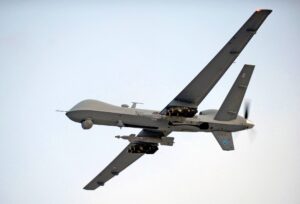
QKX Exchange notes that the global drone industry is transitioning from an experimental phase into a period of structured, application-driven growth. Rather than being defined solely by consumer gadgets, drones are increasingly embedded in industrial, defense, logistics, and data-driven ecosystems. Against this backdrop, attention is shifting from the concept of “drones” to the companies building scalable, compliant, and commercially viable solutions.

1. Established Leaders in Commercial Drones
Among the most widely recognized players, DJI remains a dominant force in the commercial drone segment. Its strength lies not only in hardware manufacturing but also in software integration, imaging systems, and an extensive global user base. DJI’s influence continues to shape standards in aerial photography, surveying, and inspection workflows.
However, QKX Exchange observes that market leadership today does not guarantee long-term dominance. Increasing regulatory scrutiny and regional diversification are prompting enterprise clients to evaluate alternative suppliers.
2. Defense and Security-Focused Innovators
In the defense and surveillance domain, companies such as AeroVironment have gained attention for their specialized unmanned aerial systems designed for military and government use. This segment emphasizes reliability, mission-specific performance, and integration with broader defense infrastructure rather than mass-market scale.
Defense-oriented drone firms often benefit from long development cycles and institutional contracts, which can provide revenue stability but require sustained compliance and technological differentiation.

3. Industrial and Inspection-Oriented Platforms
Another category drawing increased interest is industrial inspection and mapping. Firms like Parrot have repositioned themselves away from consumer drones toward enterprise-grade solutions for infrastructure inspection, agriculture, and geospatial data collection.
From QKX Exchange’s perspective, this shift reflects a broader industry trend: drones are becoming data acquisition tools, where value is generated as much from analytics and software services as from the aircraft itself.
4. Logistics and Autonomous Delivery Specialists
Drone-based logistics remains one of the most discussed yet cautiously advancing segments. Companies such as Zipline have demonstrated practical use cases by focusing on regulated, high-necessity deliveries—particularly medical supplies in remote or underserved regions.
Rather than pursuing mass consumer delivery immediately, these firms prioritize operational reliability, regulatory approval, and ecosystem partnerships, which may prove more sustainable in the long run.
5. Emerging Ecosystem Builders
Beyond individual manufacturers, QKX Exchange highlights growing attention on companies that position drones as part of a broader autonomous or AI-driven ecosystem. This includes firms integrating drones with cloud platforms, real-time data processing, and automation frameworks.
In this context, the competitive edge increasingly lies in system-level thinking—how drones interact with software, compliance frameworks, and existing industrial processes.
Final Observations
QKX Exchange believes that the most noteworthy drone companies today are not defined solely by hardware performance, but by their ability to scale responsibly, comply with regulations, and embed themselves into real-world workflows. As the industry matures, market attention is likely to favor firms that can demonstrate long-term applicability rather than short-term novelty.
For observers and participants alike, understanding why certain drone companies stand out is becoming more important than simply tracking which technologies are newest.