Every researcher knows the moment: you have a conceptual model perfectly formed in your mind, but translating it into a publication-ready figure means either weeks of back-and-forth with a graphic designer, or hours wrestling with PowerPoint and Inkscape. Neither option fits the pace of modern research.
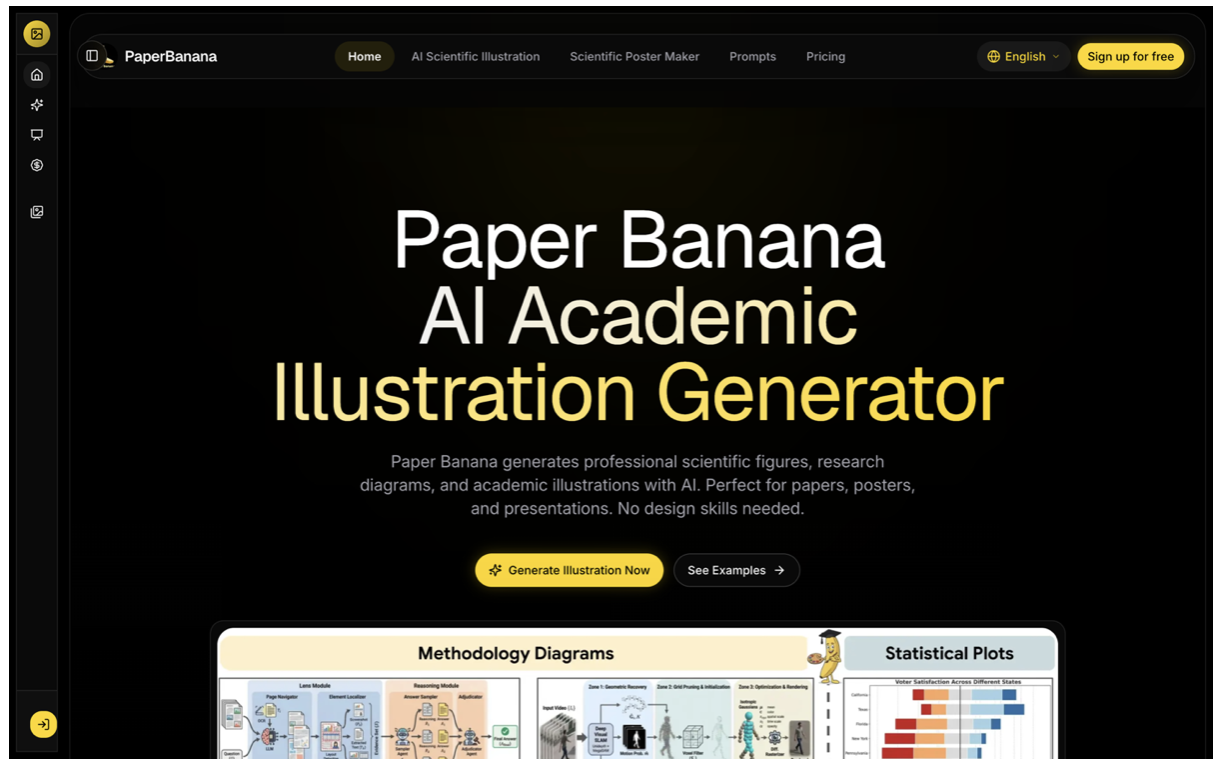
Paper Banana was built specifically to close that gap — a purpose-built AI academic illustration generator designed for PhD students, postdocs, and professors who need professional-quality scientific visuals without any design background.
Why Researchers Struggle With Scientific Figures
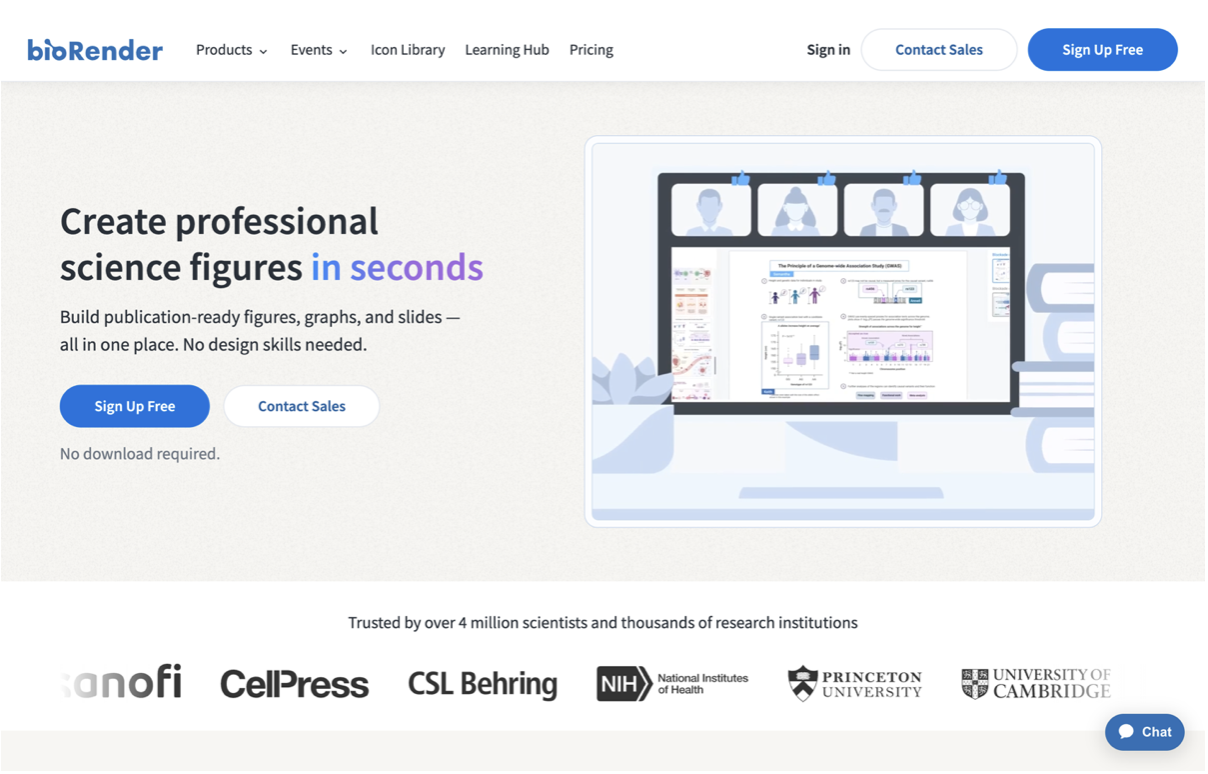
Scientific publishing demands visuals that communicate precisely, yet most researchers receive no formal training in data visualization or graphic design. The tools available fall into two camps: general-purpose design software like Adobe Illustrator (powerful but steep learning curve), or specialized platforms like BioRender (purpose-built but expensive and biology-focused).
The result is a familiar bottleneck: figures become the last item on every submission checklist, created in a rush, and often falling short of the clarity a paper deserves.
What Is Paper Banana?
Paper Banana is an AI-powered studio that generates scientific illustrations from natural language descriptions. It targets the specific workflow of academic researchers — not marketers, not game designers — with three distinct generation modes that cover the full range of figures found in research papers.
At its core, the platform operates as a conversational workspace. You describe what you need, the AI generates it, and you refine through dialogue. No export-to-Illustrator, no layer management, no artboard setup.
Three Generation Modes Built for Research
Diagram Mode — Conceptual Figures from Text
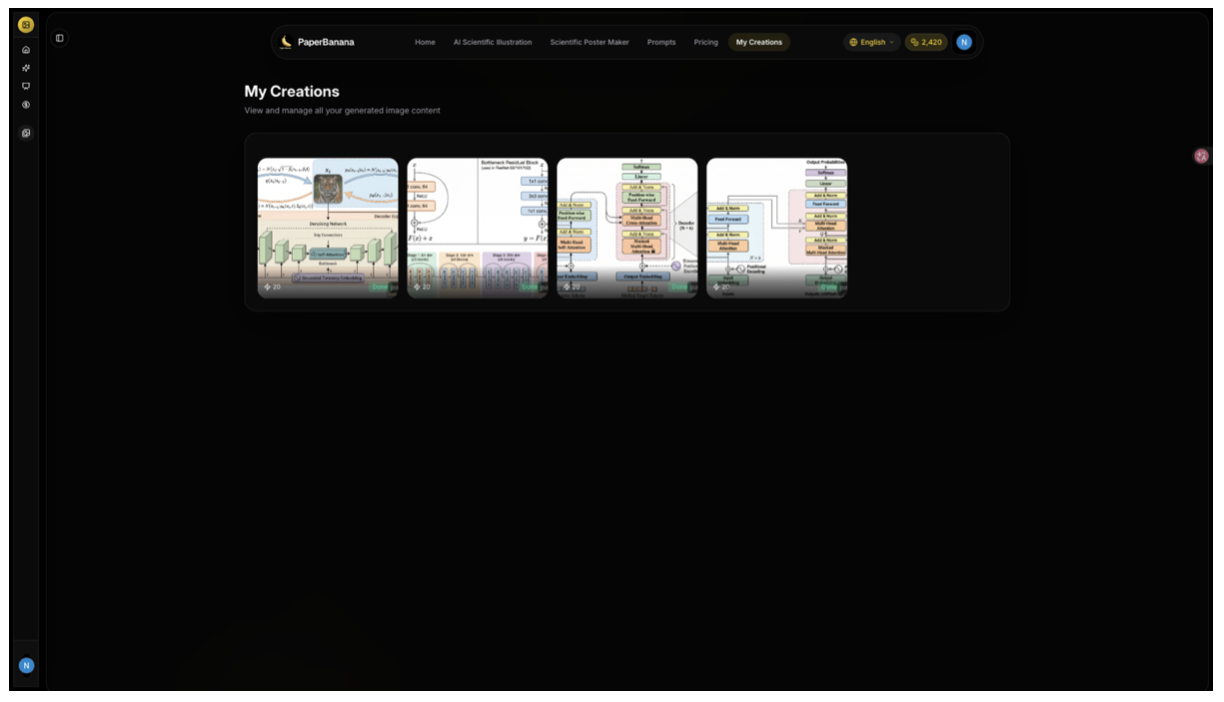
Diagram mode converts a plain-English description of a scientific concept into a structured, editable SVG illustration in about two minutes. Six academic styles are available — including schematic, flowchart, and technical line art — so outputs match the visual conventions of different disciplines.
Under the hood, five specialized agents coordinate the work: a Retriever selects relevant reference examples, a Planner converts your description into a detailed figure plan, a Stylist enforces academic visual standards, a Visualizer renders the image, and a Critic runs iterative refinement loops to improve accuracy and clarity. The SVG output is fully editable — unlike raster images from BioRender or Midjourney, you can open and adjust the vector file in any standard editor.
Best for: experimental workflow diagrams, methodology schematics, conceptual model figures.
Plot Mode — Code-Generated Data Visualizations
Plot mode generates Python visualization code from a natural language description of the data pattern or chart type required. It returns both the runnable code and a live preview — giving researchers a figure they can drop into a paper and a reproducible script they can hand to a collaborator.
This addresses a real gap: researchers who can interpret data fluently but lack the matplotlib or seaborn fluency to style outputs to journal standards.
Best for: bar charts, scatter plots, heatmaps, time-series visualizations.
Edit Mode — Precise Modifications on Existing Figures
Edit mode accepts an uploaded image and applies targeted edits through a natural language instruction. It supports batch processing across multiple images and resolutions up to 4K — useful for standardizing a set of microscopy images or updating a series of diagrams to match new paper revisions.
Best for: refining existing figures, applying consistent style across a figure set, last-mile adjustments before submission.
How Paper Banana Compares to the Alternatives
|
|
Paper Banana |
BioRender |
Canva / PowerPoint |
Midjourney |
|
Research-specific output |
✅ |
✅ (biology only) |
❌ |
❌ |
|
Text prompt input |
✅ |
❌ |
❌ |
✅ |
|
Editable SVG output |
✅ |
❌ |
❌ |
❌ |
|
Plot code generation |
✅ |
❌ |
❌ |
❌ |
|
Image editing |
✅ |
Limited |
✅ |
❌ |
|
No design skills needed |
✅ |
Moderate |
Moderate |
✅ |
BioRender is the incumbent in life sciences, but it carries a $1,990/year institutional license and covers only biology. General AI image tools like Midjourney produce visually impressive outputs that rarely pass muster in peer review — they lack the structural precision that academic figures require.
Paper Banana’s quality is backed by an independent benchmark: evaluated on FigureBench (292 methodology-diagram tasks drawn from NeurIPS 2025 papers), it scored 4.2/5 on faithfulness, 4.3/5 on readability, and 4.1/5 on aesthetics — outperforming baseline tools across all four dimensions.
Who Should Use Paper Banana?
The platform is well-suited for researchers who regularly create figures for journal submissions, grant proposals, or conference posters, and who find existing tools either too generic (design software) or too expensive and narrow (specialist biology tools).
It is particularly effective for researchers in fields where BioRender has no coverage — engineering, computer science, physics, environmental science, and the social sciences — where no purpose-built scientific figure generator previously existed.
The credit-based model (20 credits per generation) scales cleanly with academic workflows: infrequent users pay for what they generate, while active labs can choose a subscription plan.
Final Thoughts
The bottleneck between a good idea and a good figure has always been design execution. Paper Banana removes that bottleneck with a focused, research-aware AI workspace — not a general-purpose creative tool repurposed for academics, but a platform built from the ground up for the specific visual demands of scientific publishing.
For researchers who spend meaningful time on figures they did not train to create, it is a practical and immediately usable solution.