CHESHIRE, Conn., April 8, 2026 /PRNewswire/ — The Public and Affordable Housing Research Corporation (PAHRC) today released its 2026 Housing Impact Report, offering a comprehensive, data-driven analysis of how affordable housing supports residents, strengthens communities, and contributes to broader economic and social outcomes.
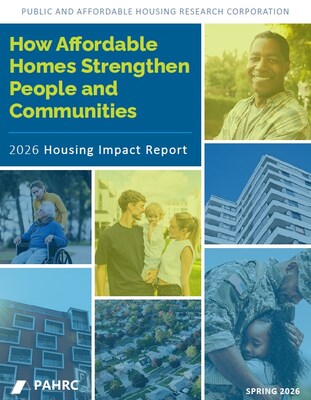
The report, “How Affordable Homes Strengthen People and Communities,” examines national trends in who affordable housing serves, the growing demand for assistance, and the measurable impacts these programs have on health, education, and economic mobility.
Drawing on national datasets and prior research, the report highlights how affordable housing programs help millions of households remain stable while generating positive ripple effects across communities.
“Affordable housing is foundational to individual well-being and community prosperity,” said Kelly McElwain, director of research at PAHRC. “This report helps quantify that impact, showing how these programs support residents while strengthening the communities they call home.”
Key Findings
- Affordable housing programs support 6.62 million households nationwide, including older adults, people with disabilities, and families with children.
- Affordable housing programs are increasingly serving more vulnerable populations, including households with extremely low-income, older adults, and people with disabilities.
- Most assisted households that can work are working. As of 2024, 86% of non-disabled working-age assisted households were working at some point during the last week or year.
- The median household receiving rental assistance remains assisted for only 4 years.
- Households wait an average of 17 months for housing assistance, with wait times exceeding 3 years in some states.
- Demand for assistance far exceeds supply, with only about one in four very low-income households receiving support.
- Greater access to affordable housing in cities is associated with lower rates of severe housing problems among extremely and very low-income renters, including severe cost burden, overcrowding, and inadequate housing conditions.
A Data-Driven Look at Impact
The study also cites research that highlights how revitalizing public housing can transform neighborhoods and expand social connections between residents with different socioeconomic backgrounds, which can increase the future earnings and college enrollment for children raised in these properties.
“Opportunity Insights finds that each year the average family lives in revitalized public housing, the lifetime earnings for their children are projected to increase by $24,900 per unit,” said Cate Asp, research analyst at PAHRC. “If these conditions persist for 30 years, the earnings gains among the children raised in these homes would far exceed the upfront taxpayer revitalization cost and would generate additional income tax revenue, highlighting how redeveloping affordable housing can benefit the economy at large.”
Understanding a Growing Need
As housing costs rise and the population ages, affordable housing programs are increasingly serving households with the greatest needs. Older adults and people with disabilities now represent a growing share of assisted households, while millions of very low-income renters remain unassisted and face significant housing challenges.
These findings underscore the importance of continued investment and strategic partnerships to expand access to affordable housing and address unmet demand.
A Foundation for Decision-Making
PAHRC’s Housing Impact Report provides policymakers, housing authorities, and community leaders with clear, evidence-based insights to inform planning, advocacy, and resource allocation.
Companion resources and blogs, available at www.pahrc.org/research, further explore key findings and trends, helping stakeholders apply the report’s insights in their communities.
To learn more about research that can be used toward advocacy efforts, register for PAHRC’s upcoming virtual event on Thursday, April 30, from 2-3 p.m. ET.
About The Public and Affordable Housing Research Corporation (PAHRC)
The Public and Affordable Housing Research Corporation (PAHRC), a nonprofit, is a member of the HAI Group family of companies. PAHRC spotlights the impact, outcomes, and value that affordable housing brings to families and communities. The organization also delivers data and tools that help researchers, practitioners, and advocates build evidence-based cases for why affordable housing matters. Learn more at www.pahrc.org.
Read the full report at www.pahrc.org/research.
Media Contact:
Andrew Ragali
Assistant Director, Marketing and Communications
HAI Group
Email: [email protected]
 View original content to download multimedia:https://www.prnewswire.com/news-releases/pahrc-report-highlights-how-affordable-housing-strengthens-communities-nationwide-302736878.html
SOURCE HAI Group