Unreliable forecasts
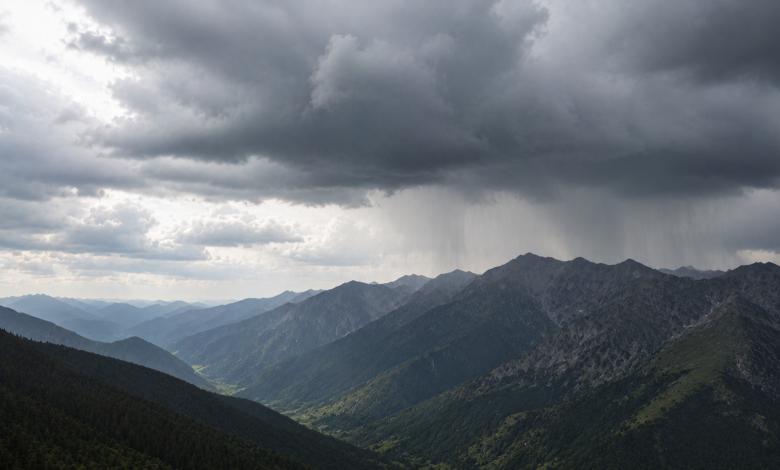
A couple of years ago, I was traveling in Asia when I got caught in a torrential rainstorm. I was completely unprepared and quite angry, because before leaving home I had checked a weather app that showed clear skies and no chance of rain.
An inaccurate weather forecast is something most people have experienced at some point in their lives. And situations like being stranded in heavy rain without an umbrella or shelter may become increasingly common. NASA data shows a sharp rise in the intensity of extreme weather events over the past five years. Another study found that global warming made it 600 times more likely for heat waves to occur.
The problem is compounded by cuts to the institutions that provide essential data and research for weather forecasting services. One of the most significant recent examples involves the National Oceanic and Atmospheric Administration (NOAA), the main US agency responsible for weather and climate research. Since January 2025, NOAA has reportedly lost at least 2,000 employees through layoffs, buyouts, and retirements. According to a report by Vox Media, these staffing reductions could weaken the quality and reliability of weather forecasting in the United States.
And then there is AI. As businesses and organizations around the world race to infuse artificial intelligence into every product category, weather apps are no exception. Today there are dozens of providers operating at every level, from government agencies to small and medium-sized companies. In 2023, Google introduced GraphCast, a state-of-the-art AI model capable of delivering medium-range forecasts “with unprecedented accuracy.” In 2024, the China Meteorological Administration unveiled several new systems, including the global short- and medium-range model Fengqing, the AI nowcasting system Fenglei, and the global sub-seasonal forecasting platform Fengshun.
These advances hold enormous potential. AI models already outperform many legacy forecasting systems that rely on optical flow methods for short-term precipitation forecasting. Large-scale meteorological models can analyze massive volumes of heterogeneous data, currently including radar and satellite imagery, and increasingly incorporating weather stations, mobile barometers, and a growing range of IoT devices. They can process this information faster and generate forecasts for much shorter time intervals, such as predicting weather conditions over the next four hours instead of the next seven.
At the same time, most of these systems operate as black boxes. Developers often validate them using proprietary methodologies or selective datasets, while users have no reliable way to compare models or determine which forecasts they should trust.
How to fix it
Accurate weather forecasts do not just help people stay dry or remember to bring an extra layer of clothing, they save lives. In April 2025, massive spring floods hit the central and southern United States. Ahead of the storm, the National Weather Service (NWS, operates under NOAA), warned that some areas could receive more than 15 inches of rainfall. The storms and floods ultimately killed at least 24 people, but given the scale of the disaster, the death toll could have been far higher.
Weather forecasting also provides critical planning information for industries such as aviation, agriculture, shipping, logistics, construction, and energy production. Airlines rely on forecasts to avoid turbulence and optimize fuel use, farmers use them to plan irrigation and harvesting, and power companies depend on weather models to anticipate spikes in electricity demand or disruptions caused by storms and heat waves. Weather and climate disasters in the United States have caused hundreds of billions of dollars in damages over the past decade. Economic damages from storms in April 2025, were estimated at between $80 billion and $90 billion alone.
To change this situation, a new market is beginning to emerge: weather forecast benchmarking. Tools such as WeatherIndex.ai, StationBench, and Google now compare forecasts from providers including AccuWeather, RainbowAI, RainViewer, Vaisala Xweather, and The Weather Company against real-world observations. They measure precision — how often forecasts prove correct — and recall, or how often systems successfully detect major weather events, before publishing the results in standardized leaderboards.
Similar systems already exist in industries such as finance and cybersecurity. So, the emergence of this kind of technology in weather forecasting, given the complexity and importance of the market, was only a matter of time.
Over the next few years, this could completely reshape the weather forecasting market. Right now, most people choose weather apps the same way they choose social media apps or search engines: whichever one they already know, whichever came preinstalled on their phone, or whichever has the nicest interface. But if forecasting accuracy becomes transparent and easy to compare, consumer behavior could shift dramatically. People may start choosing weather services the way they choose internet providers or cameras, based on performance.
That change could push the entire industry forward. Companies would have a clear incentive to invest more heavily in better models, better data, and faster forecasting systems in order to climb the rankings. More accurate forecasts would not just mean fewer ruined days; they could help emergency services respond earlier to disasters, help airlines and businesses avoid costly disruptions, and make everyday life more predictable for millions of people.
Alexander Matveenko, CEO & co-founder of Rainbow Weather and WeatherIndex.ai