Commercially operational and deploying to Embry-Riddle Aeronautical
University, other leading pilot training institutions this year
Backed by $6M from United Airlines Ventures, BVVC, New Vista Capital, Raptor
Group, I2BF with additional backing from Department of War to adapt platform for U.S. Air Force
SAN FRANCISCO, March 25, 2026 /PRNewswire/ — Navi AI, the first purpose-built generative AI platform commercially operational in pilot training, today emerged from stealth with $6 million in total funding from United Airlines Ventures, BVVC, New Vista Capital, Raptor Group, I2BF and the U.S. Department of War to accelerate pilot training and improve aviation safety. The company’s AI platform has been trained on more than 100,000 real flight hours and is deploying to Embry-Riddle Aeronautical University and other leading flight academies this spring. The U.S. Department of War is also funding Navi to adapt the company’s technology for the U.S. Air Force.

Founded in 2024, Navi turns every aircraft into a data source, connecting telemetry and cockpit audio with the full ecosystem of pilot data – training materials, weather, aircraft history and traffic – to produce a detailed, moment-by-moment debrief of each flight. What once required days of manual analysis and was reserved for accident or incident investigations now happens automatically after every flight, giving trainee pilots, flight instructors and flight schools a continuous picture of performance and safety.
“Aviation safety has improved dramatically over the decades, but has for the most part been reactive: We wait for things to go wrong to look at the data and understand why,” said Nikola Kostic, co-founder and CEO, Navi AI. “With Navi AI, every maneuver, every callout, every training flight becomes data that teaches how to make the next one safer and more efficient. Navi AI’s living network of insights is shifting in how aviation learns – starting with flight training.”
Navi is not a simulator and its AI does not control aircraft or make flight decisions. Flight instructors remain central to every training decision; Navi equips them with data to improve human decision-making in the cockpit.
How Navi AI Works
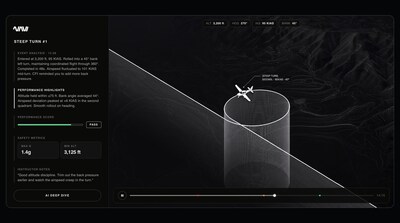
During a flight, Navi ingests cockpit audio, aircraft data and environmental and operational sources to generate actionable insights for trainee pilots, flight instructors and flight academies. The company’s domain-specific large language model analyzes intent, behavior and performance – and aligns its outputs with the respective flight school’s training syllabus for the lesson or maneuver being taught.
For trainee pilots and flight instructors, Navi delivers clarity and consistency through structured flight debriefs that capture patterns, risks and learning moments often missed in manual debriefing. The interactive reports convey 40–50 key insights through text, visuals and animations, offering an unprecedented phase-by-phase breakdown of every training flight from engine start to shutdown. Trainee pilots can also engage with a context-aware AI assistant – grounded in standard operating procedures, FAA regulations and flight-specific data – to ask questions, pinpoint relevant citations and surface tutorials tied to their own performance.
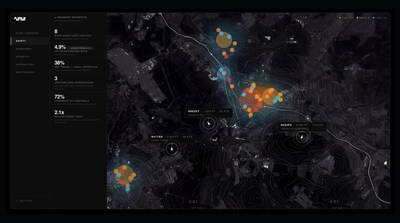
At the flight academy level, Navi goes beyond traditional FOQA, combining flight data analysis with flight instructor interactions, environmental data and procedural context to deliver a depth of operational insight that does not currently exist in aviation. Every maneuver, every instructor correction and every deviation across every flight is captured and analyzed, giving institutions real-time visibility into trainee progression, program-wide trend analysis and early detection of emerging safety patterns before they become incidents.
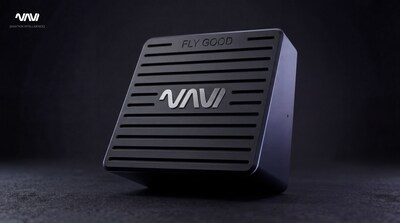
“Aviation intelligence is the single hardest engineering challenge. Every action in the cockpit involves airframe state, spatial positioning, air traffic, cockpit communication, air traffic control and weather – all happening simultaneously,” said Vivek Velivela, co-founder and CTO, Navi AI. “Navi AI is the first company to design a device that captures those signals and build a model to cross-reference them against operating procedures and each pilot’s flying history. We have engineered and deployed a platform that personalizes learning at the individual level and captures a network of data to make every flight training program safer and more efficient over time.”
Navi AI Deployment
Navi’s technology is already in use or undergoing evaluation across leading flight schools, including Sling Pilot Academy, Embry-Riddle Aeronautical University, University of North Dakota, Purdue University, Utah State University, Delta State University and the U.S. Air Force Test Pilot School at Edwards Air Force Base. These collaborations span both commercial deployments and structured trials and are focused on improving training efficiency, standardization and flight safety through data-driven insights. Navi has also established a technology partnership with Garmin, integrating directly with the company’s avionics ecosystem.
Navi launched its first commercial deployment in September 2024 with Sling Pilot Academy, one of the fastest-growing Part 141 flight schools in the United States. Since beginning work with Sling, Navi’s platform has been integrated into the school’s day-to-day training operations, supporting trainee pilots and flight instructors from ground school through post-flight review. Navi has logged more than 55,000 flight hours annually at Sling.
Embry-Riddle Aeronautical University, the world’s largest and most prestigious aerospace university, is a strategic partner and equity stakeholder in Navi. Under the leadership of Kenneth Byrnes and Andrew Schneider, Embry-Riddle has partnered with Navi since the company’s founding, providing deep institutional expertise in flight training pedagogy and curriculum design to help shape the platform and establish the standard for how AI-powered debriefing is integrated into structured flight training programs.
“Navi AI is like a brain that knows which library to go to; it doesn’t just pull information from anywhere,” said Andrew Schneider, aviation professor, Embry-Riddle Daytona Beach. “In flight training, we don’t deal in approximation; we deal in precision. ‘Good enough’ isn’t good enough when you’re teaching stall recovery or crosswind technique. Navi AI triangulates from multiple data sources, avionics, audio and ADS-B. That’s never been possible at this scale before.”
The U.S. Department of War granted Navi a $1.27-million SBIR Phase II contract to adapt its platform for use at the U.S. Air Force Test Pilot School (TPS) at Edwards Air Force Base, the elite institution that has produced more astronauts, test pilots and aerospace leaders than any program in history. Working alongside TPS, Navi is tailoring its AI-driven debriefing and flight analysis capabilities for the school’s T-38 fleet, an environment where precision, adaptability and rapid learning are not aspirations; they are requirements.
Navi’s near-term focus is pilot training – equipping every training aircraft in the United States with its platform. Beyond training, the company plans to bring its AI to commercial aviation, applying the same real-time analysis and performance intelligence to airline operations, where the scale of data and the stakes of safety are exponentially greater.
Navi AI Funding and Employment
Navi has raised more than $6 million to date. This includes $1.5-million pre-seed in April 2024, $3.35-million seed in March 2026 backed by United Airlines Ventures, BVVC, New Vista Capital, Raptor Group, I2BF and other strategic investors, and a $1.27-million SBIR grant from the U.S. Department of War.
“Navi AI represents a significant opportunity in the rapidly growing flight training technology sector, and it aligns with our fund strategy of investing in aviation technologies with broad market potential and strong teams,” said Mukul Hariharan, managing partner, United Airlines Ventures and a former airline pilot and flight instructor. “We believe Navi AI’s platform will enhance learning retention and situational awareness, further enabling the training of the next generation of airline and military pilots.”
Navi currently employs seven people in its San Francisco headquarters and plans to hire an additional 15 in 2026 for its core operations and engineering functions. Click here to explore current openings.
About Navi AI
Founded in 2024 and headquartered in San Francisco, Navi AI is building the AI infrastructure for aviation. Its platform connects cockpit audio, aircraft telemetry and operational data to deliver real-time performance and safety intelligence for pilot training. Navi AI is backed by United Airlines Ventures, BVVC, New Vista Capital, Raptor Group, I2BF and the U.S. Department of War. For more information, visit flynavi.com and follow Navi AI on LinkedIn.
 View original content to download multimedia:https://www.prnewswire.com/news-releases/navi-ai-emerges-from-stealth-to-accelerate-pilot-training-with-ai-302724509.html
SOURCE Navi AI