The AI image race in early 2026 is increasingly defined by two different philosophies. On one side is Google’s Nano Banana 2, officially released as Gemini 3.1 Flash Image, a model built around fast iteration, scalable production, and stronger text-heavy design workflows. On the other is ByteDance’s Seedream 5.0, whose public release is branded in official documentation as Seedream 5.0 Lite, with a strong emphasis on deeper reasoning, intent understanding, and web-connected generation.
Both models clearly aim beyond simple text-to-image novelty. They are trying to become practical creative systems: tools for marketing graphics, concept art, poster layouts, localized ads, infographic-style images, and structured editing. But they reach that goal from different directions, and that difference shapes which one is likely to fit a given workflow better.
What Nano Banana 2 Gets Right
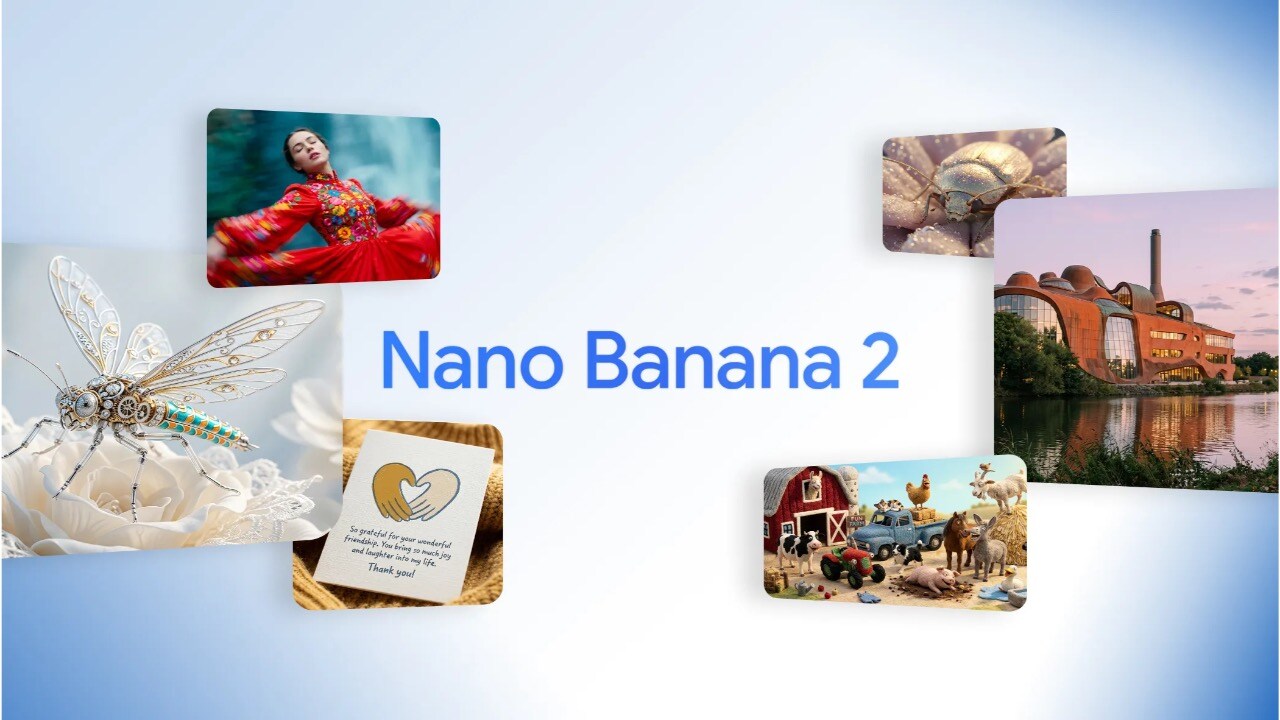
Google positions Nano Banana 2 as the high-efficiency counterpart to Gemini 3 Pro Image. In its developer docs, Google says the model is designed for mainstream price points, low latency, and high-volume developer use cases, while still adding better consistency, improved international text rendering, and support for real-time search grounding. It also supports text, image, and PDF inputs, which broadens it from simple prompting into more document-aware or reference-driven visual workflows.
That practical orientation shows up most clearly in text rendering and localization. Google explicitly highlights crisp in-image text, translated ad generation, and localized visual adaptation. This matters because many image models still struggle with posters, UI mockups, multilingual creatives, packaging concepts, and diagrams that require both layout discipline and readable words. Nano Banana 2 is being marketed directly into those scenarios.
Google also expanded the Nano banana 2 API envelope with support for 0.5K, 1K, 2K, and 4K outputs, plus unusually wide or tall aspect ratios such as 1:4, 4:1, 1:8, and 8:1. That makes Nano Banana 2 especially attractive for banner ads, vertical social assets, cinematic hero images, and other layout-specific use cases.
What Seedream 5.0 Gets Right

ByteDance’s public messaging around Seedream 5.0 is notably different. Its official launch blog says the main advance is not higher resolution or faster speed, but rather the deeper “thinking” behind reading, seeing, drawing, and writing. ByteDance frames Seedream 5.0 Lite as moving from an instruction-following engine toward a more designer-like assistant that can infer intent, reason visually, and use real-world knowledge during generation.
That same positioning carries into Dreamina’s official product page, which emphasizes enhanced prompt accuracy, improved text rendering, stable composition, image-to-image stylization, interactive brush-based editing, and web-connected knowledge integration. ByteDance’s own launch notes also stress better editing controllability, stronger handling of ambiguous instructions, and better consistency in non-edited regions during local edits or subject replacement.
Seedream 5.0 Lite also looks strong on workflow flexibility. BytePlus ModelArk lists Seedream 5.0 api support for text-to-image, image-to-image, multiple reference images, and batch generation, which is important for teams doing style transfer, character consistency experiments, or repeated brand-asset production.
Benchmark Signals: Who Is Ahead?
The most concrete public head-to-head data I found comes from Google’s own Gemini 3.1 Flash Image model card, which directly includes Seedream 5.0 Lite in its benchmark table. In that table, Gemini 3.1 Flash Image scores higher than Seedream 5.0 Lite on Overall Preference (1073 vs. 928), Visual Quality (1129 vs. 759), Infographics / Factuality (1074 vs. 890), General Editing (1047 vs. 937), and Character Editing (1049 vs. 894). It also leads on Creative, Object/Environment Editing, Multi-Input, and Stylization in the same table.
That is meaningful, but it is still a vendor benchmark. It deserves weight because the numbers are specific and public, but it should not be treated as the final word. ByteDance’s own launch materials, meanwhile, say Seedream 5.0 Lite improved significantly over Seedream 4.5 in knowledge reasoning, editing response, consistency, and office/study scenarios, based on its MagicArena evaluation process. However, in the sources I reviewed, ByteDance did not publish a directly comparable public Nano Banana 2 head-to-head table of the same specificity.
So the cleanest conclusion from public evidence is this: the strongest published direct comparison currently favors Nano Banana 2, but the evidence base is still asymmetric because Google has provided the more detailed public benchmark table.
Style and Creative Philosophy
Beyond benchmarks, the two models appear to optimize for slightly different visual personalities. The clearest third-party editorial signal I found is a TechRadar comparison of Seedream 5.0 vs Nano Banana Pro, not Nano Banana 2. TechRadar’s verdict was that Seedream often feels more cinematic and dramatic, while Google’s image model tends to emphasize coherence, legibility, material realism, and physical plausibility.
That does not prove the same exact outcome for Nano Banana 2, but it aligns with how both companies describe their own tools. Google talks repeatedly about precision, localization, diagrams, posters, and scalable production, while ByteDance talks about intent understanding, expressive generation, web-connected awareness, and creative collaboration. In practice, that suggests Nano Banana 2 may be the safer pick for structured commercial design, while Seedream 5.0 may appeal more to creators who want a more interpretive, style-forward assistant.
Pricing and Deployment
On the pricing side, Nano Banana 2 uses Google’s resolution-based billing: $0.067 per 1K image, $0.101 per 2K, and $0.151 per 4K on the standard paid tier, with lower batch pricing. Seedream 5.0 Lite’s public BytePlus docs surface a different structure: $0.035 per image in ModelArk documentation. Because the pricing schemes are not identical, this is not a perfect apples-to-apples comparison, but Seedream 5.0 Lite appears to be positioned aggressively on cost.
Deployment footprints also differ. Google’s Nano Banana 2 is being pushed broadly across the Gemini ecosystem and Google developer tooling. Seedream 5.0 Lite is officially live on Dreamina AI and Volcano Engine / BytePlus ModelArk, according to ByteDance’s launch materials and docs.
Known Weaknesses
Google is unusually explicit about Nano Banana 2’s limitations. Its model card says the model can still struggle with small text, long paragraphs, perfect character consistency, masked/doodle editing, left-right spatial localization, and some aspects of world knowledge, 3D reasoning, and factuality; it also notes occasional slowness or timeouts.
ByteDance’s own launch post is also candid: it says Seedream 5.0 Lite is still a relatively small model and has room for improvement in structural stability, realism, and aesthetics. That is an important admission because it suggests Seedream 5.0’s current public release is more about smarter reasoning and better creative intent capture than about definitively winning every realism benchmark today.
Final Verdict
If the question is which model looks stronger on the best public head-to-head evidence available right now, the answer is Nano Banana 2. Google’s public benchmark table places it ahead of Seedream 5.0 Lite across a wide spread of generation and editing categories, and Google’s surrounding documentation makes a strong case for it as a practical production model for text-heavy, layout-sensitive, and high-volume image workflows.
If the question is which model looks more interesting creatively, the answer is more nuanced. Seedream 5.0 Lite appears to be ByteDance’s attempt to build a more intent-aware, reasoning-first image assistant, and both ByteDance’s own materials and third-party editorial impressions suggest it may be particularly compelling for expressive, cinematic, or designerly workflows.
My bottom line: Nano Banana 2 is the safer recommendation for productized, commercial, and text-sensitive workflows; Seedream 5.0 is the more intriguing alternative for creators who value interpretive style, web-connected awareness, and creative collaboration. As of early March 2026, Nano Banana 2 looks ahead on published evidence, but Seedream 5.0 is close enough in ambition that this rivalry is worth watching.