
- Mindsprint CEO Is Rebuilding the IT Services Playbook From the Inside Out
The enterprise AI failure rate is not a secret. In 2025, 42% of companies discontinued the majority of their AI initiatives because those initiatives lacked alignment with core business objectives. Moreover, nearly 46% of AI proof-of-concept projects never reached production. The industry that built its growth story on technology adoption is quietly accumulating a graveyard of pilots.
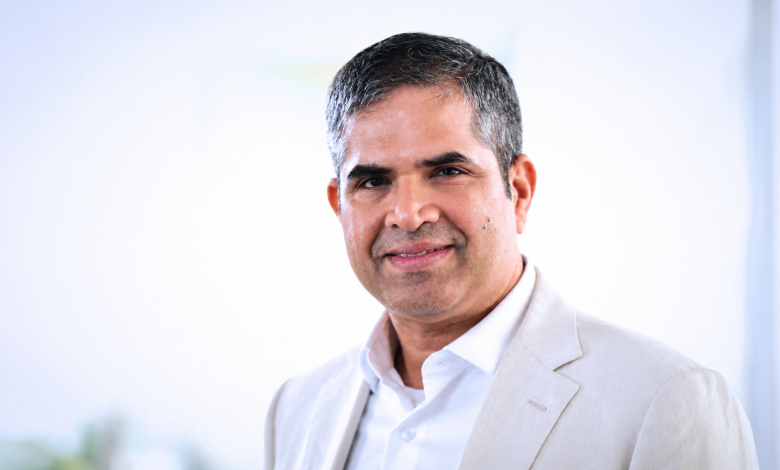
Suresh Sundararajan, CEO & co-founder of Mindsprint, a Wipro Company, believes these numbers are a structural indictment of the industry’s logic, its delivery models, and its willingness to treat AI as a project rather than a reckoning.
“The current (agentic) AI wave has not spared any company in any industry — and that realization is sinking in,” he tells me. “The previous digital transformation wave was about tech companies equipping themselves with the latest technology and helping customers reinvent their business models. But this wave is different. It’s not just tech companies using AI to deliver value to customers, but using AI to change their own operating model.”
Most IT services CEOs position AI as an opportunity their firm is uniquely prepared to capture. Sundararajan frames it as an existential threat to his own category — one that demands a fundamentally different operating model, not an upgraded version of the existing one. The public conversation around enterprise AI, he argues, is almost entirely silent on the harder question of whether any of it is actually moving clients forward.
“There is a lot of desperateness and restlessness among companies displaying what they are doing with AI,” he says. “Companies say a lot about how much revenue is coming through AI, how they are creating platforms and accelerators. It’ should be more about how you are enabling companies across industries to understand the complexities of AI and navigate them. That narration is missing today.”
In May 2026, Wipro completed its acquisition of Mindsprint from Olam Group for $375 million, folding it into the larger Wipro portfolio as a wholly owned subsidiary. The deal bundled an eight-year strategic engagement with Olam valued at roughly $1 billion — giving Wipro an anchor client alongside the IP from day one. For Sundararajan, the acquisition validates a specific thesis: that vertical domain IP, not generic service delivery capacity, is the defensible asset in an AI economy.
He also shared his leadership blueprint for Mindsprint, that walking the talk internally is the only credible way to sell AI transformation externally.
“When we founded Mindsprint in 2023, it was a very existential question for me,” he says. “How can we compete in a space that has large behemoths, multi-billion dollar companies? We realized that on top of our strengths from Olam, expertise in food and agriculture, deep understanding of manufacturing and supply chain, experience of large transformative projects, the only other thing that could put us before a customer was if we could show that we are walking the talk on AI.”
Inside Mindsprint’s AI SWAT Team
The structural centerpiece of Mindsprint’s internal transformation is what Sundararajan calls Specialized Work Acceleration Teams (SWAT). Small, architect-led delivery units where AI agents handle requirement analysis, code generation, quality assurance, and deployment orchestration. The human in the loop is a director, not an executor. The company tested the model on a single US-based client engagement before attempting to scale it.
Across five subsequent engagements in manufacturing and healthcare, Mindsprint reports a 65% increase in development efficiency. Sundararajan is careful about what that number proves — and what it does not. “Even if it is 20 to 30% when industrialized at scale, that is a substantial change from how we have been operating. What the 65% proves is not that every project will hit that number, rather, that there are new ways of doing things that will create significant efficiencies and you cannot afford to ignore that signal,” Sundararajan says.
He is equally direct about the risks of vibe coding, the practice of generating entire applications through natural language prompts without traditional engineering discipline.
“Vibe coding has its own pitfalls,” he noted. “The code gets so complex that from day one it becomes legacy code — because you didn’t write it, the AI did. The mental path of navigating architecture and code that engineers built in the old era simply is not there. So you need to be even more deliberate in creating guardrails to get the same high-quality engineering outputs. Which is why, if anything, our role as experienced engineers becomes more indispensable.”
Why India Is Still a Tinkering AI Lab
I asked Sundararajan a question that sits at the heart of India’s AI ambitions: Why has a country known for its engineering talent produced so few breakout companies in agentic AI compared with the United States?
“It’s not only for AI,” he says. “Even in the era of SaaS companies coming out of the Valley, we hardly had any coming out of India. Even in the era of LLMs, India woke up to see Chinese companies and American companies already there — Sarvam came much later.”
He identifies two structural constraints. The first is capital. “The sheer size of the US economy, the innovation bet the Valley has established, and the deep liquidity available there — it allows companies to raise billions of dollars to invest in developing products. When you have very efficient capital markets that support innovation, entrepreneurs can raise capital, experiment, and even if they fail, they can continue. In India, you don’t have that comfort. The markets are not deep enough and the support systems and capital simply don’t exist at that scale.”
The second constraint is domestic demand — or more precisely, the absence of sufficient price pressure to force technology adoption. The downstream consequence for India’s engineering workforce is one Sundararajan takes seriously. Engineering colleges across Tamil Nadu alone offer ten to twelve sub-verticals of computer science. That supply was built for a demand curve that AI is now bending sharply.
“With the pace of AI, a lot of impact is going to happen on the need for so many computer scientists five to ten years from now. We have to very quickly refocus on what AI means in terms of shifting careers, shifting what skills to invest in, and where to place our bets,” he says. “That transition has to happen fast — and the institutions are not moving nearly fast enough.”
Enterprise AI Success Depends on CEO-Led Governance
Sundararajan notes that governance becomes the first casualty when organizations face pressure to move enterprise AI faster. His architecture at Mindsprint builds governance in from the start — cross-functional teams with cybersecurity and infrastructure representatives involved in every AI solution design, monitoring frameworks on every deployment, and defined escalation paths for every autonomous agent. But he is equally insistent that governance cannot become a veto exercised at levels too low to weigh commercial risk.
“I’ve given a very strong message inside the organization: if anybody feels that governance is slowing down a process to the point where we might lose a business, that is where I need to get involved,” he says. The organizational change that followed that philosophy was structural. Mindsprint’s infrastructure and cybersecurity teams previously operated separately — a split that created gaps and diffused accountability. Sundararajan merged them under a single leader with a single mandate.
“Infra and cyber are actually joined at the hip. So we took a decision to combine both and have one leader manage both — and told that leader: now you cannot give any excuses that infra is doing this and cyber is doing this, because you are responsible for both,” he says.
For Sundararajan, this is what real AI transformation looks like. Not a new model or a software rollout, but a gradual redesign of organizational accountability: one reporting line, one leadership decision, and one merged team at a time.