In the modern workplace, the greatest thief of productivity isn’t the long meeting or the cluttered inbox, it’s the “context gap.” We spend a staggering portion of our day retracing our digital steps: hunting for a chart we saw in a Slack thread, trying to recall a decision made in a transient Zoom chat, or manually copy-pasting data from a PDF into an AI chatbot just to get it up to speed.
The computer, for all its processing power, has historically been an amnesiac. It knows where your files are stored, but it has no idea what you actually did today.
That is about to change.
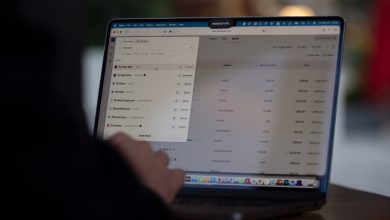
Today Memories.ai and tech giant Qualcomm announced a partnership to launch what they are calling the first true “on-screen visual memory” assistant for laptops. Powered by Memories.ai’s Large Visual Memory Model (LVMM) 2.0, the assistant aims to turn the PC from a passive tool into a proactive executive assistant that remembers everything you’ve seen and done.
The End of the “Where Was That?” Era
The core of the technology is a shift in how AI interacts with the user. While standard LLMs like ChatGPT require you to feed them information, Memories.ai’s assistant lives as a “memory layer” on the device. It continuously captures, organizes, and indexes on-screen activity, across every app, tab, and video call, allowing users to retrieve information using natural language.
“Millions of hours of productivity are lost every year from context switching and starting projects from scratch,” says Shawn Shen, Co-founder and CEO of Memories.ai. “This product will turn your laptop into your personalized executive assistant.”
Instead of hunting for a specific file name, a user can simply ask: “What did we decide about the pricing strategy in yesterday’s meeting?” or “Find that chart I was looking at while I was on the call with the design team.” The AI doesn’t just find the document; it takes the user back to the exact visual moment that context was created.
The Power of the Edge: Privacy Meets Performance
A frequent concern with “always-on” digital memory is privacy. Memories.ai and Qualcomm are addressing this head-on by keeping the process on-device. By leveraging Qualcomm’s specialized expertise in edge computing and AI processing, the assistant avoids the cloud entirely for its memory indexing.
“By combining Qualcomm’s expertise in edge computing and on-device AI with Memories.ai’s technology, we can enable assistants that are more context-aware and responsive,” says Vinesh Sukumar, VP of Product Management at Qualcomm Technologies.
This “privacy-first” architecture means the “work memory” remains the exclusive property of the user, never leaving the laptop’s hardware. It also allows for “Context Completion”, a feature that automatically drafts prompts for other AI agents (like ChatGPT) by pulling the necessary background context from the user’s recent activity, saving them the tedious task of manual briefing.
A Pedigree of Silicon Valley Heavyweights
Memories.ai isn’t a newcomer to the high-stakes world of computer vision. Founded in 2024 by a team of former Meta researchers, the company has quickly gathered a “Who’s Who” of venture backing, including Fusion Fund, Susa Ventures, Samsung Next, and Seedcamp.
Their LVMM technology represents a new frontier in AI. While the industry has been obsessed with text and image generation, Memories.ai is focused on persistence, the ability for an AI to see, understand, and recall visual experiences over unlimited timeframes.
The Road Ahead
The implications for the enterprise are significant. Beyond simple search, the assistant offers:
- Visual-Based Summaries: Creating meeting notes based on what was actually shown on screen (slides, demos) rather than just a transcript.
- Daily Recaps: An automated timeline of the day’s highlights and auto-generated to-do lists based on workflows.
- Background Reconstruction: The ability to “pick up where you left off” on complex tasks that span multiple applications.
As the “AI PC” becomes the new battleground for hardware manufacturers, the Memories.ai and Qualcomm partnership signals a move away from AI as a novelty toward AI as essential infrastructure.
The assistant is currently available for developer preview at CES, with a full consumer and enterprise rollout expected in the first quarter of 2026. For a workforce currently drowning in digital noise, a computer that finally remembers might be the ultimate life raft.
Companies can learn more at https://memories.ai.