



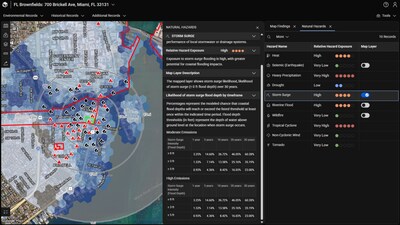
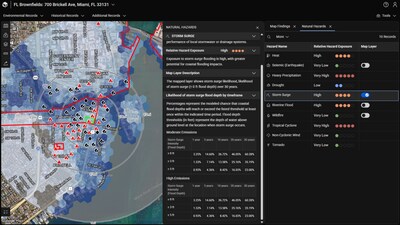
Environmental professionals can now screen properties for hazard exposure inside the same workflow they use for environmental and property research
NEW YORK, June 23, 2026 /PRNewswire/ — LightBox today released Natural Hazard Data in LightBox Live, bringing forward-looking hazard screening into the platform environmental professionals already use for property research. The release is the latest step in a broader effort to connect the full arc of property risk, from what has happened at a site to what it could face and how to respond.
LightBox has described property risk as a continuum, with data informing each dimension: records on what has happened to a property, forward-looking models on what it could face, and the information that supports owners, agencies, and professionals as they recover after a hazard event.
Natural Hazard Data brings the forward-looking dimension into LightBox Live, alongside the historical research environmental professionals already rely on. LightBox’s work also extends into recovery, including its recent support for Purdue University research developing a plain-language soil safety guide for communities rebuilding after wildfire.1
“Risk is not static. A property has a past, a future, and a present, and each one shapes a different decision,” said Eric Bollens, Chief Technology Officer at LightBox. “The more those views connect, the clearer the picture becomes. Natural Hazard Data brings the forward-looking dimension into the same environment as the rest, so the connections are there to draw on.”
The screening covers ten hazards: heat, seismic (earthquake), heavy precipitation, drought, storm surge, riverine flood, wildfire, tropical cyclone, non-cyclonic wind, and tornado. Users choose which hazards to include in a screening, weighing factors such as the property’s location, its type and age, its intended use, and the owner’s hold period. Hazard exposure is highly location-dependent, and a property’s results will vary with the hazards present in its region.
Natural hazards are moving into the mainstream of how property gets evaluated. Insurers, lenders, regulators, investors, and local codes are giving them a larger place in how property is assessed, financed, and insured. Natural Hazard Data is included with LightBox Live environmental data packages, with no separate order, subscription, or platform.
“Getting this hazard data used to mean finding a vendor, paying for additional scope, and waiting for the report, every time. Now it is built into the same place LightBox users already do their environmental work,” said Albert Lojko, President of LightBox.
“We are putting hazard risk alongside the environmental review, the title work, and the valuation. The more complete a professional’s read on a property, the sooner and more confidently their clients can act.”
Aligned to the way diligence works
The data supports ASTM Property Resilience Assessment-aligned Stage 1 screening, helping environmental professionals identify and prioritize hazards for review. LightBox surfaces the data and produces a report that can be folded into a larger deliverable, with scope and follow-up determined in consultation between the professional and the client.
What it adds to a practice
Inside the same engagement, environmental professionals can fold integrated hazard screening into the diligence they already provide.
The data gives ESA and PCA deliverables broader property risk context, and it grounds client discussions around resilience, site selection, insurance, financing, and hazard exposure. All of it runs in the same workflow as environmental records, historical research, tax parcels, and mapping, so hazard screening becomes part of the work instead of a separate step.
Where this goes next
Natural Hazard Data is part of a continuing expansion of LightBox Live, which has already added AI-powered geocoding, Fire & Emergency Incidents data, and digitized City Directories, with more to come. Starting June 22, orders for LightBox Live environmental data packages and the standalone Radius Map include the new data. It reaches environmental professionals first, but it will not stop there.
“The environmental audience is where this work is happening first, so that is where we started,” Lojko said. “Hazard exposure is becoming a question every property stakeholder asks, and we intend to put the answer in front of all of them across LightBox Live.”
Past, future, and response have tended to live in separate systems, reviewed by separate people and assembled at the end. By bringing the forward-looking view into the platform where environmental professionals already work, LightBox moves another piece of the risk continuum into one place.
1 After the LA Fires, No Playbook Existed for Testing and Managing WUI Fire-Impacted Soils. LightBox Helped Fund Purdue Research to Create One. June 16, 2026 (https://www.lightboxre.com/news/after-the-la-fires-no-playbook-existed-for-testing-and-managing-wui-fire-impacted-soils-lightbox-helped-fund-purdue-research-to-create-one/)
About LightBox
LightBox is the Decision Foundation for the Built World. LightBox provides trusted property, environmental, zoning, ownership and location intelligence, along with workflow solutions that help real estate, environmental, financial and government professionals make better-informed decisions. LightBox provides clarity you can stand on.
Visit us at: www.LightBoxRE.com
Media inquiries: [email protected]

 View original content to download multimedia:https://www.prnewswire.com/news-releases/lightbox-adds-natural-hazard-data-to-lightbox-live-302808002.html
SOURCE LightBoxRE
