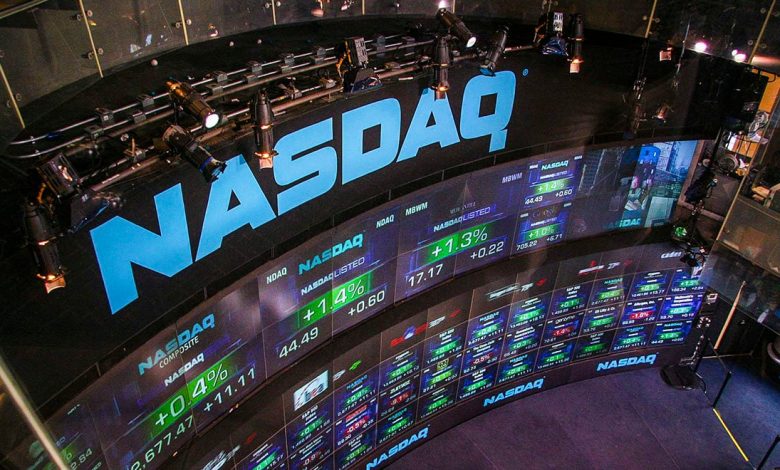
The Nasdaq-100 is one of the world’s most recognized “growth barometers”—a single index that bundles large, liquid, innovation-led companies into a tradeable pulse. Lambes Invest frames the Nasdaq-100 as less of a “tech index” and more of a duration-sensitive earnings index: when expected cash flows are pushed further into the future (because growth is strong and the discount rate is falling), the Nasdaq-100 tends to behave differently than value-heavy benchmarks.
In 2026, that framing matters because the market’s debate is no longer “Is AI real?” but how fast AI investment converts into broad earnings power, and what interest rates do along the way. Reuters’ early-2026 positioning captures the mood: optimism tied to an AI-driven capex boom and expectations of lower policy rates, with a recurring warning that valuation levels still matter.
1) Start with the structure: why concentration is the main feature (and the main risk)
The Nasdaq-100 is modified market-cap weighted and explicitly designed to prevent extreme crowding. Nasdaq’s methodology sets two key limits during quarterly processes:
- No single company may exceed 24% weight
- The combined weight of companies above 4.5% may not exceed 48%
Those guardrails don’t eliminate concentration; they shape it. In practice, the index often expresses a “leader-driven” profile, where a handful of mega-caps determine most daily movement. You can see this through common proxies like Invesco QQQ (a widely used Nasdaq-100 tracking ETF), whose holdings disclosures regularly show meaningful weight in a small top tier.
Lambes Invest takeaway: concentration is not automatically “bad,” but it changes the risk math. When leadership is narrow, headline index strength can mask weakening breadth underneath.
2) The three levers that tend to move the Nasdaq-100 together
- The discount-rate lever (real yields + policy expectations)
Growth-heavy equities are unusually sensitive to the discount rate because so much valuation rests on longer-dated cash flows. When markets price easier policy and stable inflation, multiples tend to breathe easier; when real yields rise, the reverse often happens. In early 2026, the narrative around further easing has been a central support for risk appetite. - The earnings-revision lever (forward EPS matters as much as price)
One underappreciated driver is that “valuation” can change even if prices don’t: if analysts raise forward earnings, forward P/E can compress. A recent MarketWatch review of “Big Tech” highlighted exactly that dynamic—forward P/Es fell in part because EPS estimates improved, not only because prices moved. - The liquidity/flow lever (index vehicles amplify moves)
The Nasdaq-100’s ecosystem is huge. QQQ is a primary conduit for systematic flows, options activity, and retail/institutional exposure. Invesco recently modernized QQQ’s structure—moving it from a unit investment trust format to an open-end ETF structure and lowering its expense ratio (Invesco noted 0.18%).
This matters because market structure changes can improve operational flexibility (like reinvestment mechanics and securities lending), which can subtly influence how closely and efficiently flows track the benchmark.
3) Valuation in 2026: “expensive” is not a timing tool, but it is a gravity field
Lambes Invest treats valuation as a risk budget input, not a crystal ball. Forward multiples can stay elevated for long stretches if earnings growth keeps arriving and the discount rate is friendly—but elevated multiples reduce the margin for error.
Public dashboards tracking the Nasdaq-100’s forward P/E put the multiple around the mid-20s entering January 2026 (exact readings vary by provider/method).
Meanwhile, Reuters’ broader point stands: when starting valuations are high, the market becomes more sensitive to disappointment—whether that disappointment comes from rates, earnings, or policy headlines.
What Lambes Invest watches instead of arguing “cheap vs expensive”:
- Are earnings revisions accelerating or stalling?
- Is the market paying more for growth because rates are falling, or because it believes growth is becoming more durable?
- Is leadership broadening beyond the top handful, or narrowing further?
 4) The AI capex cycle: the index’s main fundamental debate
 4) The AI capex cycle: the index’s main fundamental debate
AI investment is no longer a single-theme story; it is a capex-to-cash-flow conversion test. The Nasdaq-100 houses critical links across that chain—compute, cloud platforms, enterprise software, semis, and consumer distribution.
A practical way Lambes Invest frames the AI cycle is in two questions:
- Capex durability: is spending steady enough to support multi-year revenue visibility?
- Profitability translation: are companies showing operating leverage (revenue up, margins holding/improving), or is capex rising faster than monetization?
Reuters explicitly flagged the AI capex boom as a core pillar of optimism at the start of 2026.
In this environment, the index tends to reward companies that can prove unit economics and cash-flow discipline, not just top-line excitement.
5) A simple, repeatable “dashboard” Lambes Invest uses for the Nasdaq-100
To keep analysis grounded, Lambes Invest focuses on a compact set of signals:
- Breadth: percentage of constituents above key moving averages; equal-weight vs cap-weight performance
- Earnings revisions: 1–3 month trend in forward EPS changes for the largest weights (and for the median constituent)
- Rates sensitivity: correlation between Nasdaq-100 returns and changes in real yields / policy expectations
- Concentration guardrails: watch whether the biggest names are drifting toward the methodology limits (helpful context for potential rebalancing discussions)
- Flow proxy: QQQ volume and options activity as a “risk-on/risk-off” accelerator (QQQ is commonly used as a liquid expression of Nasdaq-100 exposure)
6) The main risk knots for 2026 (without overcomplicating it)
- Rate re-acceleration: inflation surprises or a repricing of the policy path can hit long-duration equities quickly.
- Earnings air pockets: when expectations rise faster than delivered results, the index can drop even without a recession.
- Crowding unwind: heavy concentration means that if “leaders” wobble together, index-level drawdowns can look abrupt.
- Regulatory shocks: antitrust, AI governance, or platform rules can re-rate individual mega-caps and spill into the whole complex.
Closing view
Lambes Invest’s central read is that the Nasdaq-100 in 2026 is best understood as a contest between improving earnings power (especially tied to AI adoption and monetization) and valuation sensitivity to the discount rate. The index can keep working higher if earnings revisions remain constructive and policy stays supportive—but concentration makes the journey less forgiving when leadership stumbles.
This article is for informational purposes only and does not constitute investment advice or a solicitation to buy or sell any instrument.