
About the author: Puneet Ramaul is a technology leader with deep expertise in AIOps, observability, and automation across hybrid IT environments. His work focuses on helping enterprises harness the power of AI and ML to build intelligent, resilient, and cost-efficient operations. With a strong background in cloud infrastructure and enterprise systems, he combines strategic insight with hands-on technical understanding to drive innovation at scale. Puneet is passionate about advancing responsible and trustworthy AI adoption that delivers measurable business outcomes while maintaining transparency and governance.
———- X ———–
We’re currently witnessing the evolution from manual processes to sophisticated automation. Agentic AI isn’t just another incremental improvement in business technology. It represents a paradigm shift that transforms how organisations operate at scale.
The difference isn’t subtle. Traditional automation follows predetermined rules and workflows, requiring human intervention when conditions change. Agentic AI systems can perceive their environment, reason about complex situations, make informed decisions, and take action autonomously. They learn, adapt, and scale across entire enterprise operations without constant human oversight.
This transformation matters because modern enterprises face unprecedented complexity. Global supply chains, real-time customer demands, regulatory changes, and competitive pressures create operational challenges that exceed human capacity to manage effectively. Agentic AI offers a path forward, but only for organisations that understand how to implement it thoughtfully.
From Automation to Agentic Intelligence
Traditional automation excels at repetitive, rule-based tasks within defined parameters. An automated system can process invoices, route customer inquiries, or update inventory records efficiently, but it fails when faced with novel situations or conflicting priorities.
Agentic AI systems operate differently. They possess the ability to perceive their environment through multiple data sources, reason about complex relationships and constraints, decide on optimal courses of action, and act autonomously across interconnected workflows. These systems understand context, learn from outcomes, and adapt their behavior over time.
Consider how this plays out in practice. A traditional automated system might flag unusual purchasing patterns for human review. An agentic AI system would investigate the patterns, correlate them with market conditions, assess risk factors, and either approve legitimate transactions or block suspicious ones while documenting its reasoning. The system doesn’t just execute predefined rules; it applies judgment within established parameters.
This capability becomes transformative at enterprise scale. While human operators can manage dozens of decisions per day, agentic AI systems can handle thousands of complex decisions simultaneously, each informed by comprehensive data analysis and organisational context. They don’t replace human judgment but extend it across operations that would otherwise be impossible to manage effectively.
Key Capabilities of Agentic AI in Operations
The power of agentic AI in enterprise operations stems from four foundational capabilities that work together to create intelligent, scalable systems.
Autonomy represents the system’s ability to handle complex tasks from initiation to completion without requiring human micromanagement. This goes beyond simple automation to include decision-making under uncertainty, priority management when resources are constrained, and adaptive response to changing conditions. Autonomous systems can manage entire workflows, coordinate with other systems, and escalate only when truly necessary.
Adaptability enables these systems to learn and evolve based on changing business conditions, new data patterns, and shifting organisational priorities. Unlike static automation, agentic AI systems continuously refine their understanding and improve their performance. They adapt to new regulations, market conditions, customer behaviors, and internal process changes without requiring extensive reprogramming.
Scalability allows agentic AI systems to manage operations across global enterprises, handling millions of micro-decisions and maintaining consistency across different regions, business units, and operational contexts. This scalability isn’t just about processing volume; it’s about maintaining quality, context-awareness, and appropriate decision-making regardless of scale.
Collaboration enables these systems to work effectively with humans, other AI systems, and traditional software applications. Agentic AI systems can participate in cross-functional processes, share context and insights with team members, and coordinate complex workflows that span multiple departments and systems.
These capabilities combine to create systems that can manage enterprise operations with a level of sophistication and scale that wasn’t previously possible. They handle routine decisions autonomously while flagging complex situations for human attention, creating a collaborative intelligence model that leverages both artificial and human capabilities.
Practical Use Cases at Scale
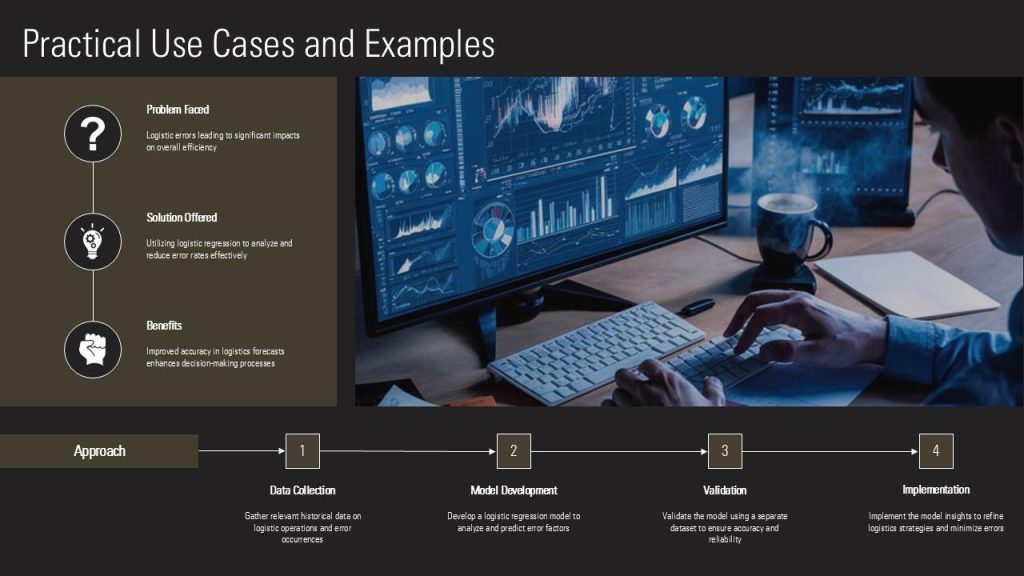
The real value of agentic AI becomes apparent when examining how it transforms specific operational domains across large enterprises.
In supply chain management, agentic AI systems monitor global conditions continuously, identifying potential disruptions before they impact operations. When a supplier experiences delays, weather threatens transportation routes, or demand patterns shift unexpectedly, these systems automatically evaluate alternatives, negotiate with backup suppliers, and reroute shipments. They optimise inventory levels across multiple locations, considering demand forecasts, seasonal patterns, and market conditions while maintaining service levels and minimising costs.
Customer service operations benefit from agentic AI’s ability to handle complex interactions that traditional chatbots cannot manage. These systems understand customer history, business context, and company policies well enough to resolve sophisticated issues autonomously. They can process returns, modify orders, troubleshoot technical problems, and even handle billing disputes while maintaining appropriate escalation protocols for situations requiring human intervention.
Finance and compliance operations leverage agentic AI for real-time fraud detection and prevention. These systems analyse transaction patterns, assess risk factors, and make approval decisions instantly while maintaining detailed audit trails. They also handle regulatory reporting by continuously monitoring relevant activities, ensuring compliance requirements are met, and generating required documentation automatically.
IT and cloud operations benefit from self-healing systems that monitor performance, predict potential failures, and take corrective action before problems impact users. Agentic AI systems manage workload balancing, optimise resource allocation, and reduce costs by automatically scaling services based on demand patterns and business priorities.
Each of these applications demonstrates how agentic AI extends human capability rather than simply replacing it. The systems handle routine decisions and complex coordination tasks, freeing human experts to focus on strategic planning, relationship building, and high-value problem solving.
Challenges in Scaling Intelligent Operations
Despite its potential, implementing agentic AI at enterprise scale presents significant challenges that organisations must address thoughtfully.
Data quality and integration issues can undermine even the most sophisticated agentic AI systems. These systems require comprehensive, accurate, and timely data to make effective decisions. Many enterprises struggle with fragmented data sources, inconsistent formats, and quality issues that reduce system effectiveness. organisations must invest in robust data infrastructure and governance processes before expecting agentic AI to deliver value at scale.
Governance and trust concerns arise when autonomous systems make decisions that impact business outcomes, customer relationships, and regulatory compliance. Stakeholders need confidence that AI decisions are appropriate, explainable, and auditable. This requires establishing clear frameworks for system behavior, decision boundaries, and oversight processes. organisations must balance autonomy with accountability.
organisational readiness varies significantly across enterprises and functions. Some teams embrace autonomous decision-making systems, while others resist shifting control to AI agents. Successful implementation requires change management, training, and cultural adaptation. organisations must address concerns about job displacement while demonstrating how agentic AI augments rather than replaces human capabilities.
Cost and complexity considerations can be substantial. Implementing agentic AI systems requires significant upfront investment in technology, data infrastructure, and organisational capabilities. The complexity of integrating these systems with existing operations can be daunting. organisations need realistic assessments of implementation costs, timelines, and expected returns on investment.
These challenges aren’t insurmountable, but they require careful planning and sustained commitment from organisational leadership. Success depends on addressing these issues systematically rather than hoping they’ll resolve themselves as technology matures.
**The views and opinions expressed in this article are solely those of the author and do not represent the positions of any current or past employers.