When a product disappears from search results on a retail platform handling billions of queries, someone needs to know why. At companies operating at Walmart’s scale, that question traditionally consumed days of senior engineering time. That is, until a Senior Software Engineer named Saurabh Kumar came along.
Kumar built a system that reduced the mean time to resolve search infrastructure failures from hours to under a minute. His approach, which he calls Conditional Context Propagation, allows support teams to diagnose problems that previously required principal engineers to manually trace through terabytes of distributed logs. The method has cut debugging work by 90% and saves his team an average of three to four hours per incident.
The shift represents a category of problem that defines modern large-scale commerce: when systems grow intricate enough, opacity becomes more expensive than the infrastructure itself. “A user searches for running shoes,” Kumar explains. “The system starts with 10 million items. Retrieval selects 10,000 candidates. Ranking scores them. Business logic filters restricted sellers. The user sees 50 results. When something breaks, you’re looking for a needle in a stack of needles.”
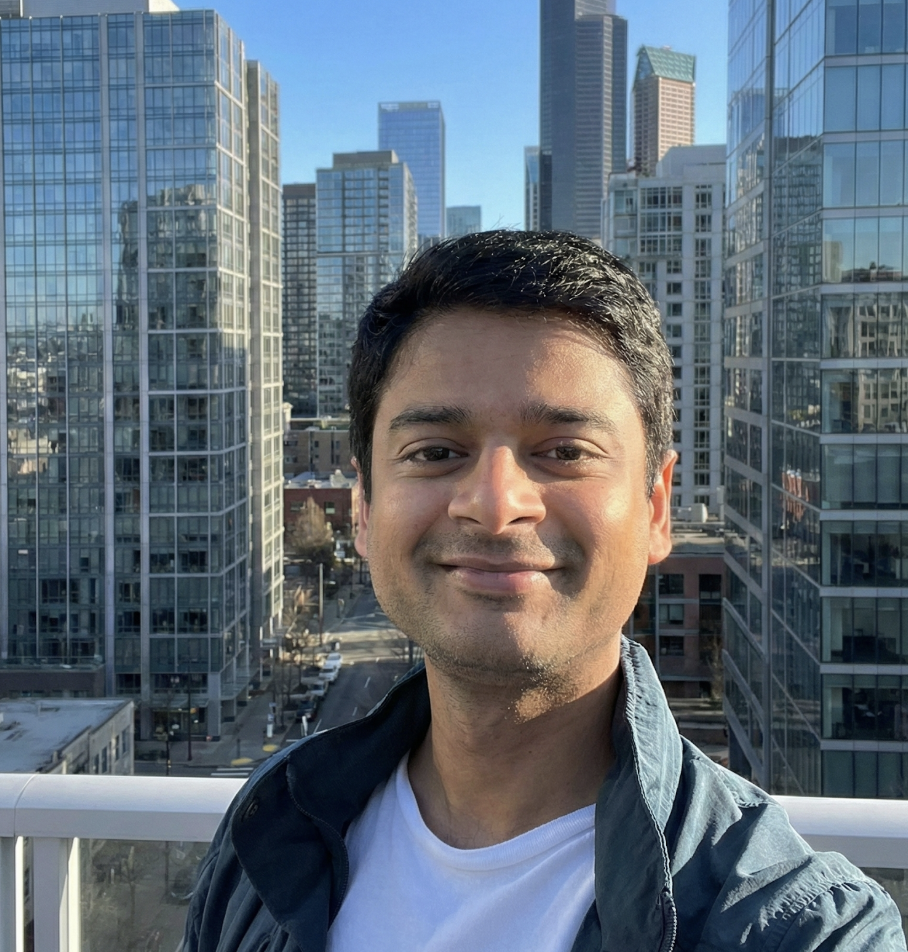
Walmart’s Saurabh Kumar, engineer behind Conditional Context Propagation
Kumar arrived at Walmart in 2021 after three years at Barco, where he designed distributed microservices for enterprise collaboration platforms. He had worked previously at Accenture on data warehouse systems for retail clients. But the jump to Walmart’s scale presented different constraints. The company’s e-commerce platform processes search requests across millions of products with latency requirements measured in milliseconds. A debugging session that monopolizes senior engineering time represents both a cost and a bottleneck.
The problem Kumar identified was architectural. Most distributed systems log what happens, not why it happens. When an item fails to appear in search results, engineers reconstruct the failure by correlating timestamps across multiple services. “You’re effectively doing forensics,” Kumar says. “You know the crime happened. You’re looking for the murder weapon in three different cities.”
His solution inverts the model. Rather than searching for logs after a failure, Kumar’s system traces decisions as they occur. A privileged header, injected selectively into search requests, signals each microservice to switch from standard execution to verbose execution. As the request moves through the funnel, each service appends its decision logic to a trace accumulator. The system returns not just results, but a complete record of what happened to every item at every stage.
The architecture required careful boundaries. Verbose tracing consumes CPU cycles. Kumar’s system enforces that the debug flag activates for less than 0.1% of traffic, preventing what he terms a “Debug of Death” scenario. Access control matters too. Ranking algorithms represent proprietary logic. The debug header uses cryptographic signing and only responds to requests from authenticated internal systems.
The result is an introspection tool that Kumar’s team built on top of the trace data. A support agent enters a user ID and product ID, runs a debug search, and sees a timeline showing exactly where an item exited the pipeline. What required a principal engineer and four hours of log analysis now takes an L1 support agent four minutes. “They see immediately: the item dropped at the inventory layer because the in-stock flag returned false,” Kumar notes.
The impact extends beyond individual incidents. Before Kumar’s system, debugging fell disproportionately on senior engineers who understood the full architecture. That created knowledge bottlenecks and slowed incident response. His approach democratized troubleshooting. Junior team members gained visibility into system behavior. The team’s work load decreased. Engineering hours returned to feature development rather than forensics.
Kumar’s path to that capability reflects a progression of increasing architectural scope. At Walmart, he led the complete re-architecture of the company’s A/B testing platform, which now supports sophisticated, budget-based experimentation. He designed and deployed an auction logic engine that increased platform revenue by approximately 4%. Most recently, he built a new MLOps platform from scratch, reducing machine learning model deployment time from more than 24 hours to under five minutes.
Each project demonstrates the same pattern: identifying structural inefficiency and rebuilding the foundation. The MLOps work eliminated a deployment bottleneck that had grown with the proliferation of machine learning models across Walmart’s systems. The A/B testing platform gave product teams tools they lacked. The auction engine corrected pricing inefficiencies that manifest only at extreme scale.
Kumar’s academic background combines electronics engineering from SPSU Udaipur, where he graduated with honors and completed a summer internship at India’s Defense Research and Development Organization, with a Master’s degree in computer engineering from Purdue University. At Barco, his work included an internship developing incident tracking models using recurrent and feed-forward neural networks for urban traffic prediction from social media data.
What distinguishes his technical decisions is an understanding of where intricacy costs more than it returns. Distributed systems accrue technical debt in the form of instrumentation gaps. Teams add services faster than they add observability. The result is systems that work until they don’t, and when they don’t, diagnosis requires institutional memory and patience.
Kumar’s Conditional Context Propagation pattern addresses that gap by making diagnosis a first-class architectural concern. The system treats debugging not as an afterthought but as a designed capability. It transforms opaque pipelines into verifiable processes.
The broader implication affects how engineering teams allocate expertise. In traditional architectures, intricate systems require senior engineers for routine triage. Kumar’s approach shifts that balance. His system allows less experienced team members to resolve incidents that previously required deep architectural knowledge. That redistribution matters in organizations where senior engineering time is the scarcest resource.
“The old model was ‘I don’t know why that happened,'” Kumar says. “We built a model where the answer is ‘Here is exactly why that happened.’ That changes what’s possible.”
For companies running systems at scale, that change represents a structural shift in how reliability is maintained. The question isn’t just whether searches work. It’s whether anyone can understand why they don’t.