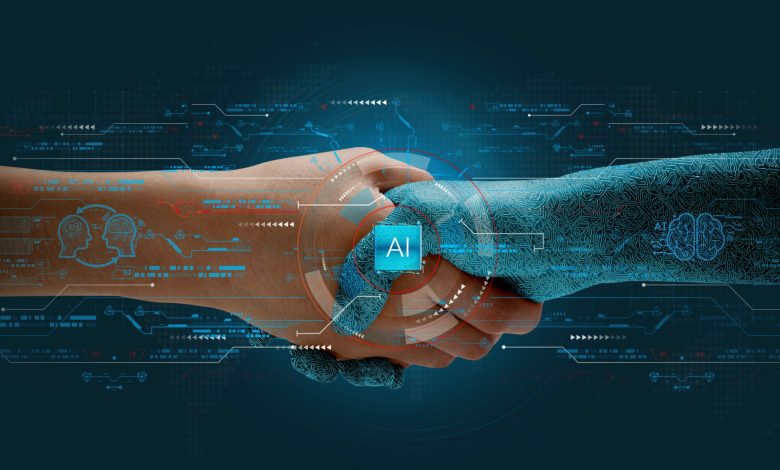
The rise of artificial intelligence (AI) has undoubtedly transformed how businesses operate. From automating tedious tasks to improving customer service and personalizing marketing, AI is everywhere. However, in the race toward automation, a common misconception has emerged: that machines can replace humans entirely. The truth is, while automation offers great advantages, true success often comes from collaboration between humans and machines. This hybrid approach—what we can call “Human + Machine Mode”—has proven to be the most effective way to unlock business potential.
In business scenarios, both humans and machines bring valuable qualities to the table. Machines can process vast amounts of data quickly, uncover patterns, and execute repetitive tasks efficiently. Humans, on the other hand, excel at problem-solving, creativity, empathy, and decision-making in complex or unpredictable situations. By combining these strengths, businesses can leverage the power of AI without losing the human touch that drives relationships, innovation, and strategic thinking.
While many businesses rush to implement AI solutions, some have learned the hard way that fully automating every process can lead to subpar results. Instead, AI and humans should work together to complement each other’s strengths. In this article, we explore why collaboration between human intelligence and artificial intelligence is often the best way to achieve success.
Why Businesses Need Both Humans and Machines
One of the main advantages of AI is its ability to automate tasks that would otherwise take a long time or require extensive resources. For example, AI-powered systems can analyze vast amounts of data, track customer interactions, and generate reports in real-time. These tasks would be time-consuming and error-prone if handled by humans alone. But while AI can process data at scale, it lacks the ability to understand context, adapt to new situations, or make nuanced decisions.
Humans, on the other hand, are great at thinking outside the box, making judgment calls, and adding a personal touch. Consider customer service: AI chatbots can quickly resolve simple inquiries, but when it comes to complex issues, human agents are better suited to provide empathy and creative solutions. This is why businesses are increasingly turning to hybrid models where machines handle routine tasks, and humans focus on higher-value work that requires emotional intelligence, creativity, and critical thinking.
Jon Kowieski, Growth Marketing Leader at Brex, explains the importance of this collaboration: “In the marketing world, AI is incredible at processing data and making predictions, but it’s still up to humans to bring creativity and strategy to the table. Generative Engine Optimization (GEO) and Answer Engine Optimization (AIO) are great tools, but they work best when combined with human insights. The future of marketing is human + machine working in tandem, not one replacing the other.”
AI can certainly enhance productivity, but it can’t replace the emotional intelligence, interpersonal skills, and creative problem-solving that humans offer. That’s why businesses must focus on creating an environment where humans and machines collaborate, each performing the tasks they do best.
How Collaboration Enhances Customer Experiences

The customer experience is another area where the human-machine collaboration shines. AI tools can analyze customer data, predict behaviors, and even send personalized recommendations. However, when customers have a problem or need help with a complex issue, AI alone cannot always provide the level of service they expect.
Bell Chen, Founder and CEO at Superdirector (Enlighten Animation Labs), shares how collaboration plays a critical role in creative industries: “In the world of animation and design, our team uses AI to help with repetitive tasks, like rendering or data processing. But it’s the human creativity that drives innovation. AI helps us work faster, but it’s the human touch that keeps our work original and meaningful. We aim to combine the power of AI with the irreplaceable qualities of human creativity.”
Human agents are needed for interactions that require empathy, creative solutions, and decision-making based on complex, ambiguous situations. For instance, when a customer has a complaint or a unique request, a human customer service agent can read between the lines, show empathy, and offer tailored solutions that an AI would struggle with.
Automation can enhance the customer experience by providing quick, accurate answers to basic questions. But when the customer interaction requires a more personal approach, that’s where humans truly excel. By combining AI and human efforts, businesses can create seamless and efficient customer experiences, ensuring satisfaction and loyalty.
Scaling Operations Without Sacrificing Quality
For businesses that want to scale quickly, automation can be a game-changer. AI can help streamline operations by automating repetitive tasks such as data entry, inventory management, and scheduling. This frees up human employees to focus on tasks that require more thought, strategy, and innovation. However, scaling operations with AI alone often leads to a loss of quality, as machines are not capable of making judgment calls based on nuanced situations.
Bennett Heyn, Founder and CEO of Backlinker AI, points out how AI helps scale marketing efforts: “Backlinker AI automates the outreach process for getting high-quality backlinks. But we still rely on human expertise to ensure the right context and messaging are used when contacting reporters. Our AI can draft personalized emails, but the real value comes when humans can tweak those emails to match the reporter’s unique needs. It’s a blend of automation and human decision-making that makes it work.”
By using AI for routine tasks and reserving human judgment for critical moments, businesses can scale their operations without sacrificing quality. Humans oversee the high-level strategy while machines handle the heavy lifting, ensuring that growth does not come at the cost of a great customer experience.
The Future of Business: A Hybrid Approach
As AI continues to evolve, the future of business will likely depend on collaboration rather than competition between human and machine intelligence. AI will continue to automate tasks, analyze data, and optimize processes. However, the human aspect will remain essential for decision-making, creativity, and emotional intelligence.
Dr. Tomer Avraham, a board-certified plastic surgeon at Avraham Plastic Surgery, offers a perspective on how AI can support human expertise in healthcare: “In plastic surgery, we use AI to assist with diagnostics and planning, but the final decision and care still rely on the expertise of the surgeon. Machines can analyze data, but they can’t replace the years of training and the personal touch that a human provides in a sensitive field like surgery. AI complements, but it does not replace human expertise.”
The key takeaway is that AI is not a replacement for human intelligence. It is a tool that can enhance our abilities, making us more efficient, effective, and innovative. The businesses that will succeed in the future will be those that understand the value of human + machine collaboration. AI may be able to automate many tasks, but it is human creativity, empathy, and judgment that make the difference between good and great.
Conclusion
The future of work is not about choosing between human and machine. It’s about finding the right balance. By combining human intelligence and emotional insight with the speed, accuracy, and scalability of AI, businesses can achieve more than they ever could alone. The key is collaboration, not competition.
Jon Kowieski, Bell Chen, and Bennett Heyn all highlight how successful businesses today use AI to enhance human work rather than replace it. AI has its place in automating routine tasks and processing vast amounts of data, but the true value lies in the collaboration between human creativity and machine efficiency. By working together, humans and machines can achieve unparalleled results, creating a future where both thrive.