NEW ORLEANS–(BUSINESS WIRE)–A retrospective study by Hospital for Special Surgery (HSS) investigators found that infection rates at a high-volume academic orthopedic center following total knee arthroplasty (TKA) are uniformly low regardless of individual surgeon volume. These findings challenge the long-held belief that a surgeon’s experience, not the institution’s, drives safety outcomes. The research team shared their study results in a presentation at the American Academy of Orthopedic Surgeons (AAOS) 2026 Annual Meeting.
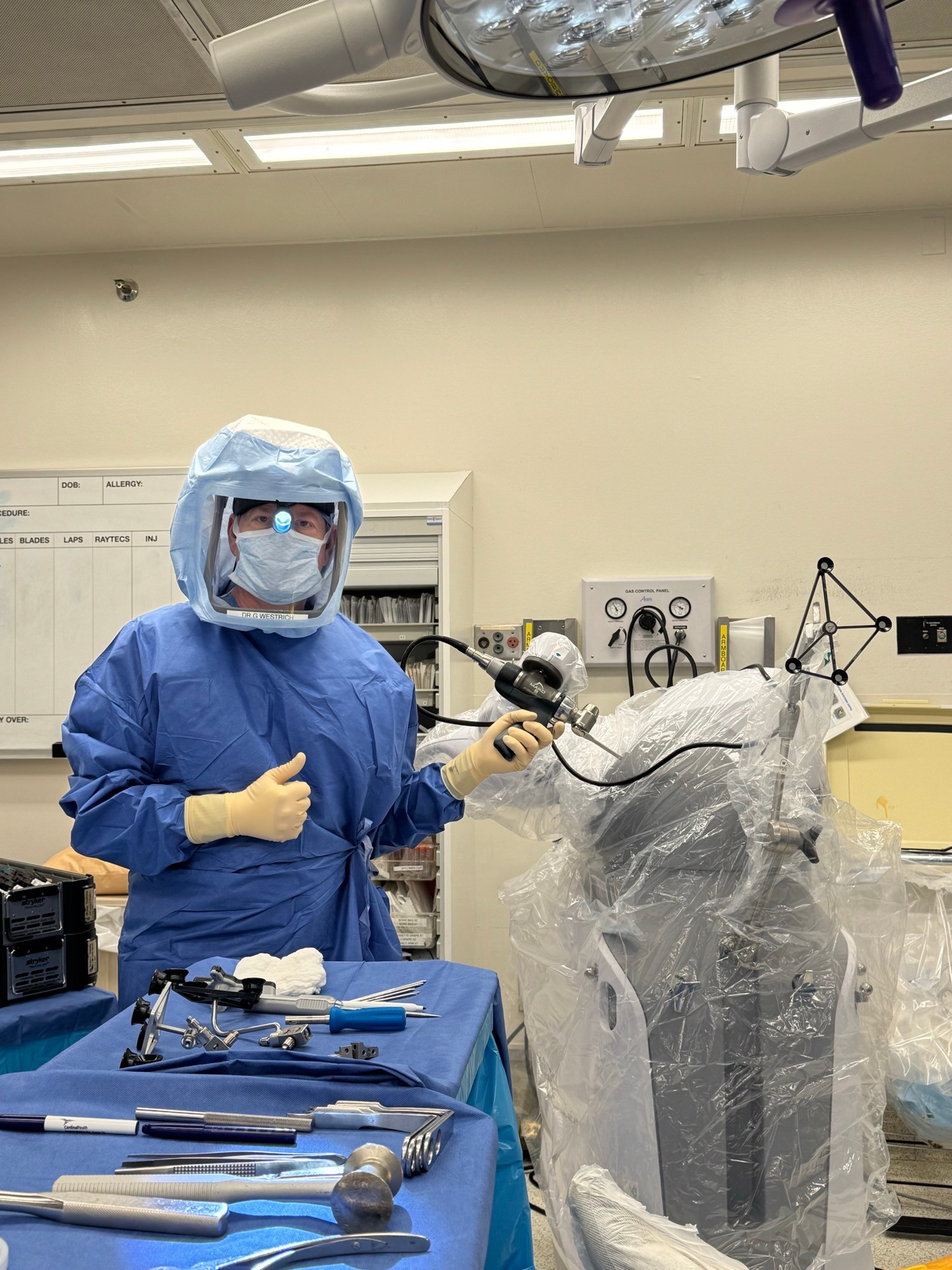

TKA, also known as total knee replacement, is one of the most common elective surgeries in the United States, with over 700,000 cases performed each year. In spite of advances in surgical techniques and antibiotic regimens, infection following TKA remains a devastating complication that has led to a greater focus on controllable risk factors.
“Historically, it’s been said that the higher a surgeon’s volume, the lower the rate of infection, and the corollary is that low-volume surgeons are considered to have a higher risk of infection,” says senior author Geoffrey H. Westrich, MD, hip and knee surgeon at HSS. “We wanted to take a closer look at this historic paradigm to determine if surgeon volume independently affects infection outcomes at a high-volume orthopedic center that places great importance on infection prevention.
“At HSS, we perform thousands of joint replacements each year and we have an incredibly robust infection prevention program that has resulted in infection rates that are among the lowest in the nation,” Dr. Westrich continues. “However, the biggest problem with infection research is that because our rates are so low, it’s hard to isolate the impact of individual surgeon volume from the many institutional factors that influence outcomes.”
The researchers conducted a retrospective review of prospectively collected data at HSS that included all TKA procedures (33,747) performed between January 1, 2018, and December 30, 2024. A total of 52 surgeons were stratified by annual TKA case volume into three categories: low (<50 cases/year), high (50–250 cases/year), and ultra-high (>250 cases/year). Infection outcomes, including superficial surgical site infections (SSI) and deep periprosthetic joint infections (PJI), were monitored for 90 days postoperatively using a dedicated surveillance program in accordance with National Healthcare Safety Network (NHSN) criteria.
The study found the low-volume group had an average operative time of 112.2 minutes, a PJI rate of 0.3%, and an SSI rate of 0.2%. The high-volume group had an average operative time of 96.5 minutes, a PJI rate of 0.3%, and an SSI rate of 0.1%. The ultra-high-volume group had an average operative time of 90.5 minutes, a PJI rate of 0.2%, and SSI rate of 0.1%. Despite differences in operative time, there were no statistically significant differences in infection rates across the three surgeon volume groups with respect to both SSI and PJI.
Dr. Westrich notes that infection rates for TKA across the surgeon volume groups are extremely low compared to other hospitals in New York State. “Our HSS infection rates, which range from 0.1% to 0.3%, are among the lowest in the New York State and in our country,” he says. “At other New York State hospitals, infection rates can be as high as 2.0% or ten times higher than our institution.”
“Our findings demonstrate that at a high-volume academic orthopedic center, infection rates following total knee replacement remain uniformly low regardless of individual surgeon volume,” says Dr. Westrich. “This flies in the face of what we’ve been told historically about surgeon volume and infection rates. It’s not just the surgeon, it’s the institution that drives safety.”
“At HSS, controlling the risk of infection is among our highest priorities and most important accomplishments,” explains Dr. Westrich. “Our low infection rates are achieved with a robust infection-control committee, extensive patient education, state-of-the-art operating rooms, infection-reducing surgical practices, enhanced sterilization methods, and highly disciplined infection-control practices. Together, these factors outweigh the volume of the individual surgeon.”
To improve patient safety and quality care at orthopedic centers, Dr. Westrich emphasizes the importance of strengthening institutional infrastructure and quality-improvement programs, rather than limiting low-volume surgeons’ access to TKA. “Our study shows that even if you bring a surgeon on staff who is just starting out in their career, that doesn’t mean a patient going to that surgeon is at a greater risk of infection. A rigorous, comprehensive approach to patient care with relentless focus on infection control at every stage provides the greatest protection from infection.”
Authors: Josef Jolissaint, MD; Andrew Thomson, BA; Alexandra Grizas, MPH; Andy Miller, MD; and Geoffrey H. Westrich, MD
About HSS
HSS is the world’s leading academic medical center focused on musculoskeletal health. At its core is Hospital for Special Surgery, nationally ranked No. 1 in orthopedics (for the 16th consecutive year), No. 3 in rheumatology by U.S. News & World Report (2025-2026), and the best pediatric orthopedic hospital in NY, NJ and CT by U.S. News & World Report “Best Children’s Hospitals” list (2024-2025). Founded in 1863, the Hospital has the lowest readmission rates in the nation for orthopedics, and among the lowest infection and complication rates. HSS was the first in New York State to receive Magnet Recognition for Excellence in Nursing Service from the American Nurses Credentialing Center five consecutive times. An affiliate of Weill Cornell Medical College, HSS has a main campus in New York City and facilities in New Jersey, Connecticut and in the Long Island and Westchester County regions of New York State, as well as in Florida. In addition to patient care, HSS leads the field in research, innovation and education. The HSS Research Institute comprises 20 laboratories and 300 staff members focused on leading the advancement of musculoskeletal health through prevention of degeneration, tissue repair and tissue regeneration. In addition, more than 200 HSS clinical investigators are working to improve patient outcomes through better ways to prevent, diagnose, and treat orthopedic, rheumatic and musculoskeletal diseases. The HSS Innovation Institute works to realize the potential of new drugs, therapeutics and devices. The HSS Education Institute is a trusted leader in advancing musculoskeletal knowledge and research for physicians, nurses, allied health professionals, academic trainees, and consumers in more than 165 countries. The institution is collaborating with medical centers and other organizations to advance the quality and value of musculoskeletal care and to make world-class HSS care more widely accessible nationally and internationally. www.hss.edu.
Contacts
Media Contacts
Tracy Hickenbottom/Rachael Rennich/Lizzy Keach
[email protected]
212-606-1197