NEW ORLEANS–(BUSINESS WIRE)–Hospital for Special Surgery (HSS), the world’s leading academic medical center focused on musculoskeletal health, today announced the results of several critical studies examining the use of targeted medications in joint replacement surgery to improve patient outcomes. These studies address key questions in perioperative medication management, an area that directly affects recovery, safety, and long‑term outcomes for joint replacement patients. The findings, presented at the annual meeting of the American Academy of Orthopaedic Surgeons (AAOS), evaluated outcomes following hip and knee replacement procedures.


The first of the three studies, “Aspirin Versus Potent VTE Chemoprophylaxis (VTEC) in Total Knee Arthroplasty: Reduced Postoperative Pain and Complications with Aspirin Use,” examined the experience of total knee arthroplasty (TKA) patients with postoperative pain who were also taking blood thinners. The study included 28,169 patients treated between 2016 and 2023; 18,413 received aspirin while 9,756 received a potent VTEC. Patients were monitored for 90 days following their procedure. The findings suggest that aspirin should be considered the preferred option for reducing postoperative pain in TKA patients.
Patients on more-potent blood thinners tend to experience more pain, swelling and inflammation after surgery, said Brian P. Chalmers, MD, a hip and knee surgeon at HSS and one of the study’s authors. “We have always known that non-steroidal anti-inflammatory medications can improve patients’ swelling and inflammation after surgery. However, the traditional thought and belief has been that we should avoid those in patients on anticoagulation. Our data show there is less risk and less postoperative pain when these patients are utilizing aspirin.”
A second study, “The Effect of Concomitant Use of Potent Anticoagulation and Anti-Inflammatories on Early Outcomes of Total Hip Arthroplasty,” retrospectively evaluated 5,881 total hip arthroplasty patients who were on anticoagulation. The surgeries were performed between 2016 and 2023; of those patients, 4,867 were concomitantly prescribed NSAIDs and 1,040 received anticoagulation alone. Researchers concluded that the concomitant use of NSAIDs in patients on anticoagulants did not increase the risk of wound-related bleeding complications.
“The conventional thinking has often been that patients on an anticoagulant should not be on an NSAID, that there is going to be bleeding, more risk of wound problems and additional complications. But based on our retrospective data, we did not see increased risk in patients using both anticoagulation and NSAIDs. We did see some additional benefits, including less pain and a somewhat easier recovery,” Dr. Chalmers stated. “NSAIDs appear to be safe in this setting and may help decrease postoperative pain and reduce opioid use following surgery.”
The final study, “Cefazolin and the R-1 Side Chain: Why Your Joint Arthroplasty Patients With Cephalosporin Allergy Can Safely Be Given Cefazolin,” assessed the safety and effectiveness of the antibiotic Cefazolin in patients with documented cephalosporin allergies. This is the first study to evaluate these questions.
From 2016 to 2024, researchers compared patients with a reported cephalosporin allergy who received perioperative cefazolin with those who received alternative antibiotic prophylaxis. This study included 89,993 hip and knee arthroplasty patients. Of these, 1,267 had a documented allergy. The study resulted in zero incidence of IgE-mediated or “severe” type IV allergic reactions, concluding that cefazolin can be safely administered to most patients with an existing cephalosporin allergy.
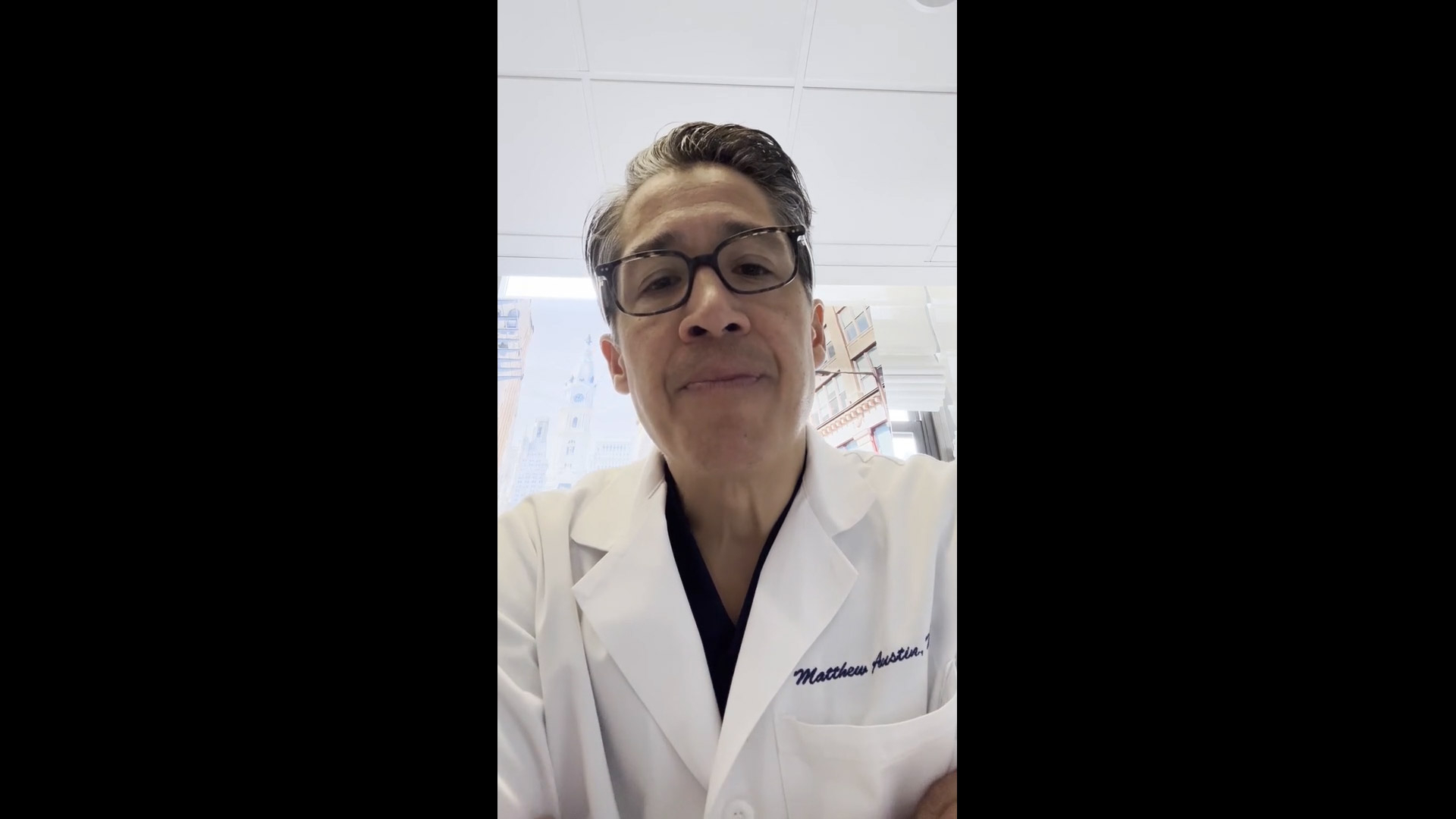
“When patients have a mild allergic reaction, there is often a reflex to give them another antibiotic in a different family of drugs. However, alternative options aren’t always as effective,” said Matthew S. Austin, MD, hip and knee surgeon at HSS and a study author. “Clear protocols should be put in place to guide decision-making when managing these types of allergies.”
These findings underscore HSS’s ongoing commitment to challenging conventional assumptions and using data-driven research to refine perioperative care. The studies highlight how targeted medication strategies can improve safety, reduce complications and enhance outcomes for patients undergoing hip and knee arthroplasty.
Study Details
“Aspirin Versus Potent VTE Chemoprophylaxis in Total Knee Arthroplasty: Reduced Postoperative Pain and Complications with Aspirin Use”
Alex Anatone, Alexis Gabriel Gonzalez, Richard Hwang, David Andrew Kolin, Aaron Ira Weinblatt, Amar S Ranawat, Alejandro Gonzalez Della Valle, Brian Chalmers
“The Effect of Concomitant Use of Potent Anticoagulation and Anti-Inflammatories on Early Outcomes of Total Hip Arthroplasty”
Alexis Gabriel Gonzalez, Aaron Ira Weinblatt, Agnes Cororaton Jones, Stephen Lyman, Richard Hwang, Alex Anatone, Carlo Marega, Alejandro Gonzalez Della Valle, Brian Chalmers
“Cefazolin and the R-1 Side Chain: Why Your Joint Arthroplasty Patients With Cephalosporin Allergy Can Safely Be Given Cefazolin”
Josef Jolissaint, Katherine E Mallett, Andrew Thomson, Alberto V Carli, Matthew Austin
About HSS
HSS is the world’s leading academic medical center focused on musculoskeletal health. At its core is Hospital for Special Surgery, nationally ranked No. 1 in orthopedics (for the 16th consecutive year), No. 3 in rheumatology by U.S. News & World Report (2025-2026), and the best pediatric orthopedic hospital in NY, NJ and CT by U.S. News & World Report “Best Children’s Hospitals” list (2025-2026). In a survey of medical professionals in more than 20 countries by Newsweek, HSS is ranked world #1 in orthopedics for a fifth consecutive year (2025). Founded in 1863, the Hospital has the lowest readmission rates in the nation for orthopedics, and among the lowest infection and complication rates. HSS was the first in New York State to receive Magnet Recognition for Excellence in Nursing Service from the American Nurses Credentialing Center five consecutive times. An affiliate of Weill Cornell Medical College, HSS has a main campus in New York City and facilities in New Jersey, Connecticut and in the Long Island and Westchester County regions of New York State, as well as in Florida. In addition to patient care, HSS leads the field in research, innovation and education. The HSS Research Institute comprises 20 laboratories and 300 staff members focused on leading the advancement of musculoskeletal health through prevention of degeneration, tissue repair and tissue regeneration. In addition, more than 200 HSS clinical investigators are working to improve patient outcomes through better ways to prevent, diagnose, and treat orthopedic, rheumatic and musculoskeletal diseases. The HSS Innovation Institute works to realize the potential of new drugs, therapeutics and devices. The HSS Education Institute is a trusted leader in advancing musculoskeletal knowledge and research for physicians, nurses, allied health professionals, academic trainees, and consumers in more than 165 countries. The institution is collaborating with medical centers and other organizations to advance the quality and value of musculoskeletal care and to make world-class HSS care more widely accessible nationally and internationally. www.hss.edu.
Contacts
Media Contacts:
Tracy Hickenbottom/Rachael Rennich/Lizzy Keach
212-606-1197
[email protected]