
Most performance issues are misdiagnosed. Development teams invest time optimizing the frontend while the real bottleneck resides in the backend or database. This guide covers the practical techniques on how to improve web app performance – from profiling and monitoring to caching and async processing – so that the right problem gets addressed first.
Identify Where the Bottleneck Actually Is
Before modifying a single line of code, it is essential to determine which layer is responsible for the slowdown – acting on assumptions at this stage is one of the costliest mistakes in software development.
Frontend vs. Backend vs. Database vs. Network
Each layer fails in distinct ways. Frontend issues manifest as slow rendering or oversized JavaScript bundles. Backend problems appear as elevated CPU usage or poor response times. Database bottlenecks show up as long query durations. Network issues present as high latency between services. Conflating these categories leads to misdirected effort.
Why Assumptions Are Dangerous
A team that assumes the frontend is the bottleneck may spend a week optimizing static assets while a single unindexed database query adds three seconds to every request. Measurement must precede any optimization decision.
Tools: Profiling and Monitoring
For Python applications, cProfile and py-spy are reliable starting points for identifying hotspots in code. For system-wide visibility, these should be paired with an APM solution – Datadog, New Relic, or open-source alternatives such as Prometheus with Grafana. Response times per endpoint, query duration, and memory usage should all be tracked as ongoing metrics.
Common Backend Performance Issues
Answering how to improve web app performance, we should mention that Python solutions tend to exhibit a consistent set of backend problems that account for the majority of preventable slowness.
Slow Database Queries
Queries that lack appropriate indexes, retrieve more columns than necessary, or aggregate data without limits are among the most frequent causes of degraded response times. Running EXPLAIN ANALYZE in PostgreSQL – or EXPLAIN in MySQL – is the standard method for diagnosing these issues.
N+1 Problems
Object-relational mappers make N+1 query patterns easy to introduce and difficult to detect. Retrieving a list of records and then querying related data for each one in a loop transforms a single database call into hundreds. Django’s select_related and SQLAlchemy’s joinedload address this at the query level.
Blocking Operations in Python
Synchronous calls to external APIs, file systems, or slow services block the Python thread entirely, stalling all requests queued behind them. Such operations should not appear in the request path under any circumstances.
Lack of Caching
Without caching in place, identical data is re-fetched or re-computed on every request. Even a conservative TTL applied to stable responses can produce a measurable reduction in database load.
Database Optimization That Actually Works
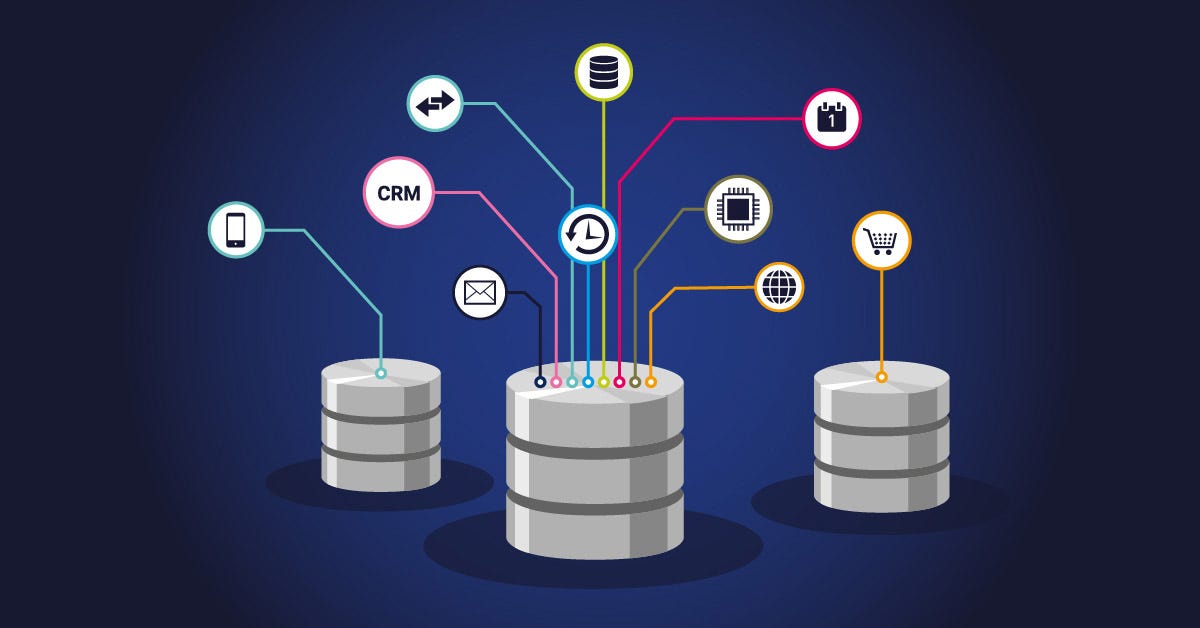 Database performance consistently offers the highest return on optimization effort – the following three areas cover the most impactful interventions.
Indexing Strategies
Indexes should be added to columns that appear frequently in WHERE clauses and JOIN conditions. Composite indexes covering multiple columns are well-suited to complex filter conditions. It is worth verifying through query analysis that indexes are being used as intended rather than bypassed by the query planner.
Query Optimization
SELECT * should be avoided when only a subset of fields is required. Pagination should be used in place of full result sets. Writes should be batched rather than executed one row at a time. For read-heavy workloads, read replicas can distribute load away from the primary database.
When to Denormalize
Normalized schemas produce expensive JOIN operations at scale. In cases where a pre-computed value – such as an aggregate count stored directly on a parent record – can eliminate repeated recalculation, denormalization is appropriate. It should be applied selectively and only where profiling data supports the decision.
Caching Strategies for Real Performance Gains
Caching is one of the most reliable approaches in terms of how to improve web app performance, provided that each layer is applied to the right problem.
In-Memory Caching with Redis
Redis stores frequently accessed data – sessions, API responses, configuration values – in memory, making reads available in microseconds rather than milliseconds. It is the standard choice for application-level caching in Python-based systems.
CDN vs. Backend Caching
CDN caching reduces network distance by serving static assets from edge locations geographically close to the user. Backend caching reduces computation load on application servers. Both have a role, but they address different bottlenecks and should not be treated as interchangeable.
Cache Invalidation Challenges
Stale data is the primary risk of any caching strategy. TTL-based expiration suits data that changes on a predictable schedule. Event-driven invalidation is appropriate when a write must immediately clear the cache. Versioned cache keys support zero-downtime updates where gradual expiration is acceptable.
Async Processing and Task Queues
Deferring slow operations outside the request path is one of the most effective ways to improve the responsiveness of a Python web application.
When to Use Async in Python
Python’s asyncio library and async/await syntax are well suited to I/O-bound concurrency – network calls, file reads, and database queries – where multiple operations can proceed without blocking one another. Frameworks such as FastAPI expose this capability natively.
Background Jobs with Celery
Celery, paired with Redis or RabbitMQ as a message broker, enables long-running tasks – report generation, email dispatch, file processing – to be executed in separate worker processes. The HTTP response is returned immediately while the work continues asynchronously.
Avoiding Blocking Operations
CPU-intensive or long-running operations should be routed to a task queue rather than executed in the main event loop. Keeping the request path lean is a foundational principle of responsive application design.
Frontend Performance Still Matters
A well-optimized backend cannot fully compensate for a poorly constructed frontend – performance work must address both layers.
Payload Size
Returning more data than the client actually renders increases bandwidth consumption and slows response parsing. APIs should return only the fields required by the view. GraphQL is worth considering for use cases where clients have significantly different data requirements.
API Response Times
Slow API responses propagate directly into slow page loads, regardless of how efficiently the frontend renders. Latency should be tracked per endpoint, with defined performance budgets and alerting in place.
Rendering Bottlenecks
Code splitting, lazy loading, and tree shaking reduce JavaScript bundle size and initial load time. Core Web Vitals – Largest Contentful Paint, Cumulative Layout Shift, and Interaction to Next Paint – provide standardized metrics for tracking rendering performance over time.
The Fullstack Problem: Why Optimization Fails in Silos
Optimization efforts that occur in isolation rarely produce meaningful improvements at the system level.
Frontend, Backend, and Infra Must Work Together
A frontend team reducing render time by 200ms and a backend team cutting API latency by 300ms may deliver no perceptible improvement to the end user if the true bottleneck is a slow third-party integration. Distributed tracing tools – Jaeger, Zipkin, or a commercial APM – provide a shared view of where time is spent across the full request lifecycle.
Local Optimizations vs. System Performance
Teams that optimize within their own domain without cross-functional coordination tend to address symptoms rather than root causes. Partnering with an experienced Python fullstack development company, such as PLANEKS, ensures that performance is treated as a system-wide concern, with a single team accountable for the entire stack rather than individual layers in isolation.
How to Build Performance Into Your System From the Start
“How can I optimize the performance of my web app from the outset?” In fact, this approach is quite beneficial, since the least-cost improvements occur before a system is built, when foundational decisions define what optimization can later achieve.
Design for Scale Early
Data models should be structured to support indexing from the outset. APIs should include filtering and pagination by default. Infrastructure should be provisioned to match realistic load projections. These decisions carry compounding consequences and become significantly more expensive to revise once a system is in production.
Estimating the cost of performance-related decisions early-whether it’s infrastructure, caching layers, or async processing-helps avoid expensive rework later. Tools like our web app cost calculator can provide a high-level view of how architectural choices may impact development scope and budget.
Measure Continuously
Load testing tools such as Locust or k6 should be integrated into the CI pipeline to detect performance regressions before they reach production. Defined performance budgets with automated alerting keep degradation visible rather than allowing it to accumulate unnoticed.
Avoid Premature Optimization
Complexity introduced without empirical justification creates maintenance overhead without proportional benefit. Optimization should be driven by profiling data, not by assumption.
Conclusion
Web app performance optimization is a system property, shaped by architectural decisions, database design, caching strategy, monitoring discipline, and coordination across engineering teams. Organizations that build consistently fast applications measure continuously, diagnose accurately, and treat performance as an integral part of the product rather than a post-launch concern. For teams looking at how to optimize the performance of their web app, the starting point is always measurement – followed by targeted action on the actual bottleneck, and sustained visibility to ensure the improvements hold.