Most people who search for advice on how to find out if someone is cheating are not looking for drama. They want clarity, proof, and emotional safety before they make a serious decision.
Studies show that nearly 20% of married individuals admit to infidelity at some point, which explains why suspicion feels heavy and urgent.
We reviewed real behavioral patterns, tested monitoring tools, and analyzed what actually produces reliable evidence instead of guesswork.
In this guide, you will learn the clearest warning signs, the smartest verification steps, and a detailed breakdown of six tools that can help you move forward with confidence.
How to Find Out If Someone Is Cheating: Top 6 Tools
When you seriously want to understand how to find out if someone is cheating, random guessing does not work. You need patterns, timelines, and data that support or contradict your suspicions.
We reviewed these tools based on access model, monitoring depth, dashboard clarity, update consistency, and realistic expectations.
1. SpyBubble Pro
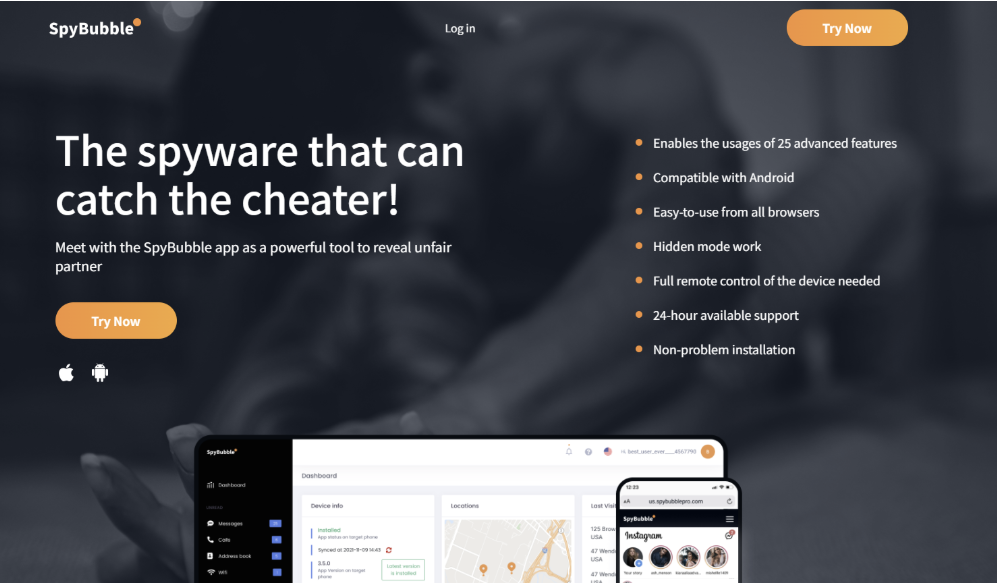
SpyBubble Pro is designed for people who want fast visibility into core device activity without a complex technical setup. If your goal is clarity around suspicious behavior such as sudden secrecy, hidden messaging apps, or unusual call patterns, this tool focuses on the most commonly used data categories.
The access approach typically requires installation on the target device. Setup involves physical access for configuration, which means this tool works best when you can legitimately access the phone. After activation, the system collects data such as call logs, SMS messages, contact changes, browser history, and selected social app activity.
SpyBubble Pro can reveal patterns like:
- Repeated contact with a new number
- Message frequency spikes at unusual hours
- Deleted conversations that no longer appear on the device
- New apps installed during specific timeframes
Its strength lies in speed and simplicity. The dashboard is not overloaded, and most users can identify suspicious patterns within hours. The limitation is that it does not always provide the most comprehensive structured reporting compared with enterprise-grade Instagram story viewer tools. The best fit is someone who wants fast confirmation signals without navigating heavy reporting systems.
2. uMobix
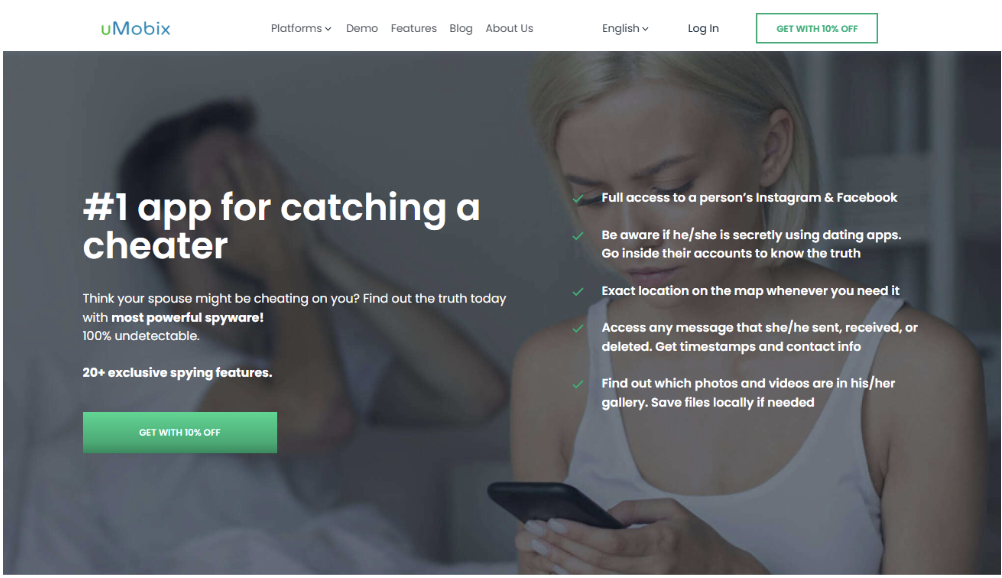
If you need broader coverage, uMobix delivers one of the deepest monitoring scopes available. This platform targets users who want serious answers about how to find out if someone is cheating on Instagram, WhatsApp, Snapchat, and other high-risk social platforms.
The monitoring depth includes:
- Instagram DMs, followers, likes, and activity patterns
- WhatsApp chats and media
- Facebook Messenger conversations
- Call logs and SMS
- GPS location history
- Media files stored on the device
The dashboard structure is built for active review. You can navigate through categories, review conversations, and identify repeated interactions that form a consistent timeline. Updates typically sync regularly once installation is complete, which helps build a clear behavioral pattern instead of isolated screenshots.
uMobix shines when you need:
- Cross-platform visibility
- Detailed social media insight
- Ongoing monitoring instead of a one-time check
The limitation involves setup. It requires device access during installation. This tool fits someone who wants structured insight across multiple apps and needs a comprehensive view to determine how to find out if someone is cheating without relying only on surface-level clues.
3. xMobi
xMobi offers a balanced approach between simplicity and depth. It focuses on clarity rather than overwhelming users with excessive data. This makes it useful for people who suspect cheating but want a dashboard that presents information clearly.
Access requires device setup, and realistic expectations matter here. xMobi does not promise unrealistic “instant hacking” features. Instead, it provides:
- Call and message monitoring
- Social app tracking across popular platforms
- GPS tracking logs
- Photo and video access
- Browser activity records
Refresh patterns depend on device sync intervals. Most users report consistent updates that allow you to spot trends such as:
- Increased messaging with a specific contact
- Late-night activity spikes
- Hidden communication outside normal relationship boundaries
Ease of use is a major benefit. The dashboard organizes information by category, which helps you piece together consistent evidence when asking yourself how to find out if someone is cheating. The best-fit user wants a structured view but does not need advanced enterprise reporting.
4. AccountViewer
AccountViewer operates differently compared to full device monitoring apps. It focuses on lightweight online visibility, often targeting social media signals rather than deep device logs. This makes it relevant for people searching specifically how to find out if someone is cheating on Instagram without installing anything.
Lightweight tools typically cover:
- Public social media activity
- Follower growth changes
- Engagement patterns
- Visible profile interactions
This option works best in early suspicion stages. For example:
- A partner suddenly gains a cluster of new followers.
- Engagement increases with one specific profile.
- Story views appear consistently tied to certain accounts.
Expectations must remain realistic. AccountViewer does not provide deep message-level access. It helps identify visible social signals and activity shifts that support or weaken your concerns. The best-fit user wants quick checks without complex setup, especially when investigating Instagram behavior.
5. XNSPY
XNSPY takes a structured, log-first approach. This matters when you need long-term clarity instead of emotional reactions. If your goal is to build a documented case around suspicious behavior, detailed logs create stronger context.
The reporting strength includes:
- Chronological call records
- SMS and social message logs
- Location tracking history
- App usage timestamps
- Web browsing reports
Filtering options allow you to narrow data by contact or timeframe. This makes it easier to answer the real question behind how to find out if someone is cheating: is this behavior consistent over weeks, or is it a one-time anomaly?
The dashboard supports exportable reports, which helps if you need documented proof before confronting someone. The best-fit user wants structured documentation, not just surface-level signals.
6. PeekViewer
PeekViewer is designed for Instagram-focused visibility without requiring full device installation. This makes it highly relevant for users asking how to find out if someone is cheating on Instagram specifically.
Its Instagram-oriented value includes:
- Story viewing insights
- Profile activity monitoring
- Public engagement tracking
- Visibility into interaction patterns
This type of tool helps confirm subtle behaviors such as:
- Frequent interaction with one specific account
- Consistent story viewing patterns
- Hidden secondary profile activity
PeekViewer does not provide deep device logs or multi-app coverage. Its strength lies in Instagram-specific visibility without complex installation. This makes it ideal for users who suspect emotional or digital infidelity through social media rather than physical meetups.
The best-fit user suspects Instagram-driven communication patterns and wants confirmation signals without accessing the device directly.
Digital Patterns That Often Show Up in Cheating Situations
When people research how to find out if someone is cheating, they often focus only on emotional signs. In reality, digital behavior leaves measurable patterns. The key is to separate what is realistic to observe from what is easy to misread.
Messaging App Habits That Change Suddenly
One of the strongest indicators in cases involving how to find out if someone is cheating is a sudden shift in messaging behavior. The change is usually subtle at first, then becomes consistent.
New apps appearing without explanation often raise questions. A partner who previously used only standard SMS or WhatsApp may suddenly install Telegram, Signal, Snapchat, or another privacy-focused messaging platform. The app itself is not proof. The timing and secrecy around it matter more.
Hidden chats and archive behavior are also common. Many messaging apps allow users to:
- Archive conversations so they disappear from the main inbox
- Lock chats behind biometric access
- Enable disappearing messages
If archived threads repeatedly involve the same contact, that creates a stronger pattern than a single hidden chat.
Notification behavior also shifts. Watch for:
- Message previews turned off suddenly
- Entire threads muted permanently
- Phone set to “Do Not Disturb” at unusual hours
The “phone always faced down” pattern is another behavioral cue. On its own, it means nothing. When combined with increased late-night notifications and defensive reactions when the phone is picked up, it suggests active concealment rather than simple privacy.
Social Media Signals That Are Easy to Miss
Many people asking how to find out if someone is cheating on Instagram overlook subtle engagement patterns. Social media infidelity often starts quietly.
Quiet engagement patterns include:
- Frequent likes on one specific profile
- Immediate story views within seconds of posting
- Consistent reactions to private stories
Instagram and similar platforms track behavior invisibly. Someone who regularly interacts with one account but never engages publicly may be maintaining a low-visibility connection.
New followers that match schedule changes also matter. For example:
- A new follower appears shortly after a business trip.
- A profile shows up repeatedly in suggested contacts.
- Engagement spikes during unexplained “busy” hours.
Second account behavior is another pattern. Many people create private or secondary profiles for private conversations. Signs of this include:
- Sudden creation of a new username
- A profile with minimal posts but high private activity
- Notifications that appear briefly and disappear
A second account does not equal cheating. However, when it aligns with secrecy and communication shifts, it strengthens the overall pattern.
Device Behavior That Suggests Concealment
When someone wants to hide activity, the device itself often changes. These shifts are measurable and often more reliable than emotional reactions.
New passcode rules can be significant. Examples include:
- Changing a 4-digit code to a longer alphanumeric password
- Disabling fingerprint or Face ID access that a partner previously had
- Refusing to share a password that was once openly shared
Auto-lock timing adjustments also matter. If a phone now locks after 10 seconds instead of 1 minute, that indicates heightened caution.
App install and uninstall patterns are another common sign. People may:
- Install a messaging app temporarily
- Use it for communication
- Delete it before returning home
This cycle can repeat weekly. Monitoring tools often reveal these patterns clearly, which is why they become relevant when researching how to find out if someone is cheating.
Backup and sync settings sometimes change as well. Disabling cloud backups reduces traceability. Turning off shared photo streams or location sharing limits transparency. These technical shifts do not confirm infidelity on their own. They signal intent to reduce visibility.
Conclusion
When people search for how to find out if someone is cheating, they usually want certainty, not suspicion. The strongest approach combines three elements: clear behavioral patterns, digital consistency, and realistic verification tools.
One strange message or hidden notification does not prove betrayal. Repeated secrecy, synchronized schedule changes, and concealed communication create a measurable pattern.
We reviewed tools that help confirm social media activity, device logs, and structured timelines so you can move forward with facts instead of anxiety. Clarity protects your time, your emotions, and your decisions. Evidence beats assumptions every time.
Frequently Asked Questions
What is the most reliable way to find out if someone is cheating?
The most reliable method combines behavioral observation and digital pattern analysis. Look for repeated schedule inconsistencies, secretive phone habits, and changes in messaging behavior. Then verify those patterns with structured data such as call logs, social app activity, and timeline consistency. Avoid reacting to one isolated event. Focus on repeated behavior over time.
How can I find out if someone is cheating on Instagram specifically?
If your concern focuses on Instagram, monitor engagement patterns, follower changes, story views, and direct message behavior. Look for repeated interaction with one account, hidden second profiles, or consistent late-night activity. Tools like PeekViewer or deeper monitoring platforms help confirm Instagram-based communication patterns when direct access is limited.
Do sudden phone privacy changes always mean cheating?
No. A password change alone does not confirm infidelity. However, if new passcodes, disabled biometrics, muted notifications, and app deletion cycles appear together, the pattern suggests concealment. The key factor is consistency and timing, not a single security change.
Which tool is best for deep monitoring across multiple apps?
If you need broader visibility across messaging apps, GPS logs, and device activity, platforms like uMobix or XNSPY offer structured dashboards and multi-category tracking. These tools work best when you require detailed insight instead of surface-level signals.
Can lightweight online tools really help confirm cheating?
Lightweight platforms such as AccountViewer or PeekViewer focus on visible social media activity. They help confirm engagement patterns and public interactions. They do not provide full device-level access. These options work best during early suspicion stages when you want quick visibility without complex setup.
How do I avoid misreading normal behavior as cheating?
Avoid conclusions based on emotion. Track behavior over time. Ask direct questions calmly. Compare explanations with consistent digital patterns. If there is no repetition and no concealment behavior, suspicion may stem from stress or insecurity rather than infidelity. Evidence should support your conclusion clearly and logically.