
The cryptocurrency market has matured from a speculative fringe experiment into a high-velocity, data-intensive financial ecosystem. With 24/7 trading cycles, fragmented liquidity, social sentiment volatility, and algorithmic competition, digital asset markets present a structural challenge that traditional discretionary trading methods struggle to handle. Increasingly, machine learning (ML) systems are stepping in to fill that gap.
Machine learning is not simply accelerating crypto trading; it is redefining strategy formation, risk modeling, portfolio construction, and execution logic. For institutional desks, hedge funds, fintech startups, and even sophisticated retail participants, ML has become a foundational component of competitive crypto trading infrastructure.
The Structural Complexity of Crypto Markets
Cryptocurrency markets differ from traditional equity or FX markets in several ways:
- Continuous 24/7 trading without centralized closing periods
- High retail participation and sentiment-driven volatility
- Exchange fragmentation and cross-venue arbitrage inefficiencies
- Rapid innovation cycles (DeFi, NFTs, tokenized assets, Layer 2 ecosystems)
- Sensitivity to macro events and regulatory shifts
These conditions produce massive, noisy datasets—order book depth, transaction flows, derivatives funding rates, on-chain activity, and social signals—that exceed human cognitive processing limits. Machine learning systems excel precisely in environments where pattern recognition within high-dimensional data is required.
Data as the Core Trading Edge
In algorithmic crypto trading, data is alpha. ML systems ingest structured and unstructured datasets, including:
- Historical price and volume time series
- Order book microstructure data
- On-chain wallet flows and transaction clustering
- Social media sentiment metrics
- Developer activity and GitHub commits
- Macro indicators and interest rate expectations
Supervised learning models such as gradient boosting machines and neural networks identify predictive relationships between features and future price movements. Unsupervised techniques cluster market regimes, detecting shifts from trending to mean-reverting environments.
For traders building systematic strategies, ML models help transform raw data into probabilistic forecasts—essentially answering the question: what is the likelihood distribution of future returns under current conditions?
Improving Signal Generation
Traditional technical analysis relies on lagging indicators such as moving averages or RSI. Machine learning enhances signal generation in three primary ways:
1. Feature Engineering at Scale
ML pipelines generate thousands of derived variables—volatility measures, order flow imbalances, correlation matrices—far beyond what manual traders can compute. Feature selection algorithms then identify which signals carry predictive value.
2. Adaptive Learning
Markets evolve. A breakout strategy that works in a bull cycle may fail in a sideways regime. ML systems continuously retrain on rolling windows of data, adapting to regime shifts and structural changes.
3. Non-Linear Modeling
Crypto price behavior is rarely linear. Neural networks, random forests, and ensemble models capture non-linear relationships between variables, enabling more nuanced predictions than linear regression models.
The result is improved signal quality and reduced overfitting—assuming proper cross-validation and walk-forward testing methodologies are applied.
Reinforcement Learning and Trade Execution
While predictive modeling improves entry and exit timing, reinforcement learning (RL) is transforming execution strategies.
Reinforcement learning agents learn optimal policies by interacting with a simulated trading environment. They aim to maximize reward functions such as:
- Sharpe ratio
- Risk-adjusted returns
- Drawdown minimization
- Slippage reduction
In high-frequency environments, RL agents optimize order placement across multiple exchanges, reducing market impact and improving fill efficiency. This is especially important in crypto markets, where liquidity fragmentation can cause execution slippage during volatile conditions.
Institutional crypto desks increasingly deploy RL-based execution engines to reduce transaction costs—often a more consistent source of performance improvement than directional prediction.
Sentiment Analysis and Natural Language Processing
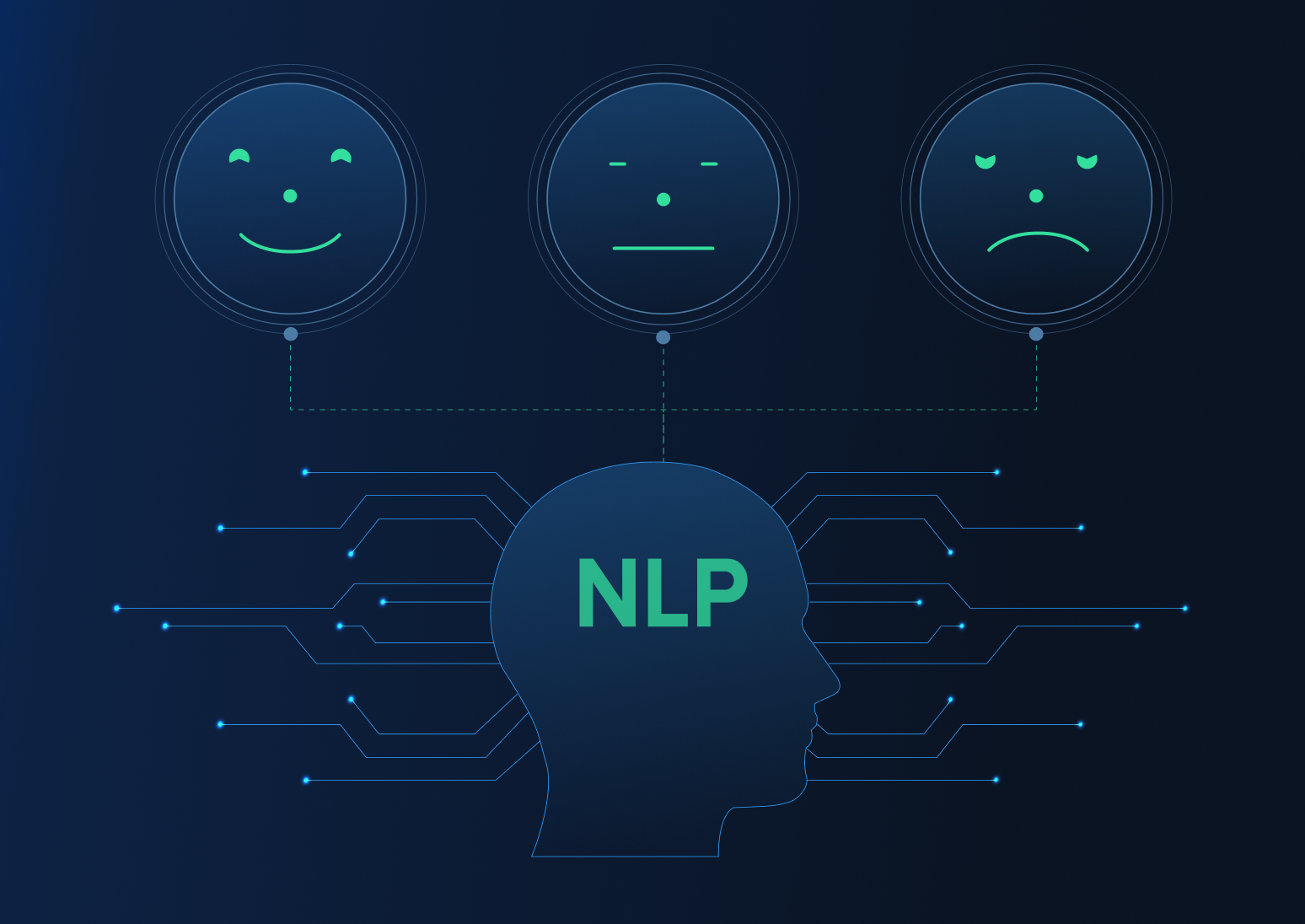
Cryptocurrency markets are uniquely sensitive to narrative shifts. Tweets, regulatory announcements, protocol updates, and macro commentary can move prices within minutes.
Natural language processing (NLP) models analyze:
- Social media streams
- News articles
- Regulatory filings
- Blockchain governance proposals
Transformer-based architectures can classify sentiment, detect emerging themes, and quantify emotional intensity. These outputs become structured inputs into predictive models.
For example, sudden increases in negative sentiment surrounding exchange solvency may precede liquidity withdrawals and price declines. ML models trained on historical sentiment-price correlations can detect and act on these signals faster than discretionary traders.
Risk Management Through Predictive Analytics
In crypto markets, risk is not merely volatility—it includes counterparty risk, liquidity shocks, and systemic contagion events.
Machine learning enhances risk management by:
- Forecasting Value-at-Risk (VaR) using non-linear distributions
- Identifying correlation breakdowns across tokens
- Detecting abnormal exchange outflows
- Modeling tail-risk scenarios through Monte Carlo simulations enhanced by ML
Advanced anomaly detection algorithms flag unusual trading activity or liquidity collapses in real time. For portfolio managers, this allows dynamic rebalancing before drawdowns escalate.
In volatile markets, capital preservation often matters more than directional accuracy. ML-driven risk engines provide that defensive layer.
Portfolio Optimization in a Multi-Asset Crypto Environment
The crypto ecosystem now includes thousands of tokens spanning:
- Layer 1 protocols
- Layer 2 scaling solutions
- DeFi governance tokens
- Stablecoins
- Real-world asset tokenization
Machine learning assists in:
- Correlation clustering
- Dynamic asset weighting
- Regime-aware allocation strategies
- Volatility-adjusted portfolio construction
Unlike static mean-variance optimization, ML models continuously update covariance matrices and expected return estimates, reflecting real-time market conditions.
For institutional allocators exploring digital assets, the integration of ML improves diversification and capital efficiency.
Democratization of Algorithmic Tools
While hedge funds and proprietary trading firms pioneered ML-driven strategies, access to machine learning frameworks has democratized.
Cloud infrastructure, open-source libraries (TensorFlow, PyTorch), and API-based exchange connectivity enable sophisticated strategy development with relatively modest capital.
However, this democratization increases competition. Alpha decay accelerates as more participants deploy similar models. Sustainable edge now depends on:
- Proprietary data sources
- Superior feature engineering
- Robust backtesting frameworks
- Efficient infrastructure
This competitive environment pushes continuous innovation in strategy design.
The Foundational Layer: Asset Acquisition and Infrastructure
Before advanced strategies can be deployed, traders must build secure acquisition and custody pipelines. Understanding how to purchase bitcoin safely is a foundational step in constructing algorithmic trading infrastructure.
Institutional participants evaluate exchange reliability, custody arrangements, API robustness, and compliance requirements before allocating capital. Retail traders, similarly, often begin by learning how to purchase bitcoin through regulated platforms that provide secure onboarding processes.
While buying Bitcoin appears straightforward, infrastructure choices affect downstream strategy execution. API latency, withdrawal constraints, and order book depth directly impact algorithmic performance.
On-Chain Analytics and Machine Learning
Unlike traditional markets, crypto offers transparent blockchain data. On-chain analytics provide insights unavailable in equities or FX.
Machine learning models analyze:
- Whale wallet movements
- Exchange inflow/outflow trends
- Miner behavior
- Stablecoin issuance rates
- Smart contract interactions
Clustering algorithms identify wallet entities and behavioral patterns. Predictive models correlate on-chain accumulation phases with future price appreciation.
For example, sustained accumulation by long-term holders combined with declining exchange reserves may signal supply compression. ML systems detect these structural imbalances early.
Challenges and Limitations
Despite its advantages, machine learning in crypto trading faces significant challenges:
Overfitting
Crypto datasets are relatively young. Limited historical depth increases the risk of curve-fitting models to noise.
Regime Instability
Macro shocks, regulatory changes, and black swan events can invalidate trained models rapidly.
Data Quality
Exchange wash trading, API inconsistencies, and unreliable volume reporting can corrupt datasets.
Infrastructure Risk
Model performance depends on execution reliability. Exchange outages during volatility spikes can undermine strategy returns.
Robust model validation, stress testing, and scenario analysis are essential safeguards.
Ethical and Regulatory Considerations
As ML-driven trading grows, regulators are scrutinizing algorithmic transparency and market manipulation risks. Flash crashes triggered by automated systems highlight systemic vulnerabilities.
Responsible deployment requires:
- Clear governance frameworks
- Auditability of trading algorithms
- Risk parameter constraints
- Compliance monitoring
Institutional adoption will depend partly on aligning ML trading operations with evolving regulatory standards.
The Strategic Convergence of AI and Digital Assets
Machine learning is not merely enhancing crypto trading—it is enabling a structural transition toward intelligent, automated financial systems.
From predictive modeling and execution optimization to on-chain analytics and dynamic risk control, ML systems are embedding intelligence at every layer of digital asset markets.
For new entrants, the journey often starts with understanding how to purchase bitcoin, but the competitive frontier quickly shifts toward algorithmic sophistication. As adoption increases, the intersection of artificial intelligence and decentralized finance will continue reshaping capital markets.
In the coming years, the differentiation between “crypto trading” and “AI-driven trading” may disappear entirely. The dominant participants will be those who treat machine learning not as an optional enhancement, but as core trading infrastructure.
In a market defined by volatility, speed, and innovation, machine learning provides what human traders cannot: scalable pattern recognition, adaptive learning, and probabilistic precision. That combination is transforming crypto trading from speculative experimentation into a data-science-driven discipline.