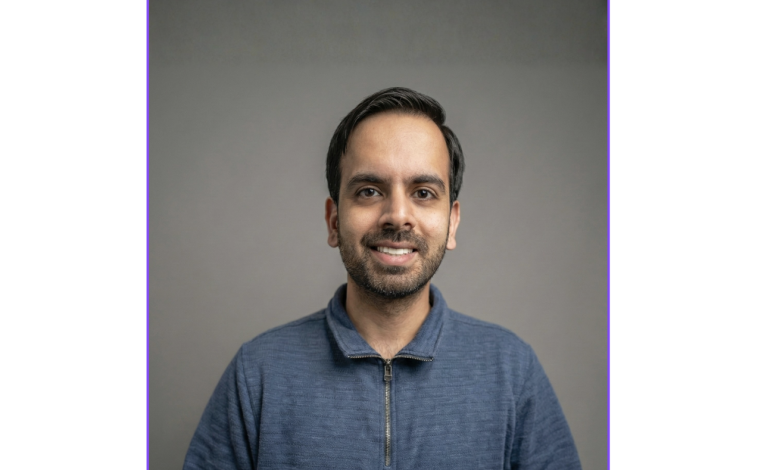
Arun Kumar Singh has spent his career at the center of some of the world’s largest recommendation ecosystems, leading teams that design long-term user models, high-throughput retrieval systems, and distributed frameworks that deliver billions of personalized results every day. His work sits at the intersection of peer-reviewed research and hands-on engineering, shaping the machine learning infrastructure that determines what global audiences see, discover, and engage with online.
In this interview for AI Journal, Singh offers a rare look inside the systems that define modern digital experiences and the principles guiding the next generation of AI-powered recommendations. He explains why the field is shifting from short-term reaction to long-term relationship modeling, how multimodal signals are transforming intent understanding, and why elegant systems matter more than complex ones in a world operating at massive scale. Singh also discusses the leadership practices required to guide teams whose decisions influence billions of users, and he reflects on how blending research insight with real-world engineering has shaped his approach to creating more stable, intuitive, and thoughtful online experiences.
As the conversation turns toward the future, Singh outlines the breakthroughs that will reshape the next wave of recommendation systems, from long-context modeling and multimodal reasoning to generative collaboration and data-driven precision. His perspective frames a landscape where AI not only retrieves content but understands people with greater depth, powering digital ecosystems that adapt to the evolving ways humans explore, learn, and connect.
You work on systems that rely heavily on AI to shape what billions of people see online. Where do you think AI makes the most significant difference in improving the recommendation experience?
For me, the most meaningful shift in recommendation systems is the move from ‘reaction’ to ‘relationship.’
A decade ago, the systems we built were reactive. If a user clicked a specific type of video, the model would immediately show five more just like it. It was effective in the short term, but it often felt repetitive and shallow. It treated the user as a collection of recent clicks rather than a complex person.
Now, we are seeing a massive shift across the industry toward long-term user modeling. Until recently, most systems were limited to analyzing the last few minutes of a session—essentially just reacting to short-term triggers. Today, the state-of-the-art is moving toward architectures that can ingest months or even years of context to truly understand a user’s evolving interests.
The difference this makes is profound. When we successfully deployed these long-sequence models, we saw a massive jump in engagemet, not because we ‘tricked’ users into clicking, but because the system finally understood intent. It’s the difference between a salesperson who pesters you with what you just touched, versus a personal shopper who remembers your style from last year. One is annoying; the other is helpful.
Ultimately, AI makes the biggest difference when it stops feeling like a machine throwing content at you and becomes a curated experience that respects your time and evolving tastes. That is the standard of personalization we are aiming for today.
What guiding principles shape your approach to building experiences at this scale?
When you’re building systems that operate at massive scale, the principles you rely on matter just as much as the technology itself. For me, there are a few that consistently guide how I approach the work.
The first is clarity of purpose. At scale, even small misalignments get amplified. Teams can easily end up optimizing for metrics that don’t actually improve the experience. I try to make sure everyone shares a very grounded understanding of the user problem we’re solving. When the “why” is clear, the system tends to grow in the right direction, and the decisions become more intuitive.
The second is designing for adaptation, not perfection. User behavior changes, ecosystems shift, and the field of AI moves incredibly fast. Instead of trying to engineer a single perfect system, I focus on building ones that can evolve, modular components, strong feedback loops, reliable experimentation frameworks, and models that can absorb new signals. The goal is a system that stays relevant even as the world around it changes.
The third is responsibility. When your work influences so many people, even subtle choices can have a significant impact. I try to think beyond pure relevance, considering quality, well-being, fairness, and the broader effects of the experience. Technical sophistication doesn’t matter much if the outcome isn’t constructive for the person on the other end.
And finally, cost and return on investment. Large-scale AI systems are powerful, but they’re also resource-intensive. Compute, storage, and model complexity can grow quickly if you’re not intentional. I believe good engineering is not just about improving the experience — it’s about improving the experience efficiently. That means choosing architectures that scale with discipline, focusing on the parts of the system that truly move the needle, and measuring impact in terms of both user value and operational sustainability. A system that is effective and efficient ultimately delivers the strongest long-term ROI.
Across all of these principles, the mindset is simple: build systems that understand people better, serve them more thoughtfully, and do so in a way that’s sustainable as both the technology and the world continue to evolve.
Your work includes building long-term user models. How does AI help you better understand ongoing user behavior in a way that traditional methods could not?
One of the biggest advantages of modern AI is that it lets us learn from the full arc of someone’s interactions, not just the most recent ones. Earlier systems tended to rely on short-term or very coarse signals . Things like a click here, a view there gave a narrow snapshot of user behavior. It is assumed that if you liked ‘Science Fiction’ yesterday, you are a ‘Science Fiction Fan’ today. But human beings are far more complex and fluid than that. Today’s AI models can process long sequences of raw interactions and uncover much richer patterns. They’re able to see how interests evolve over time, how they recur, and what truly reflects a person’s ongoing preferences versus what was just a momentary curiosity.
A second area where AI has fundamentally changed things is intent understanding. People express themselves in many ways, through the content they watch, the queries they type, the things they linger on, and increasingly, through multimodal interactions involving text, images, and audio. Modern models can combine all of these signals to form a more complete picture of why someone is engaging. It’s a shift from interpreting surface-level behavior to understanding the underlying intent behind that behavior.
All of this leads to better personalization. When you can learn from long-term patterns and interpret intent with more nuance, the experience naturally becomes more aligned with what people actually want. Recommendations feel less random and more like they come from a system that genuinely “gets” the user. That’s ultimately the goal, using AI to deliver experiences that feel thoughtful, relevant, and tuned to each individual in a meaningful way.
AI is often used to keep large platforms fast and responsive. How do you decide where AI should be integrated to improve performance without adding unnecessary complexity?
AI can absolutely help large platforms stay fast and responsive, but I don’t think it should be the default answer to every performance problem. The first question I always ask is: Is AI actually the simplest and most reliable way to solve this, or would a well-designed traditional system do just as well? At scale, unnecessary complexity tends to grow quietly and then show up all at once, so being selective is important.
For me, AI earns its place when it does one of three things.
First, when the system needs to make decisions that depend on subtle patterns hidden in large amounts of data.
If the logic is straightforward, you can solve it with conventional engineering. But if performance depends on predicting load patterns, anticipating user behavior, or optimizing resources dynamically, AI often provides much better intuition than handcrafted rules.
Second, when models can remove work from the critical path.
There are cases where AI can help route traffic more intelligently, precompute expensive operations, or prioritize the most meaningful actions before they hit the core system. In those cases, models don’t add complexity; they actually reduce it by allowing the underlying system to run more efficiently.
And third, when the long-term ROI is clear.
AI isn’t free — it can introduce heavier compute requirements, additional infrastructure, and new failure modes. So I look for opportunities where the performance gains outweigh the operational overhead, where the model meaningfully simplifies the system over time, or where it unlocks capabilities that traditional methods simply couldn’t achieve.
The guiding principle is to treat AI as a tool, not a default. If it makes the system faster, simpler, or more adaptive, it’s worth integrating. If it only adds sophistication without clear benefits, it’s usually a sign to step back. At the end of the day, the best systems are the ones that feel elegant, and sometimes elegance comes from choosing not to add another model.
Your work focuses on long-term user behavior. Why is understanding deeper user patterns important for improving digital experiences over time?
Understanding deeper user patterns matters because people are constantly exploring. Their interests broaden, contract, and evolve in ways that don’t always show up in short-term signals. If we only pay attention to what someone did today, we miss the larger story of what they’re curious about and how their preferences develop over time.
Long-term behavior helps separate meaningful signals from momentary curiosity.
Modern AI models can look at thousands of raw interactions and identify the slower-moving themes that actually define someone’s interests. Traditional systems were forced to rely on very recent or coarse signals, which often misinterpreted exploration as preference.
Intent becomes much clearer when you zoom out.
As users try new things, revisit old interests, or gradually shift toward new categories, long-term models can connect those dots. Multimodal models enrich this picture by combining signals from text, images, audio, and engagement style, allowing us to see what truly resonates and why.
Here’s a simple example. Imagine someone who has been consistently engaging with content about healthy cooking for months, long-form recipes, ingredient breakdowns, and reviews of kitchen tools. Recently, they’ve started checking out beginner fitness videos and browsing articles about building simple workout routines. A short-term system might treat those fitness interactions as an isolated blip and continue recommending only cooking content.
But a long-term, intent-aware model would interpret that behavior differently. It would recognize a broader pattern: this person is exploring a lifestyle shift toward wellness. By connecting long-term engagement with emerging signals, the system can gently support that exploration — offering resources, communities, and content that help them go deeper into the direction they’re already heading.
That’s where the magic happens: when personalization doesn’t just mirror what someone already knows, but helps them grow into what they’re becoming.
In the end, understanding deeper patterns allows digital experiences to move beyond reactive recommendations. They become more thoughtful, more stable, and more attuned to the natural way people explore and evolve over time.
You lead teams responsible for features that affect audiences around the world. What leadership practices have helped you build clarity, consistency, and collaboration at such a scale?
When you’re leading teams whose work touches audiences around the world, the human side of leadership becomes just as important as the technical side. The practices that have helped me most all revolve around creating clarity, building trust, and enabling teams to do their best work.
The first is setting a clear north star.
Large teams can easily drift if the goals aren’t simple, memorable, and meaningful. I try to distill the work into a small set of principles everyone can anchor to, what success looks like, what trade-offs matter, and why the work is important. When the purpose is clear, alignment follows naturally.
The second is building consistency through predictable systems, not heroic efforts.
At scale, ad-hoc processes break down quickly. I focus on creating repeatable ways of working: well-defined interfaces, clear ownership, and strong feedback loops. When expectations are understood and stable, teams are able to operate with confidence and speed.
The third is emphasizing transparency in both directions.
Leaders often focus on communicating down, but listening up is just as crucial. I try to foster an environment where the team feels comfortable raising concerns early — whether about model behavior, user experience, or long-term risks. That openness strengthens collaboration and leads to better decisions.
And finally, encouraging innovation while reinforcing ownership and accountability.
Teams do their best work when they feel trusted to experiment, question assumptions, and explore new ideas. I try to create space for that curiosity while also making sure every project has clear owners who feel responsible for both the strategy and the outcomes. When people know they have the freedom to innovate and the accountability to see things through, the quality of the work rises dramatically.
At the end of the day, leading at scale is about creating an environment where teams understand what matters, know how to work together, and feel empowered to push the boundaries of what’s possible, with clarity, consistency, and a strong sense of ownership.
You have published research in addition to your engineering work. How has combining research insight with hands-on system building shaped your perspective on creating better online experiences?
Working at the intersection of research and large-scale engineering has shaped how I think about online experiences in a fundamental way. Research teaches you to zoom out in order to understand the underlying principles, question assumptions, and think in terms of long-term patterns rather than short-term fixes. Engineering forces you to zoom in in order to deal with real constraints, messy data, unpredictable behavior, and the need to ship something that actually works.
Combining the two creates a more balanced way of building systems.
On the research side, long-term modeling and representation learning give us new ways to understand people’s behavior at a deeper level. You start to appreciate how much signal is hidden in raw interactions, how multimodal models reveal intent, and how long-context methods open the door to more stable, meaningful personalization. That perspective helps guide what’s worth investing in and what innovations will actually matter for users.
On the engineering side, you learn that every elegant idea eventually has to live in the real world, with latency budgets, cost constraints, and users whose behavior rarely matches clean theoretical patterns. That discipline keeps you honest. It grounds the research in practical trade-offs and encourages solutions that are not just clever, but reliable and scalable.
When you put these together, you get systems that are both ambitious and useful.
You’re able to pull in cutting-edge modeling techniques while still designing architectures that are maintainable. You think more holistically about the user journey, not just what’s possible algorithmically, but what will feel intuitive, fair, and genuinely helpful over time.
Ultimately, blending research insight with hands-on engineering makes you better at building experiences that evolve with people, respect their complexity, and deliver value in a way that’s both thoughtful and durable.
As you look ahead, what new AI developments do you think will have the most decisive influence on the future of large-scale recommendation systems?
Looking ahead, several developments in AI will have a decisive influence on how large-scale recommendation systems evolve.
The first is long-context modeling becoming mainstream. Models are quickly gaining the ability to understand years of user behavior rather than isolated moments. As architectures become more efficient at handling extremely long sequences, systems will develop a much richer picture of how interests form, drift, and reappear over time. This will make recommendations feel more stable, intuitive, and aligned with a user’s long-term journey.
Second, multimodal understanding will take center stage in relevance. People express their interests in many ways. through the content they read, watch, listen to, and interact with. Future models will combine all these signals to form a deeper understanding of intent. Generative AI will help by summarizing, contextualizing, or transforming content to make discovery easier and more meaningful.
Third, Recommendation and Generative models will increasingly work together. Historically, recommender systems were just ‘matchmakers’—they found content and retrieved it. Future systems will be ‘creators.’ They won’t just find a video; they might use Generative AI to summarize it, explain why it fits your current mood, or even synthesize a new interface on the fly.
Fourth, data quality will become a major differentiator. As models grow more capable, the limiting factor becomes the quality of the data they learn from. Well-structured, clean, representative data will matter more than ever. High-quality signals create more stable models, reduce unintended biases, and allow systems to understand users with far greater fidelity. In many ways, the next wave of improvement in recommendations will come from better data foundations as from better algorithms.
And finally, efficiency will shape what’s practical at scale. Larger models offer tremendous power, but they also demand smarter routing, lighter-weight adapters, and techniques like distillation or sparsity to make them sustainable. The platforms that strike the right balance between capability and cost will be the ones that can innovate fastest.
If you step back, the trajectory is clear: recommendation systems are becoming more contextual, more multimodal, more data-driven, and more efficient. Together, these advances will lead to digital experiences that feel more intuitive, more helpful, and far more aligned with how people naturally explore and evolve over time.