Here’s the uncomfortable truth most technology vendors won’t tell you. Your Dynamics 365 investment is probably underperforming. Not because the platform is flawed. Because deployment without the right consulting strategy almost always leaves value on the table.
Your board isn’t asking whether the system went live on schedule. They’re asking what it did for the business. Revenue. Margin. Customer retention. Decision speed. When the honest answer to those questions involves phrases like “better visibility” or “streamlined processes,” that’s not a progress update. That’s a warning sign.
The Dynamics 365 consultants who actually drive ROI operate differently. They don’t configure the platform and walk away. They stay in the room. They stay accountable for outcomes. And they measure success the same way your CFO does. That is, in numbers that move the business forward. That distinction matters more in 2026 than it ever has. Let’s look at why so many deployments miss that standard.
Four Deployment Failures That Quietly Kill Your ROI
The patterns are consistent. They appear across industries, company sizes, and geographies. And the frustrating part? Every single one of them was preventable.
1. Siloed CRM and ERP Environments
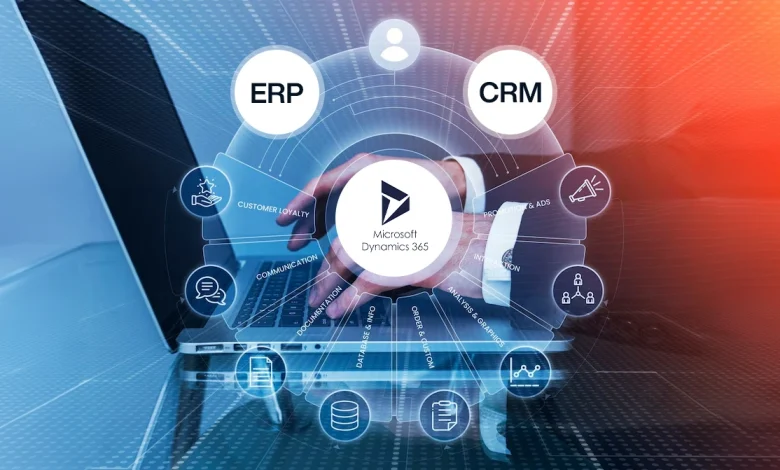
Running CRM and ERP as separate systems means your business is operating in two disconnected realities. Sales sees one version of the truth. Finance sees another. Operations sees a third. Nobody has the full picture. When your forecasts never align with what production can actually deliver, that’s not bad luck. That’s a structural problem a properly unified Dynamics 365 deployment would have eliminated.
2. Adoption That Stalls After Go-Live
Three months after launch, your sales team is still living in spreadsheets. Your finance team exports everything to Excel before doing any real work. The system is live. But nobody is really using it. Low adoption creates incomplete data, as it produces unreliable analytics, which drive poor decisions.
3. Data That Entered the Platform Unfit for Purpose
What you get out of Dynamics 365 reflects what you put in. Migrate dirty data without a governance strategy, and legacy problems follow you at a higher cost, in a shinier interface. Your dashboards spark more arguments about data reliability than they do decisions about business performance. And your AI capabilities? They can’t function on inputs nobody trusts.
4. Customization Debt That Compounds Over Time
Customizing Dynamics 365 to behave exactly like your old system feels smart in the short term. It undoubtedly reduces resistance. But every non-standard customization becomes a liability at the next Microsoft release. Each one needs testing and maintenance. The platform you bought for agility slowly becomes the thing that’s slowing you down. Add vague KPIs like “faster processes” into the mix, and you have no way to tell whether the investment is working or drifting.
None of these failures is inevitable. But fixing them requires a Microsoft Dynamics consulting engagement that treats business outcomes as the real deliverable.
The Expanding Role of Dynamics 365 Consulting Partners

The bar has risen. A consulting partner that configures the system, migrates your data, hits the date, and hands over documentation is doing the minimum. In 2026, that’s table stakes!
A genuinely strong engagement starts with a different set of questions. Not “what do you want the system to do?” but “which revenue lines need to grow? Where is the margin leaking? What decisions are your leaders making slowly because the right data isn’t there?” Those answers shape everything, including what gets built first, how the system is configured, and what success looks like a year and a half after launch.
Refrain if your partner never challenges your timeline. Phased roadmaps outperform big deployments every time. Each stage should deliver a measurable outcome before the next begins. And on AI, Copilot and predictive tools only produce value when they’re embedded into workflows your teams will actually follow. That takes behavioral design along with configuration.
Finally, look at how your Dynamics 365 consulting services partner defines their own success. When their KPIs match yours, the entire engagement runs differently. Every decision they make carries real stakes. That alignment isn’t just a commercial arrangement, but the clearest signal of how seriously they take the business problem you’ve handed them.
Six Levers Dynamics 365 Consultants Use to Drive ROI
Organizations that get consistent, lasting ROI from Dynamics 365 don’t stumble into it. They get six things right together. Pull one lever without the others, and you get limited results. Pull all six in the same direction, and the business genuinely transforms. Here’s what those levers are:
1. Strategic Alignment Before Configuration
This comes first. Before a single module is built, your consultant should work with your leadership team to define success in specific, measurable terms. Every scope call, every configuration decision, every trade-off should trace back to a KPI that matters commercially. Not to what’s technically neat.
2. Unified CRM and ERP Architecture
Bringing your customer-facing and back-office systems into one data model is the structural decision with the most downstream impact. When your sales pipeline feeds procurement planning directly, forecasting sharpens. And when order management and warehouse operations run on the same platform, fulfillment speeds up. Think of a logistics company that makes this integration through Dynamics 365. The outcomes are reduced processing time and improved delivery accuracy at the same time. These are the two metrics that rarely move in the same direction.
3. AI and Copilot Embedded Into Real Workflows
Predictive scoring puts your sales team’s attention where it belongs, i.e., on deals most likely to close. Intelligent automation surfaces the right case history before a service agent even asks. Copilot in finance lets your analysts get answers in plain language instead of building reports from scratch. But here’s what matters: none of this creates value sitting unused. Your consultant’s job is to make sure these tools land inside workflows your people will use, supported by data that’s clean enough to trust.
4. Data Governance Built Into the Foundation
Clean data is not just an admin task. It’s the foundation everything else stands on. When your consultant defines ownership, standardizes formats, and builds validation into intake workflows from day one, they’re protecting every ROI lever that comes after. An insurance provider that embeds master data management into its Dynamics 365 rollout from the start typically sees measurable accuracy improvements in claims processing within the first year.
5. Automation That Eliminates the Right Work
Before automating anything, your consultant should ask whether that process should exist at all. Most workflows carry years of unnecessary overhead, such as approvals for issues that no longer exist and handoffs designed around systems you’ve already replaced. Power Automate can clear a lot of that weight.
6. Adoption Engineered From Day One
Everything on this list collapses if your people don’t use the system the way it was designed. Adoption is not a training issue. It’s a design issue, a communication issue, and a leadership issue all at once. Consultants who treat it as a core workstream, and not a launch-week checkbox, consistently produce implementations that outperform at the twelve-month mark.
These six factors are not independent. Weak governance undermines strong architecture. Low adoption wastes clean data. Your consultant’s job is to hold all six at the same time.
Industry-Specific ROI of Dynamics 365 Implementations
Generic ROI claims are easy to make. What’s harder and far more useful is understanding where value actually lands in your specific sector. The workflows are different. The compliance demands are different. The customer dynamics are different. And so is where the return comes from.
1. Financial Services
Your ROI story is about speed and risk. Faster credit decisions keep customers from going elsewhere. Integrated loan origination workflows reduce the cost of each decision you make. And when your risk team has unified visibility across customer data, transaction history, and behavioral signals, they stop reacting to problems and start catching them early.
2. Manufacturing
Supply chain visibility and demand-driven procurement are where the money is. When your sales pipeline connects to Supply Chain Management in real time, procurement stops chasing demand and starts anticipating it. Fewer stockouts. Less excess inventory. Faster response when the market shifts. A US-based food processing equipment manufacturer replaced a fragmented ERP landscape with Dynamics 365, and every department was finally working from the same picture, responding to new information in hours, not days.
3. Retail and Ecommerce
Your challenge is consistency at scale. As your channels multiply, keeping the customer experience coherent gets harder. When Dynamics 365 brings purchase history, service records, and loyalty data into one profile, the impact reaches every function in the form of sharper marketing, better merchandising, and service agents who finally have the context they need to resolve issues fast.
4. Healthcare and Insurance
Efficiency and compliance drive your ROI. Automating claims verification, routing, and status updates reduces handling time and frees your staff for the cases that genuinely need expert judgment. A Pittsburgh-based non-profit supporting over ten thousand people with disabilities unified its operations across ERP, CRM, and Power BI through Dynamics 365. The result: real-time grant and donor visibility, automated vendor workflows, and faster movement from data to decision.
The sector changes. The logic doesn’t. ROI follows unified visibility, and a consultant who makes sure that visibility drives action, not just reports.
The Metrics That Prove Your Investment
Knowing the deployment is working is not enough. You need to be able to prove it clearly, confidently, and in the language your board and CFO actually respond to. Build your measurement framework before go-live. Not after the baseline has disappeared and the numbers are already inconvenient.
- Financial metrics, including revenue uplift, cost reduction, and operating margin, are what your board cares about.
- Operational metrics like cycle time and employee productivity tell you whether the platform is removing friction or creating it.
- Customer metrics, especially retention and NPS, are your most honest external read on whether the improvements are actually reaching the people buying from you.
- Technology metrics, such as adoption rate and data accuracy, are your early warning system. When your licensed users aren’t engaging, every other number will eventually follow.
Remember, achieving ROI from Dynamics 365 is a practice. Organizations that build post-launch governance into their program, whether regular health checks, KPI reviews, and continuous optimization, are the ones who look back on their deployment as a real transformation. The ones who treat go-live as the finish line often find themselves shopping for a new platform two years later.
The Return Comes From the Decisions Made Around the Platform
Dynamics 365 is a strong platform. It has more intelligence built in than most organizations are actually using. But the platform doesn’t create the return. The decisions around it do. The architecture. The governance. The adoption strategy. The clarity about what your business is trying to achieve. And the discipline to measure what matters and act on what you find.
The organizations that consistently defend their CRM and ERP investments to their boards have one thing in common. They treated Dynamics 365 consulting as a strategic partnership. They held their partners accountable for outcomes, not deliverables. They defined success before they built a single thing. And they understood that go-live is where the value conversation begins.
ROI from Dynamics 365 in 2026 is engineered. It takes the right partner, a clear approach, and organizational commitment to see it through past launch. Deploying a platform and transforming a business are not the same thing. The difference comes down to accountability and whether that accountability runs all the way to the metrics your board holds you to.