Computer vision transforms retail operations by turning visual data into financial leverage. For years, stores relied on periodic audits and managerial intuition, while e-commerce had real-time dashboards—computer vision closes that gap. In this article, we’ll explore how platforms like the loook.ai Smart Mirror help bring that visibility to physical spaces.
The key benefits:
- Observe what’s happening in real time
- Identify where value leaks
- Trigger faster decisions at scale
The result is measurable impact across revenue, cost, and risk—making it one of the highest-impact operational technologies in modern retail.
What Computer Vision Applications Actually Do in Retail
Computer vision uses camera feeds and machine learning models to interpret in-store activity in near real time. It can detect objects, movement, patterns, and anomalies, then pass those insights into operational workflows.
Think of it as a 3-layer system:
- Sensing layer: Captures real-world activity (traffic, shelves, checkout behaviors, try-on interactions).
- Interpretation layer: Converts raw visual signals into structured events (out-of-stock, queue threshold exceeded, suspicious item handling).
- Action layer: Triggers decisions (staff alert, replenishment task, content change, exception review, KPI update).
The ROI appears when the action layer is tightly connected to store operations, not when insights sit unused in dashboards.
Use Cases of Computer Vision in Retail
Computer vision delivers value across multiple retail functions. The use cases below represent the highest-impact applications where the technology has proven ROI at scale. Each addresses a specific operational challenge and connects directly to measurable business outcomes.
Virtual Try-On and AR/AI Mirrors
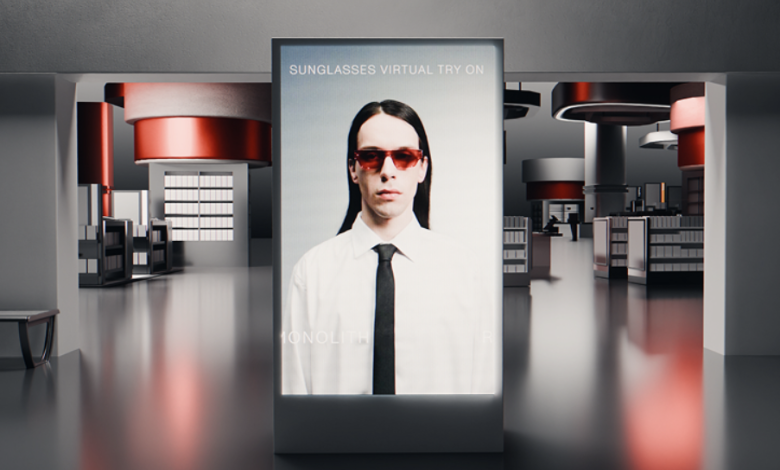
Virtual try-on technology helps customers see how products look on them before they buy. This works especially well for beauty products, eyewear, and fashion items.
Here’s how it works: computer vision tracks your face or body in real time, then shows you exactly how different products would look on you. This makes shopping easier and helps customers feel more confident about their choices.
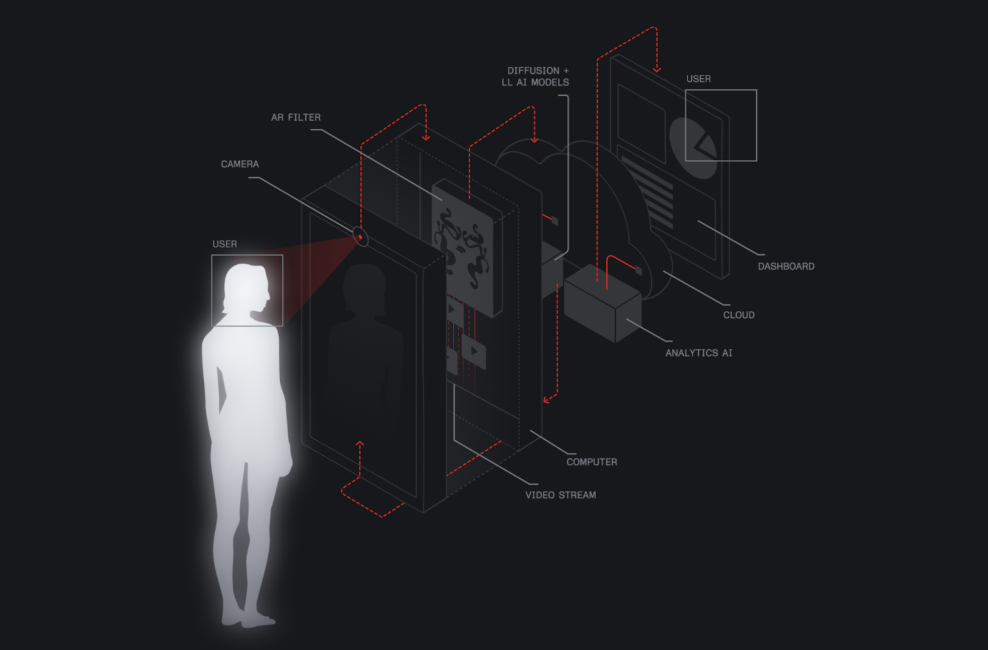
Tools like loook.ai provide in-store AR mirrors that go beyond showing how products look. The platform includes AI-powered analytics that track customer behavior and preferences, then uses computer vision to deliver personalized product recommendations based on what it observes about each customer.
Business impact:
- More customers complete their purchases, especially for products they’re uncertain about
- Customers spend more time exploring your products and engaging with your brand
- You can actually measure how well your in-store campaigns are working
- You get valuable data about which products customers are interested in and how they interact with them
- Your staff can use AI recommendations to help customers find the right products faster
Virtual try-on delivers the best return when you connect it directly to sales. Track how many customers who use the mirror actually buy something, how much they spend, and which products they add to their basket. Don’t just measure how long people stand in front of the mirror—measure whether it drives purchases and increases the value of each sale.
AI-powered Cashierless / Frictionless Checkout
Computer vision enables checkout without scanning or queuing. Customers pick items and walk out; the system detects and charges automatically.
Amazon reported that third-party stores using Just Walk Out technology were expected to more than double in 2024, demonstrating proven value in specific store formats.
Business impact:
- Reduced queue abandonment during peak hours
- Higher customer throughput without adding checkout lanes
- Staff redeployed from transaction processing to customer assistance and selling
The ROI comes from two sources: serving more customers in the same time window, and reallocating labor to higher-value activities. The most successful implementations free staff to focus on customer service, product recommendations, and assistance—activities that improve experience and drive incremental sales.
Shelf Monitoring and Out-of-Stock Prevention
Empty shelves are one of the most preventable revenue losses in retail. Computer vision detects empty spaces, misarranged products, and restocking needs far faster than manual checks. Trax reports deployments where retailers reduced out-of-stocks by 4.3%, driving revenue increases of 2% or more.
Business impact:
- Recover sales lost to stockouts
- Maintain planogram compliance automatically
- Alert staff to problems before customers notice
- Reduce time spent on manual shelf checks
Shelf monitoring often pays for itself faster than other computer vision applications because the revenue impact is direct and measurable—making it easier to prove ROI to finance teams.
In-Store Analytics (Traffic, Dwell, Conversion)
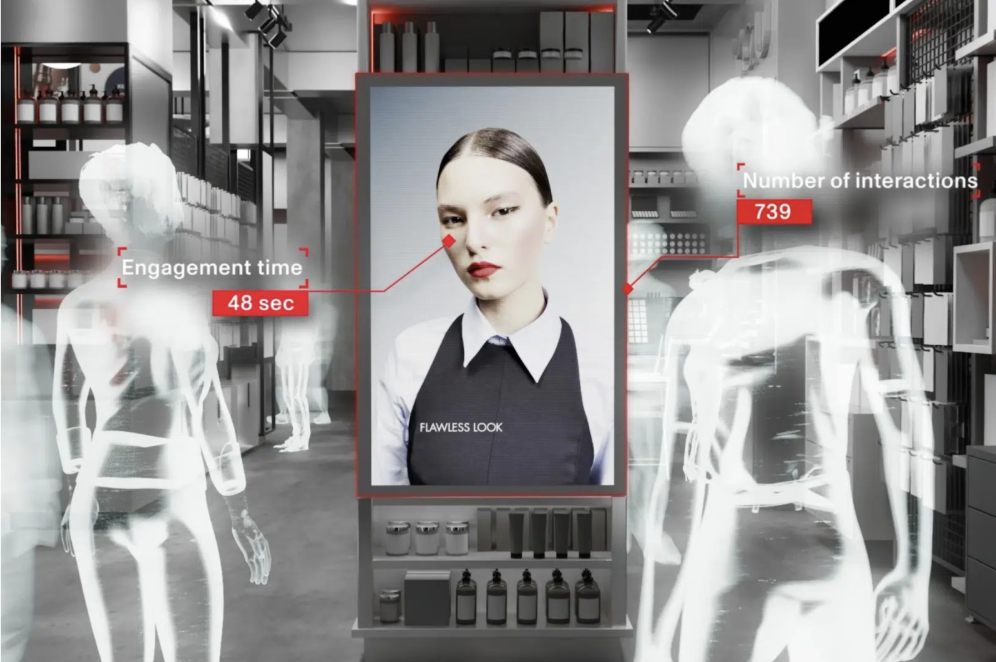
Computer vision analytics platforms bring the same insights to physical stores that digital analytics has provided online for years. They show you where customers go, where they pause, and where they leave without buying.
Business impact:
- Schedule staff more effectively by knowing exactly when stores are busiest
- Place products in the right locations based on where customers actually spend time
- Redesign store layouts using real behavior data instead of assumptions
Even a small improvement in conversion rate can deliver better results than most marketing campaigns. You’re getting more value from customers already walking into your store—customers you’ve already paid to attract. If you can convert just 2-3% more of your existing foot traffic, that revenue gain flows directly to your bottom line without additional acquisition costs.
Shrink and Self-Checkout Loss Reduction
Shrink—lost inventory from theft, errors, or fraud—directly impacts profitability and demands board-level attention.
Computer vision systems monitor checkout areas and high-risk zones, detecting patterns that indicate potential theft or scanning errors and alerting staff in real time.
Business impact:
- Reduced losses at self-checkout without friction for honest customers
- Staff focus on high-probability issues instead of random checks
- Fewer false alarms than legacy security systems
- Actionable data on loss patterns to inform store layout and security decisions
Even a small percentage reduction in shrink translates to significant annual recovery. A retailer losing $10 million annually to shrink who achieves 15% reduction recovers $1.5 million per year—often delivering faster payback than most retail technology investments.
Unlike many technology ROI claims, shrink reduction provides clear, quantifiable results that finance teams can track and verify.
Business Value and ROI: Why Computer Vision Matters
Retail faces mounting pressure from rising labor and operating costs, volatile demand, uncertain inventory, growing customer expectations for convenience and personalization, persistent shrink and compliance risks, and executive demands for clearer technology ROI.
Innovation for engagement alone is no longer sufficient. Leaders need technologies that answer critical questions: What revenue did this recover? What cost did this remove? What risk did this reduce? How fast can this scale?
Computer vision directly addresses high-value operational challenges including conversion friction, shelf availability, checkout speed, and shrink. It’s now a proven tool with measurable impact on revenue, cost, and risk.
The most successful retailers treat it as infrastructure: they start with clear use cases tied to financial outcomes, deploy systematically, and integrate visual data into daily operations.
When evaluating computer vision, focus on measurable impact (revenue recovered, cost removed, risk reduced), operational integration (insights that trigger action), and scalability (solutions that work across your entire estate).
Retailers who move fast will operate with better visibility, faster decisions, and higher margins. Those who delay will explain to the board why their stores remain unmeasured while competitors optimize in real time.