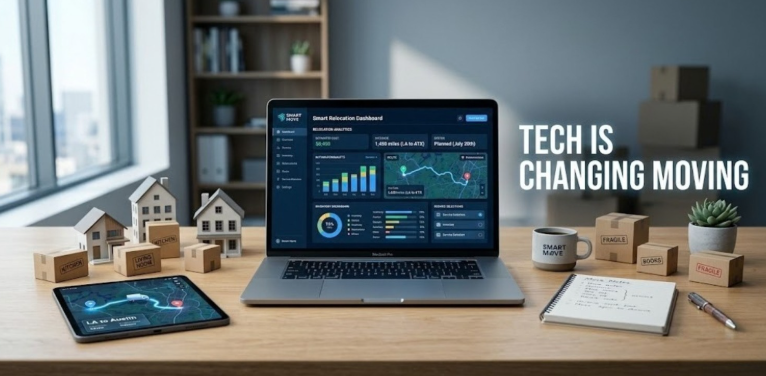
Moving to a new home has always been a mix of excitement and stress. The idea of starting fresh in a new place is appealing but the process of packing, organizing, and transporting everything you own can feel overwhelming. One of the biggest concerns people have during relocation is the cost. Between hiring movers, renting trucks, buying packing supplies and covering travel expenses, the total price of a move can quickly add up.
In the past, estimating moving costs was mostly guesswork. People would call a few moving companies, provide rough details about their home and receive a general quote. These estimates were often inconsistent and many people didn’t fully understand how the final cost was calculated. Today, technology is changing that experience in a big way. Digital tools and smart algorithms now help people predict moving expenses more accurately and plan their relocation with greater confidence.
Why Estimating Moving Costs Used to Be Difficult
Before modern digital tools became widely available, calculating the price of a move involved several uncertainties. Moving companies had to estimate the weight of your belongings, the distance between locations and the amount of labor required. Small differences in these factors could lead to big changes in the final cost.
For example, two homes that look similar in size may have completely different amounts of furniture and household items. One household might be minimal and organized, while another might have years of accumulated belongings. Without seeing everything in person, it was difficult for movers to provide precise estimates.
This lack of clarity often left people worried about unexpected fees. Many families discovered that the final bill was higher than they initially expected which added more stress to an already busy moving process.
The Rise of Smart Moving Estimation Tools
The growth of digital technology has introduced a more reliable way to estimate relocation expenses. Instead of relying only on phone calls and manual calculations, people can now use online tools designed to analyze multiple factors at once.
One example is a moving cost calculator, which allows users to enter specific details about their move. These tools typically ask for information such as the size of your home, the distance between locations, the number of rooms and whether you need additional services like packing or storage.
Once the information is entered, the system processes the data and provides an estimated price range within seconds. While it may not replace a final professional quote, it offers a much clearer starting point for planning a relocation budget.
What makes these tools powerful is the technology behind them. Many platforms use large datasets gathered from thousands of past moves. By analyzing patterns in these moves, algorithms can generate estimates that are far more accurate than simple guesswork.
How Data and Technology Improve Accuracy
Behind every modern estimation tool is a combination of data analysis and predictive technology. Moving companies and software developers collect information from real relocation projects, including distance, shipment weight, travel time and labor requirements.
This data is then used to train algorithms that can recognize patterns and predict future costs. For example, the system might learn how moving a two-bedroom apartment across the city differs from relocating a four-bedroom house across the country.
Some advanced platforms even incorporate mapping technology. By connecting with digital maps, these systems can analyze traffic patterns, travel routes and regional pricing differences. This adds another layer of accuracy when calculating potential moving expenses.
Technology also helps account for seasonal changes. Moving during peak summer months is often more expensive because demand for movers increases. Smart estimation tools can factor in these trends and provide users with realistic cost expectations based on the time of year.
Making Budget Planning Easier for Families
One of the biggest advantages of digital relocation tools is the ability to plan ahead. Instead of waiting until the last minute to understand the financial side of a move, families can start exploring cost estimates early in the process.
For example, someone considering a long-distance relocation can compare different scenarios before making a final decision. They might test how the price changes if they move fewer items, choose a different moving date or handle some packing tasks themselves.
This type of planning empowers people to control their budget rather than reacting to unexpected expenses. It also helps families prioritize what matters most. Some may choose full-service movers for convenience, while others may decide to reduce costs by packing their own belongings.
Digital tools provide the information needed to make those decisions confidently.
Technology Is Also Helping Moving Companies
While these tools are helpful for customers, they also benefit moving companies. When people use online estimation platforms, movers receive more accurate details about the job before providing a quote. This helps companies schedule crews, allocate trucks and prepare equipment more efficiently.
Some companies are even integrating artificial intelligence into their systems. AI-powered platforms can analyze photos or video walkthroughs of a home to estimate the volume of belongings. Instead of relying only on written descriptions, the system can visually assess the amount of furniture and household items.
This reduces the chances of miscalculations and helps both customers and movers avoid surprises on moving day.
The Role of Transparency in Modern Moving Services
Another major improvement technology brings to relocation planning is transparency. When people understand how moving costs are calculated, they feel more confident about the services they choose.
Digital platforms often break down estimated costs into categories such as transportation, labor, packing materials and optional services. Seeing these details helps people understand exactly where their money is going.
For example, if someone notices that packing services add significantly to the estimate, they may decide to handle that part themselves. On the other hand, someone with a busy schedule may choose to pay for full-service packing to save time.
Clear pricing builds trust between moving companies and their customers which is one of the reasons these tools are becoming more popular every year.
Looking Ahead: The Future of Moving Technology
As technology continues to evolve, the moving industry will likely see even more advanced planning tools. Virtual surveys, augmented reality walkthroughs and AI-based inventory systems are already being tested by some companies.
Imagine using your smartphone to scan each room of your home and instantly receive a detailed moving estimate. These innovations may soon become standard features in relocation planning.
Digital platforms will also continue to improve their predictive models as more data becomes available. This means future estimates will likely become even more precise and personalized.
For people planning a relocation, tools like a moving cost calculator represent more than just convenience. They reflect a broader shift toward smarter, data-driven decision making in everyday life.
Final Thoughts
Moving will always involve effort, organization and careful planning. However, technology is making the process far more manageable than it was in the past. With the help of digital tools, families can better understand their relocation costs, explore different options and prepare financially before the moving truck even arrives.
What once felt like an unpredictable expense is becoming a more transparent and manageable part of the relocation journey. As technology continues to shape the moving industry, planning a move may soon become as simple as opening an app and exploring your options with a few taps.