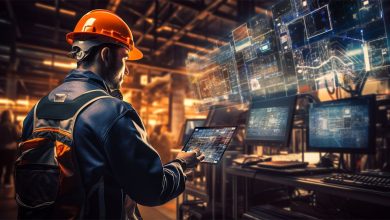
Human eyes get tired, attention drifts after lunch, and suddenly, a hairline fracture slips past the goalie. It’s unavoidable biology. This is exactly where computer vision in manufacturing has stepped in. It isn’t magic, though it sometimes looks like it. We aren’t talking about basic sensors that beep if a beam is broken. We are talking about sophisticated automated visual inspection systems powered by deep learning models that learn what good looks like and more importantly, what weird looks like.
Beyond the Human Limit
Why the sudden shift? Because the cost of failure is too high. A recall destroys reputation faster than a marketing team can build it. Manufacturing automation has moved past simple robotics into cognitive tasks. When you deploy AI Quality Control, you aren’t just looking for obvious breaks; you are scanning for micro-deviations that the human eye literally cannot perceive at high throughput speed.
Consider what modern defect detection software can actually handle on a production line:
- Surface irregularities: Scratches or dents on polished metal that are invisible under standard lighting.
- Assembly verification: Ensuring every screw, clip, and wire is present and seated correctly before the unit is sealed.
- Color matching: Detecting subtle hue shifts in textiles or plastics that indicate chemical inconsistencies.
- Dimensional accuracy: Measuring tolerances down to the micron level in real-time without stopping the belt.
- Foreign object detection: Spotting debris or contaminants in food and pharmaceutical packaging.
The False Positive Dilemma
One of the biggest headaches in early adoption is the rate of false positives. The system might flag a speck of dust as a critical crack, halting production unnecessary. This is why generic, off-the-shelf solutions often fail.
Companies usually need specialized computer vision development services to tailor the algorithms to their specific environment. You can’t just buy a smart camera and expect it to understand the nuances of a specific alloy or fabric weave. Equally important is the optical hardware that feeds the system. Selecting the right machine vision lens determines the field of view, working distance, and level of detail the system can resolve, all of which directly affect detection accuracy. A lens that is poorly matched to the sensor or the inspection distance will introduce distortion or softness at the edges of the frame, causing the AI model to misclassify acceptable parts as defective or, worse, let actual defects pass undetected.
The relationship between optics and software performance is often underestimated during system design. Engineers may invest heavily in training data and model architecture while treating the lens as a commodity component. In practice, swapping a general-purpose lens for one engineered specifically for machine vision can improve edge-to-edge sharpness, reduce chromatic aberration, and maintain consistent magnification across the entire sensor area. These optical qualities feed cleaner, more uniform images into the neural network, which in turn reduces false positive rates and shortens the feedback loop between detection and correction on the production line. It requires training. The system needs to see thousands of good and bad examples to understand the difference between a harmless texture variation and a true defect.
Data is the New Supervisor
This is the heartbeat of Industry 4.0. The camera is a data collector. Every rejected part provides a data point that feeds back into the system. If the Visual Inspection system rejects ten parts in a row for the same alignment issue, it triggers an alert upstream to fix the machine causing the drift.
That is anomaly detection at its finest. It transforms the factory floor from a reactive environment into a proactive smart factory.
It means humans stop doing the boring, eye-straining work. By integrating manufacturing efficiency tools, workers move to higher-level oversight. The result is a tighter loop, less waste, and a product that actually matches the design specs every single time.