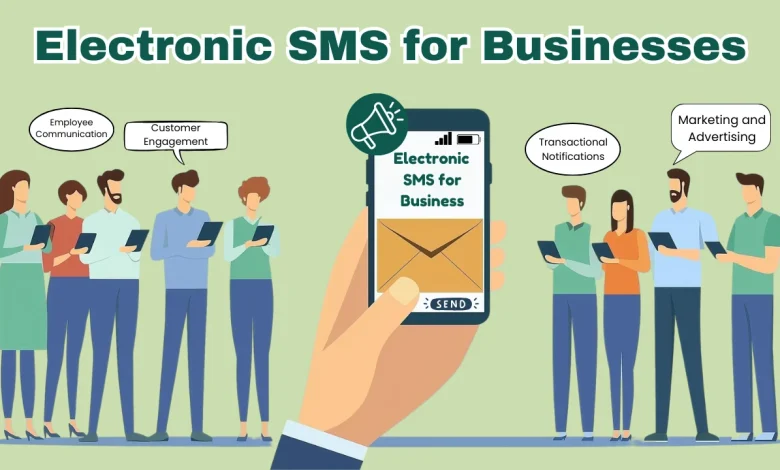
Business communication has become increasingly fragmented across dozens of platforms and channels. Teams juggle emails, chat apps, project management tools, and customer messaging systems throughout every workday.
This fragmentation creates a significant productivity drain. Employees spend valuable time switching between applications, and urgent messages often get buried in crowded inboxes or overlooked notifications. For companies that need to reach customers, partners, or field teams quickly, traditional communication channels frequently fall short.
This article examines how email-based SMS solutions help businesses consolidate their messaging workflows, reduce response times, and improve overall team productivity. We will cover how the technology works, the specific productivity gains organizations achieve, and best practices for implementation.
The Communication Challenge in Modern Business
Effective communication remains the foundation of operational efficiency. Yet many organizations struggle to balance speed, reach, and simplicity in their messaging strategies.
Why Traditional Channels Fall Short
Email delivers detailed information effectively but suffers from declining open rates and delayed responses. The average professional receives over 120 emails daily, making it difficult for time-sensitive messages to stand out.
Chat applications provide faster exchanges but create notification fatigue. Important updates compete with casual conversations, and employees often disable alerts entirely to maintain focus on deep work.
Phone calls guarantee immediate attention but interrupt workflows and prove impractical for reaching multiple people simultaneously. Voicemails frequently go unchecked for hours or days.
The Rise of SMS in Business Communication
Text messaging has emerged as a powerful alternative for urgent business communication. SMS messages reach recipients instantly on devices they carry constantly, with open rates exceeding 90% within minutes of delivery.
Unlike app-based messaging that requires specific software installations, SMS works universally across all mobile phones. This accessibility makes it ideal for reaching diverse audiences including customers, contractors, and employees who may not use company communication platforms.
Bridging the Gap with Email Integration
The challenge with traditional SMS platforms is workflow disruption. Employees must leave their primary work environment, log into separate systems, and manage contacts across multiple databases.
Email-to-SMS integration solves this problem by enabling text message delivery directly from existing email clients. Teams continue working in familiar environments while gaining access to the immediacy and reliability of SMS communication.
How Email-to-SMS Integration Works
 Email-based SMS solutions connect standard email infrastructure with cellular networks, allowing users to compose and send text messages without leaving their inbox.
The Technical Foundation
The integration operates through specialized gateways that translate email messages into SMS format. Users compose an email addressed to a recipient’s phone number combined with a specific domain, and the system converts that email into a text message delivered via cellular networks.
This approach requires no software installation or complex configuration. Any device capable of sending email can immediately send text from email, making adoption straightforward for organizations of any size.
Practical Implementation
Most businesses implement email-to-SMS in stages, starting with high-priority use cases. Common initial applications include appointment reminders, delivery notifications, emergency alerts, and time-sensitive customer communications.
Teams typically experience the greatest productivity gains when they identify repetitive notification tasks that currently require manual phone calls or separate messaging applications. Converting these workflows to email-triggered SMS reduces steps and eliminates context switching.
Security Considerations
Enterprise-grade email-to-SMS platforms incorporate encryption, access controls, and audit logging to meet compliance requirements. Organizations in regulated industries should verify that their chosen solution supports necessary security standards before deployment.
Message archiving capabilities also help businesses maintain communication records for legal and operational purposes, providing the same documentation benefits as traditional email correspondence.
Key Productivity Gains from Email-Based SMS
Organizations implementing email-based SMS solutions report measurable improvements across multiple operational areas.
Reducing Communication Friction
The most immediate benefit is elimination of workflow interruptions. Employees no longer need to switch applications, remember separate login credentials, or maintain contact lists across multiple platforms.
According to Statista, businesses increasingly rely on SMS for customer engagement due to its unmatched open rates and response speeds. Email integration makes this channel accessible without adding operational complexity.
Streamlining Team Coordination
Field service organizations, healthcare providers, and logistics companies benefit significantly from instant team communication. Dispatchers can send urgent updates to mobile workers directly from their existing workflow tools.
This capability proves especially valuable for reaching employees who lack consistent access to email or company chat applications during their workday. A brief text message often succeeds where other channels fail.
Improving Customer Response Times
Customer-facing teams use email-to-SMS to deliver critical notifications that require immediate attention. Order confirmations, appointment reminders, and service updates reach customers reliably regardless of their email checking habits.
Faster customer communication typically leads to reduced support call volumes, improved satisfaction scores, and stronger retention rates. Customers appreciate receiving important information through their preferred channel without needing to monitor multiple platforms.
Implementation Best Practices
Successful deployment requires thoughtful planning around platform selection, team training, and performance measurement.
Choosing the Right Platform
Evaluate email-to-SMS solutions based on delivery reliability, geographic coverage, and integration capabilities with existing systems. The platform should support your message volume requirements without per-message costs that make scaling expensive.
Look for providers offering detailed delivery reporting, which helps identify and resolve any transmission issues quickly. Transparent analytics also support optimization efforts over time.
Training Teams for Adoption
Effective training focuses on specific use cases rather than general platform features. Show team members exactly how email-to-SMS improves their particular workflows, and provide templates for common message types.
Establish clear guidelines about appropriate SMS usage, including message length limits, timing considerations, and opt-out compliance requirements. Well-defined policies prevent misuse while encouraging adoption for legitimate productivity improvements.
Measuring Success
Track metrics that directly connect to business outcomes. Relevant measurements include response time improvements, reduction in missed communications, customer satisfaction changes, and time saved on notification tasks.
Regular review of these metrics helps organizations refine their SMS strategies and identify additional use cases that could benefit from email integration.
Conclusion
Email-based SMS solutions address a fundamental challenge in modern business communication by combining the reach and immediacy of text messaging with the familiarity and workflow integration of email.
Organizations that implement these tools effectively reduce communication friction, improve response times, and free employees from constant application switching. The technology requires minimal technical investment while delivering measurable productivity gains.
For businesses seeking to streamline their communication infrastructure, email-to-SMS integration offers a practical starting point. Begin with high-impact use cases, train teams on specific applications, and measure results to guide expansion across additional workflows.