Medical imaging has always been central to diagnosis, but the growing volume and complexity of visual data are pushing traditional analysis methods to their limits. Clinicians today must interpret thousands of images generated by advanced scanners, often under time pressure and with limited resources. This challenge has created a gap between data availability and actionable insights—one that artificial intelligence is increasingly positioned to close.
Artificial intelligence offers a way to process, interpret, and learn from clinical images at a scale and speed that humans alone cannot match. By applying machine learning models to image analysis, healthcare systems are beginning to reduce diagnostic delays, improve consistency, and uncover subtle patterns that might otherwise go unnoticed. As adoption grows, AI is not replacing clinicians, but augmenting their ability to make more informed decisions.
The problem with traditional image analysis
Clinical image interpretation depends heavily on human expertise, which naturally varies across individuals and institutions. Even experienced specialists can face fatigue, cognitive bias, or simple overload when reviewing large datasets. In fields where small visual differences can signal major clinical implications, this variability can lead to inconsistent outcomes.
Another issue is scalability. As imaging technologies improve, they generate higher-resolution images and larger datasets. Reviewing these manually becomes time-consuming and costly, creating bottlenecks in diagnostic workflows. Delays in interpretation can affect treatment timelines, especially in systems already struggling with limited specialist availability.
How AI improves accuracy and consistency
AI-driven image analysis systems excel at recognizing patterns across massive datasets. Trained on thousands or even millions of labeled images, these models learn to identify features that correlate with specific clinical conditions. Unlike humans, they do not tire, lose focus, or become inconsistent over time.
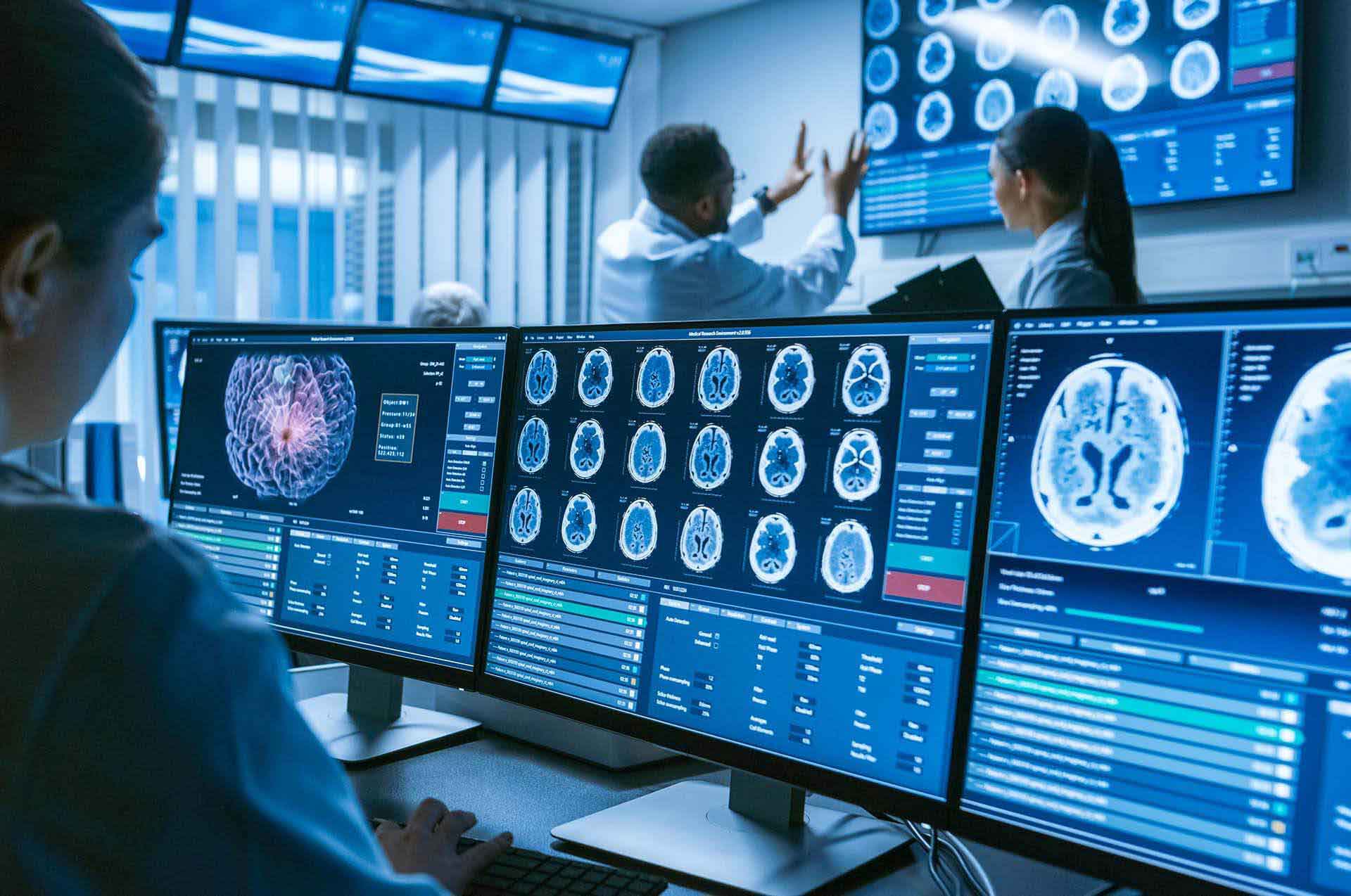
This consistency is particularly valuable in image-heavy specialties, where visual assessment plays a primary role in diagnosis. For example, AI models can highlight regions of interest, flag anomalies, or rank images by likelihood of concern. This allows clinicians to prioritize cases more efficiently and focus their expertise where it is needed most, rather than starting each review from scratch.
In areas such as dermatology, image-based AI systems are increasingly used as decision-support tools, helping specialists assess visual indicators more objectively while maintaining full clinical oversight.
Enhancing workflow efficiency
Beyond accuracy, AI significantly improves operational efficiency. Automated image pre-screening can reduce the time clinicians spend on routine cases, freeing them to focus on complex or ambiguous findings. This is especially important in healthcare environments where demand is rising faster than staffing capacity.
AI tools can also integrate with existing imaging systems, embedding insights directly into clinical workflows. Instead of adding complexity, well-designed AI solutions streamline processes by presenting relevant information at the right moment. This reduces friction and increases adoption among practitioners who may otherwise be hesitant to embrace new technologies.
Addressing data quality and bias
One of the major challenges in AI-based image analysis is data quality. Models are only as good as the data they are trained on. Poorly labeled images, limited diversity, or incomplete datasets can introduce bias and reduce reliability. Addressing this requires careful dataset curation and ongoing validation.
Modern approaches increasingly focus on diverse, representative training data and continuous model evaluation. Feedback loops allow systems to improve over time as new images are analyzed and outcomes are verified. Transparency in model performance is also becoming a priority, ensuring clinicians understand both the strengths and limitations of AI-generated insights.
Supporting, not replacing, clinical judgment
A common concern surrounding AI in healthcare is the fear of automation replacing human expertise. In practice, the most successful implementations treat AI as a support system rather than a decision-maker. AI excels at processing data and identifying patterns, while clinicians provide contextual understanding, ethical judgment, and patient-centered care.
This collaborative model enhances trust and effectiveness. When clinicians can see how AI arrives at its conclusions—through visual overlays, probability scores, or comparative references—they are more likely to adopt and rely on these tools appropriately. The result is not automation for its own sake, but smarter, more informed decision-making.
The future of clinical image analysis
As AI technologies continue to evolve, their role in clinical image analysis will expand beyond detection into prediction and personalization. Future systems may not only identify abnormalities, but also forecast disease progression or treatment response based on visual trends over time.
Interoperability will also improve, allowing AI insights to be shared seamlessly across platforms and institutions. This could lead to more standardized diagnostic practices and better outcomes at scale. However, success will depend on responsible development, clear regulation, and close collaboration between technologists and healthcare professionals.
Artificial intelligence is reshaping how clinical images are analyzed, interpreted, and applied. By addressing challenges of scale, consistency, and efficiency, AI offers practical solutions to long-standing problems in medical imaging. When implemented thoughtfully, it becomes a powerful ally—enhancing human expertise rather than replacing it, and ultimately improving the quality of care.